

 40.42°N 3.70°W
Two weeks is the sweet spot for a first trip to Spain. It gives you time for Madrid’s museums, three Andalusian cities, a beach day in Valencia and Gaudí’s Barcelona, without spending every other day on a train.
This route runs Madrid → Seville → Córdoba → Granada → Valencia → Barcelona. It follows Spain’s high-speed rail lines, so every transfer is a few hours or less. It works for solo travellers and anyone on a budget, and you can fly into Madrid and out of Barcelona.
Below you’ll find the route at a glance, a day-by-day plan, how to book cheap trains, a realistic budget and the entry rules you need to know for 2026.
Itinerary at a glance
Thirteen nights in six bases, all linked by direct trains. Fly into Madrid and home from Barcelona.
| Days | Base | Nights | Getting there | Fastest train |
|---|---|---|---|---|
| 1–3 | Madrid (+ Toledo day trip) | 3 | Fly into Madrid-Barajas | Madrid → Toledo: 34 min |
| 4–5 | Granada | 2 | Train from Madrid | 3 h 14 min |
| 6 | Córdoba | 1 | Train from Granada | 1 h 29 min |
| 7–9 | Seville | 3 | Train from Córdoba | 52 min |
| 10–11 | Valencia | 2 | Train from Seville (one direct a day) | 4 h 22 min |
| 12–14 | Barcelona | 2 | Train from Valencia | 3 h 9 min |
Train times are the fastest scheduled services listed on Trainline in October 2026. Check the exact timetable when you book.
Day by day
Days 1–3: Madrid and Toledo
Spend day 1 walking the old centre: Puerta del Sol, Plaza Mayor and the Royal Palace, then tapas at Mercado de San Miguel or the cheaper bars on Calle Cava Baja. On day 2, do the art museums and Retiro Park. On day 3, take the 34-minute train to Toledo, a hilltop city of churches, synagogues and mosques. Come back for dinner.
- Budget tip: the Prado is free Monday–Saturday 18:00–20:00 and Sunday 17:00–19:00. The Reina Sofia (home of Picasso’s Guernica) is free most evenings 19:00–21:00 and closed Tuesdays (free hours).
- Where to stay: Sol or La Latina for walkability, Lavapiés for cheaper hostels.
Days 4–5: Granada
The Alhambra is the reason you’re here. Book it the moment your dates are fixed: the general ticket is €21 (€22.27 online), and your entry to the Nasrid Palaces is timed. Arrive late and you can be turned away (prices and rules). Spend the other day in the Albaicín, the old Moorish quarter, and watch sunset from the Mirador de San Nicolás.
- Budget tip: many Granada bars still give a free tapa with each drink. Two or three drinks can add up to dinner.
- Where to stay: the Albaicín for views, the area around the cathedral for flat streets and easy station access.
Day 6: Córdoba
One night is enough for Córdoba’s Mezquita-Catedral, a mosque with a cathedral built inside it. Go early, before the tour groups. Then wander the Jewish Quarter and cross the Roman Bridge at golden hour. In May, the city’s flower-filled patios open to visitors.
Days 7–9: Seville
Seville rewards slow days. Visit the Real Alcázar palace, climb the Giralda bell tower, see the Plaza de España and stroll across the river to Triana for tapas. Catch a flamenco show at a small peña rather than a big dinner show.
- Budget tip: the Alcázar costs €15.50, but it’s free on Mondays in the last hour. Free slots must be booked online and often go weeks ahead (details).
- Where to stay: Santa Cruz or El Arenal, both walkable to every sight.
Days 10–11: Valencia
Valencia is your beach break. Rent a bike and ride the Turia Gardens, a 9 km park in an old riverbed, down to the City of Arts and Sciences. Eat paella where it was invented: go at lunchtime, as locals do, and look for restaurants near Malvarrosa beach or in the village of El Palmar.
- Where to stay: Ciutat Vella (old town) or Ruzafa for cafes and nightlife.
Days 12–14: Barcelona
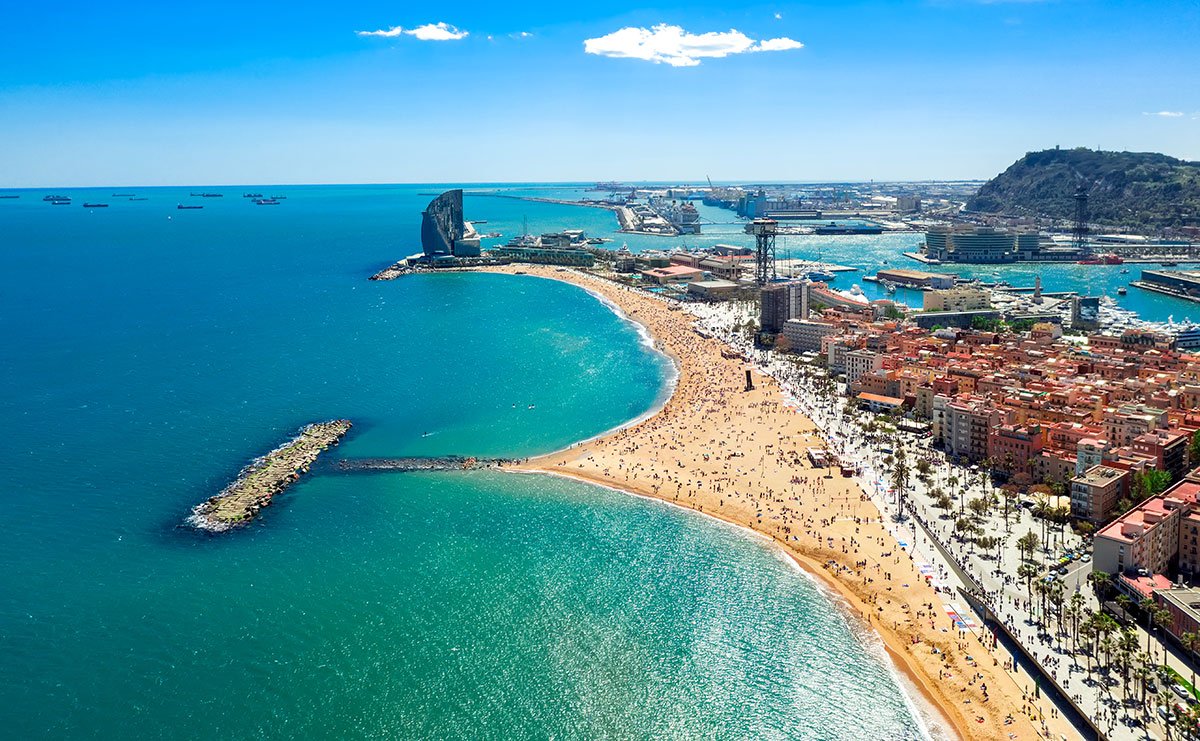
End with Gaudí. The Sagrada Família basic ticket is from €26, or €36 with a tower. Book well ahead in high season (ticket guide). 2026 is the centenary of Gaudí’s death, so expect extra exhibitions and bigger crowds. Fill the rest of your time with the Gothic Quarter, the El Born neighbourhood, Park Güell and an evening at Barceloneta beach.
- Where to stay: El Born or the Gothic Quarter for atmosphere, Gràcia for a quieter, local feel.
- Safety: Barcelona has Europe’s busiest pickpockets. Keep your phone off the café table.
Getting around Spain
Take the train. Spain’s high-speed network is fast, and on the main lines four companies now compete on price: Renfe (AVE and its low-cost Avlo), OUIGO and iryo. On busy routes such as Madrid–Seville, about 29 trains run a day, and advance fares start around €7 (Trainline).
- Book early. Fares rise as seats sell. Booking two to four weeks ahead is usually enough for the cheapest tickets.
- Compare operators. Renfe’s site shows only Renfe trains. An aggregator like Trainline or Omio shows all of them side by side.
- Check the luggage rules. Low-cost tickets (Avlo, OUIGO basic) include a small bag; a big suitcase can cost extra.
- Arrive 20–30 minutes early. High-speed trains have airport-style bag scanners.
- Know your station. Madrid has two main stations, Atocha and Chamartín. Tunnel works at Atocha run through 2026 and occasionally close it on weekend mornings (details).
The one awkward leg is Seville to Valencia: there is usually one direct train a day (4 h 22 min). Otherwise you change in Madrid, which takes about six hours in total. A budget flight is the other option.
How much does 2 weeks in Spain cost?
Budget around €1,050 for two weeks as a backpacker, or about €2,500 mid-range, per person and not counting flights.
| Per person, per day | Budget (€) | Mid-range (€) |
|---|---|---|
| Bed: hostel dorm vs. private room or 3-star | 25 | 90 |
| Food: menu del día lunch, tapas dinner | 25 | 45 |
| Sights and tours | 10 | 20 |
| Metro, buses and local transport | 5 | 8 |
| Daily total | 65 | 163 |
| Trains for the whole route, booked early | 150 | 250 |
| Two-week total (13 nights) | ≈ 1,050 | ≈ 2,550 |
Daily costs are approximate, based on typical 2026 prices: dorm beds at €20–30, a set lunch at €10–12 (about €15 in Catalonia) and tapas at €3–7 each (cost guide). Expect Barcelona and Madrid to cost more than Granada and Córdoba, and everywhere to cost more in July, August and Easter week. [Add your own real numbers from the trip here.]
Best time to go and entry rules
Go in spring (April–June) or autumn (mid-September–early November). July and August are crowded and pricey, and Seville and Córdoba regularly pass 40 °C. Winter is mild and cheap in the south, but some beach towns go quiet. Book further ahead around Easter week (Semana Santa) and Seville’s April Fair, when rooms sell out.
Entry requirements for 2026. Spain is in the Schengen Area, so visa-exempt visitors (such as UK, US, Canadian and Australian passport holders) can stay up to 90 days in any 180.
- EES: since 10 April 2026, the EU’s Entry/Exit System has replaced passport stamps. On your first entry you’ll give fingerprints and a facial photo at the border, so allow extra time at passport control (European Commission).
- ETIAS: the new €20 travel authorisation is not live yet and has no confirmed start date. When it launches, it will last three years. Apply only at the official site, travel-europe.europa.eu (ABTA).
Rules change, so check your government’s travel advice before you book.
Tips for solo and budget travellers
- Eat your big meal at lunch. The menú del día, a set lunch on weekdays, gets you a starter, main, dessert and a drink for about €10–15.
- Eat on Spanish time. Lunch is 14:00–16:00 and dinner from 21:00. A solo diner fits easily at a tapas bar counter, no booking needed.
- Use the free hours. Madrid’s big museums and Seville’s Alcázar all have free entry slots (see the day-by-day section).
- Stay in social hostels. Spain’s hostels often run free walking tours and tapas nights, the easiest way to meet people when travelling alone.
- Mind your bag, not your safety. Spain is generally safe for solo travellers, including women. Petty theft is the main risk, especially on Barcelona’s metro and Las Ramblas, and in central Madrid.
- Carry some cash. Cards work almost everywhere, but small bars and markets sometimes prefer cash for small amounts.
- Emergency number: 112.
FAQ
Is two weeks enough for Spain? Yes, for a first trip covering the highlights. Two weeks fits Madrid, Andalusia, Valencia and Barcelona at a steady pace. Add the Basque Country or the islands on a second trip.
Should I start in Madrid or Barcelona? Either works, as long as you book an open-jaw flight (into one city, out of the other). This route starts in Madrid because it sits at the centre of the rail network.
Do I need a rail pass? Usually not. Early-booked point-to-point tickets are often cheaper than a pass for six or seven journeys.
How much money do I need for 2 weeks in Spain? About €1,050 on a backpacker budget or €2,500 mid-range, not counting flights. See the budget table above.
Can I drink the tap water? Yes, it’s safe across mainland Spain. Taste varies; Barcelona’s is heavily chlorinated.
Plan your trip
Save this itinerary, then start with the Alhambra: it’s the ticket that sells out first. Got questions about the route? Leave a comment below.
Sources
- Trainline: train times and fares, checked 16 October 2026
- European Commission: EES fully operational
- ABTA: upcoming changes for travel to Europe
- Love Granada: Alhambra ticket prices
- Art Visit Guide: free museum hours in Madrid
- Art Visit Guide: Sagrada Família tickets
- European Traveler: Real Alcázar tickets
- The World Was Here First: Spain cost guide
- aparca&go: Spanish rail in 2026