Ask on any Banff forum whether you can go hiking alone, and someone will tell you it’s illegal. It isn’t, except on a few specific trails, at specific times of year. Those are rules worth knowing exactly, because the maximum fine is $25,000.
This guide takes the common beliefs about hiking alone in Banff one at a time and sets each against what Parks Canada actually says (pages checked November 2026). Bear safety is a serious subject, so whenever a claim couldn’t be confirmed on an official page, we say so.

Myth: “Solo hiking is banned in Banff”
The rule: there’s no park-wide ban. One area has a legal group-size rule, and it’s seasonal.
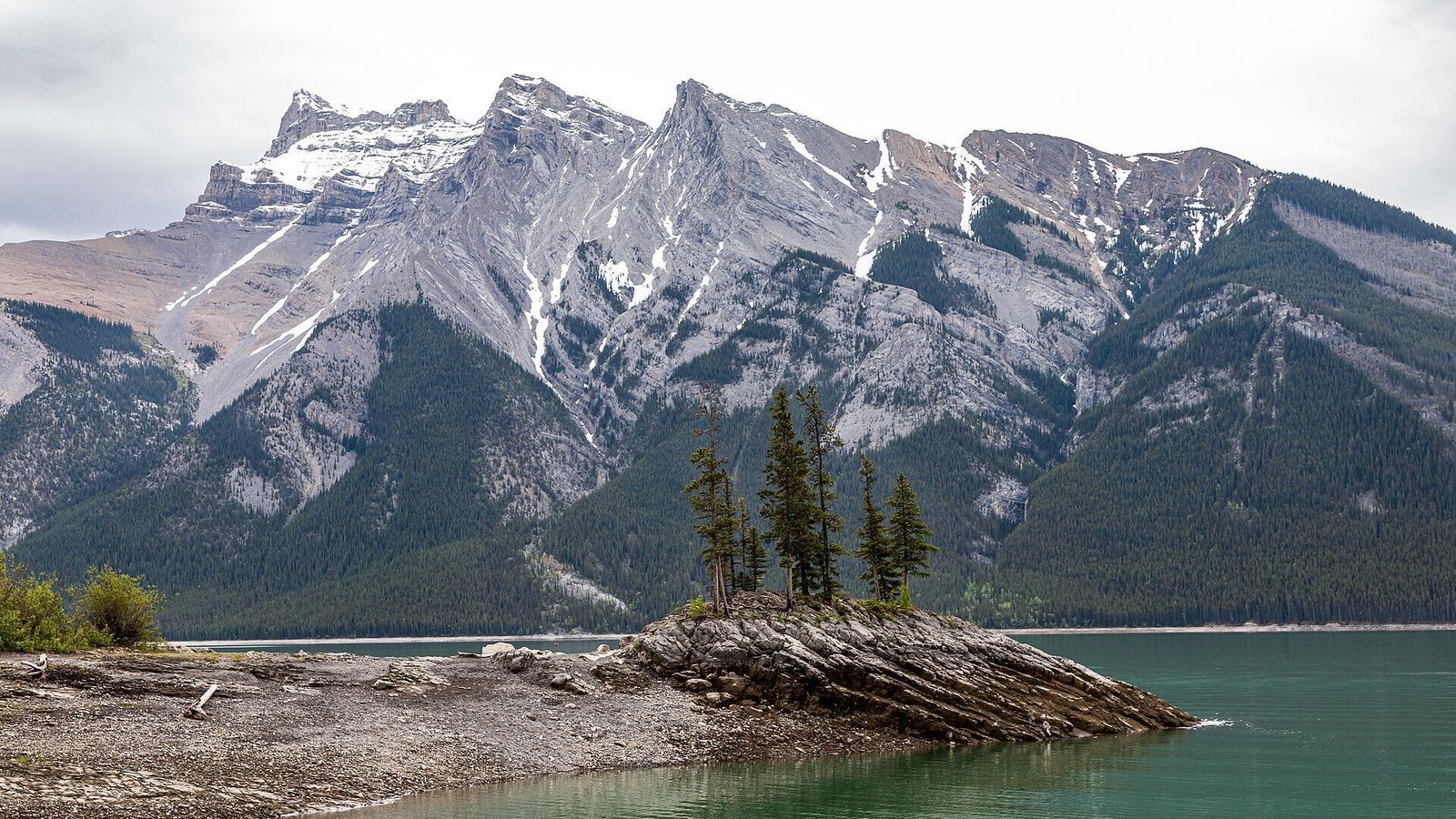
On the trails beyond Stewart Canyon at Lake Minnewanka, Parks Canada puts a seasonal trail restriction in place “from July 10 to September 15 annually” (Lake Minnewanka seasonal restrictions). In that period:
- “All hiking parties must travel in a minimum group size of four.”
- “The maximum distance between two individuals must not exceed 3 metres.”
- “The hiking party must carry bear spray with them at all times.”
- No bikes or dogs beyond Stewart Canyon Bridge.
The restriction covers the Lake Minnewanka Trail from Stewart Canyon Bridge to the east park boundary, the Aylmer Pass Trail and the Aylmer Lookout Trail. Anyone who breaks it can be charged under the National Parks Regulations, with a “maximum fine $25 000”. The 2026 bulletin ran the same dates, 10 July to 15 September 2026.
Outside those trails and those dates, you can legally hike alone in Banff.
Myth: “The group rule is just a suggestion”
The rule: at Minnewanka it’s a legal requirement. Elsewhere, group advice is usually just that: advice.
Parks Canada uses two kinds of notice, and they’re easy to mix up:
| Notice type | What it means | Example from 2026 |
|---|---|---|
| Restriction or closure | Legally binding, with a fine | Lake Minnewanka, groups of four, 10 July–15 September |
| Bear warning | Advice: groups recommended, extra caution | A bear warning for the Skoki trails, which recommended groups of four or more |
A warning doesn’t make solo hiking illegal, but it tells you bears are active there right now. If you’re on your own, take the hint and choose another trail.
Myth: “Lake Louise and Moraine Lake trails need groups of four”
The rule: we couldn’t find any current official group-of-four rule for Larch Valley, Sentinel Pass or Paradise Valley.
You’ll see this claim repeated on third-party sites. We checked the Parks Canada Banff bulletins and the closures and restrictions page (updated 17 November 2026), and neither listed one. The closures page does list a seasonal trail restriction at Bryant Creek from 1 August to 30 September, “to minimize disturbance to bears feeding on berries”. Read that bulletin’s exact terms before a late-summer trip there.
Group rules can appear at short notice when bears are active. Check the bulletins page on the morning you hike, not the week before.
Myth: “Bear spray is optional”
The rule: it’s mandatory in the Minnewanka restricted area. Everywhere else, Parks Canada calls it “a good idea” (mountain parks bear safety).
If you’re hiking alone, treat it as compulsory everywhere. Two practical points:
- You can’t take bear spray on a plane. Buy it in Banff or Canmore when you arrive.
- Carry it on your hip or chest strap, not inside your pack, and learn how to use it before you set off.
Myth: “Bear attacks are random, so being in a group doesn’t help”
The rule: Parks Canada’s own account of the Minnewanka attacks says the opposite. “All of the bear attacks resulted from hikers travelling alone or in a small group who surprised female grizzlies with cubs along these trails during berry season.”
That sentence explains the whole Minnewanka rule. A larger group makes more noise and is less likely to surprise a bear. Alone, you have to make that noise yourself: talk, call out on blind corners and near streams, and don’t hike with headphones in.

Myth: “You can’t do Banff hiking without a car”
The rule: you can reach many of the busiest trailheads by public transport. Our guide to Banff without a car covers the buses and Parks Canada shuttles to Lake Louise and Moraine Lake. The Moraine Lake road is closed to private vehicles year-round anyway, according to Parks Canada’s closures page.
For a solo hiker, that’s an advantage. The busy, shuttle-served trails are where you’ll have other people within earshot, which is the next best thing to a group.
So where should you hike alone?
A simple way to choose, using the rules above:
- Check the bulletins page on the day for restrictions, closures and bear warnings.
- Pick busy, popular trails where you’ll pass other hikers regularly, especially near Lake Louise and Moraine Lake in summer.
- Avoid berry-season trails with warnings from late July into September, when bears are feeding.
- Join others at the trailhead if you want a trail with a group rule. At Minnewanka in summer, solo hikers can team up at the trailhead to make a group of four. Agree to stay within 3 m, as the rule requires.
- Leave your plan with someone and set an alarm time for when they should call for help.
If you need to get to Banff first, our Vancouver to Banff comparison sets out the drive, train and flight options.
The short version
Hiking alone in Banff is legal on almost every trail. The firm exception is Lake Minnewanka beyond Stewart Canyon, including Aylmer Pass and Aylmer Lookout: every year from 10 July to 15 September you must hike there in a group of four, stay within 3 m of each other and carry bear spray, or risk a fine of up to $25,000. Treat bear warnings as advice to go elsewhere, check the official bulletins on the morning of your hike, and carry bear spray on every trail. For more solo planning, sign up for the TravelSpatial newsletter.
Sources
- Parks Canada: Lake Minnewanka seasonal trail restrictions (modified 11 August 2025, checked November 2026)
- Parks Canada: 2026 Lake Minnewanka bulletin (checked November 2026)
- Parks Canada: Banff closures and restrictions (modified 17 November 2026)
- Parks Canada: Banff bulletins (checked November 2026)
- Parks Canada: bear safety in the mountain parks (checked November 2026)
Photo credits
- Banff National Park (AB, Canada), Lake Minnewanka — 2022 — 2274 by Dietmar Rabich, CC BY-SA 4.0, via Wikimedia Commons
- Lake Agnes, Banff NP Alberta Canada by Jonathan Mueller, CC BY 2.0, via Wikimedia Commons
The infographic is original to TravelSpatial. Photos are used under the licences linked above.