Edinburgh Festival Fringe 2027: 6–30 August. It’s the Fringe’s 80th edition (Edinburgh Festival Fringe, checked November 2026), and the Royal Edinburgh Military Tattoo runs almost alongside it, 6–28 August 2027 (Royal Edinburgh Military Tattoo).
If you’re reading this in late 2026, you’re early, and that’s exactly when you should be reading it. August is the month Edinburgh’s hotels, hostels and short lets fill first. This guide is a countdown: what to do now, what to do in spring, and where to sleep if the centre is full or out of your budget.
The quick version
- Book your bed before you book any shows. Rooms run out long before tickets do.
- The centre is not your only option. Leith is on the tram, the south side is walkable, and Glasgow is a train ride away.
- Budget for the new Visitor Levy: 5% of your accommodation cost, on up to five nights.
- Plan your last journey home. Trams stop before midnight; night buses pick up the slack.
Now (November–December 2026): lock in a bed
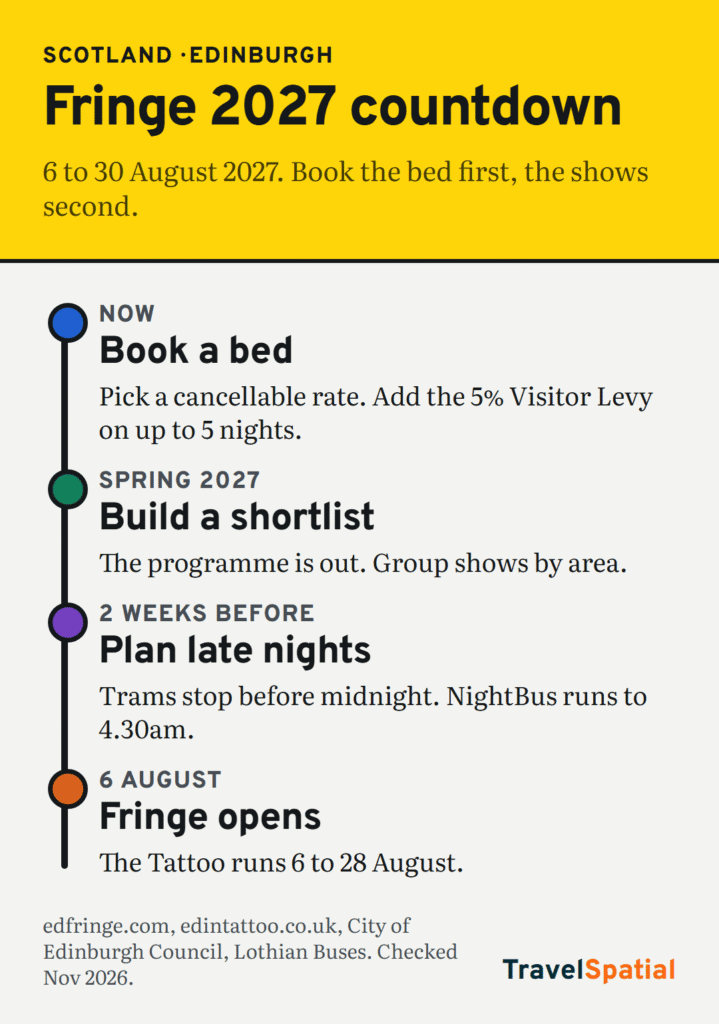
This is the step that matters most. Search for 6–30 August 2027 now, and look for rates you can cancel for free. Prices only go one way as the festival approaches.
When you compare totals, include Edinburgh’s Visitor Levy. Since 24 July 2026, overnight stays in the city carry a charge of 5% of the accommodation cost, calculated before VAT and charged only on the first five nights of a stay. It covers hotels, hostels, B&Bs, guest houses, self-catering, holiday lets and campsites, and student rooms let to visitors. It doesn’t apply to extras like meals or parking (City of Edinburgh Council).
Our tip: a seven-night stay pays the levy on five nights, not seven. Because the cap counts the first five nights of a stay, one continuous booking will usually pay less levy than two shorter ones back to back. Ask your accommodation how it applies the cap.
Where to stay, base by base
Old Town and New Town: in the middle of it
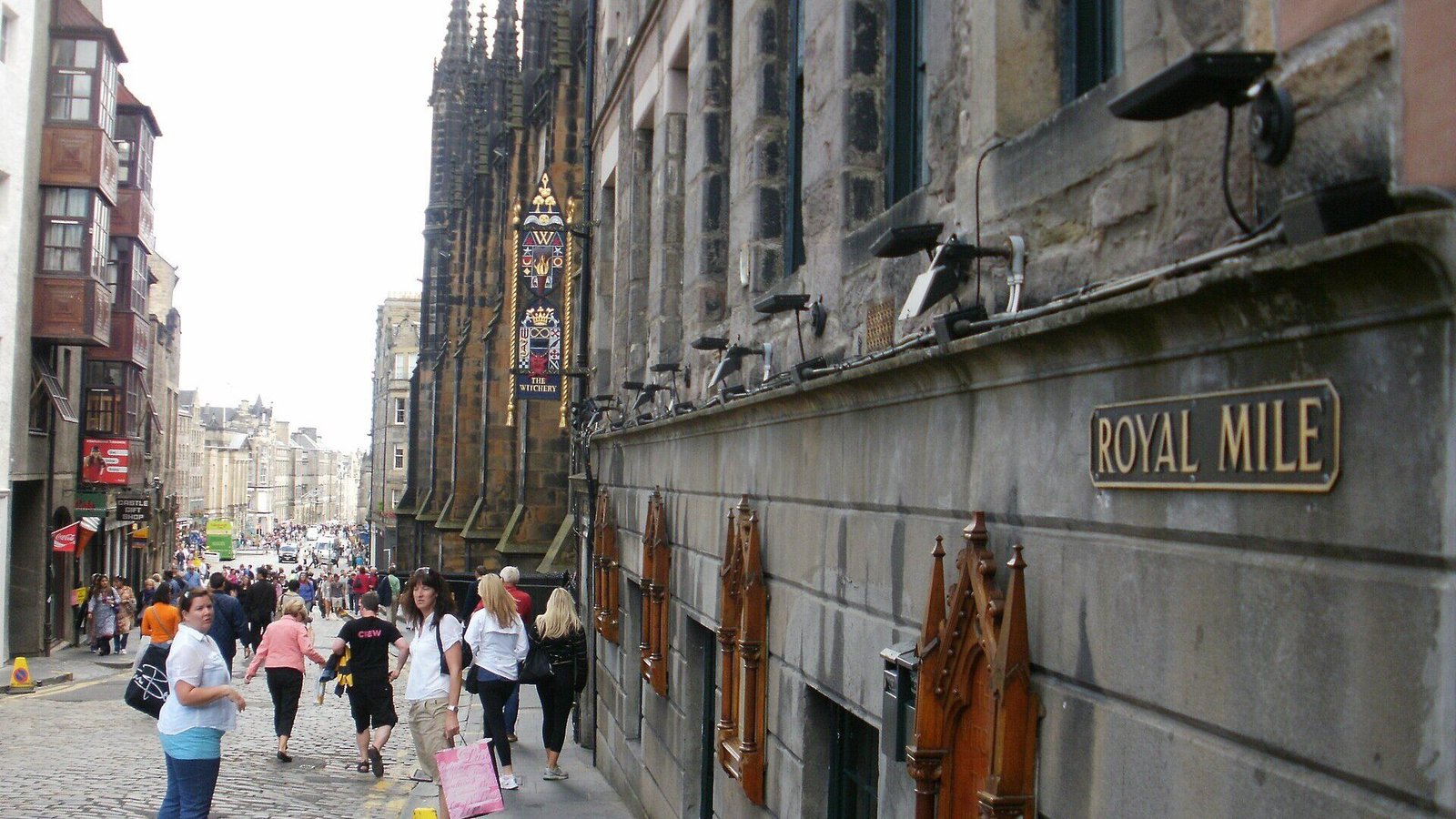
The Royal Mile, most of the big venues and Waverley station are here, and you can walk to almost everything. That’s why these streets are booked first and cost most in August. The Royal Mile itself is crowded and noisy late into the night during the Fringe; New Town side streets are calmer.
Choose it if: you have the budget, you’re staying a few nights, and you want to walk home from every show.
Leith: the tram makes it easy
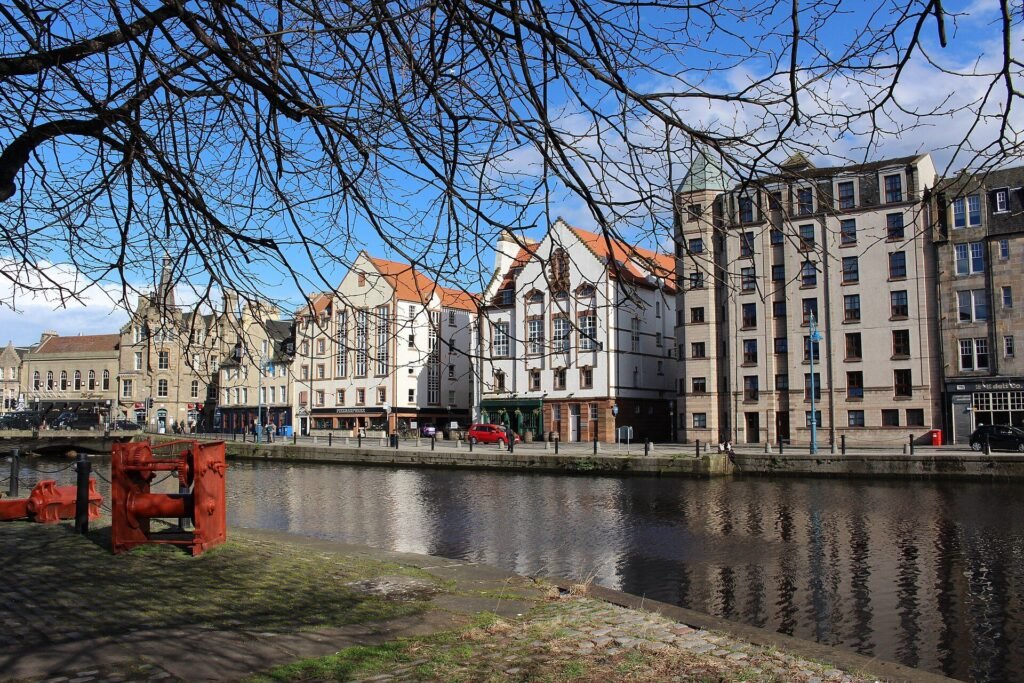
Leith, Edinburgh’s port district to the north, has its own restaurants and bars along The Shore and the Water of Leith. Since the tram extension opened, it is directly connected to the centre: trams run between Newhaven, Leith and the city centre (St Andrew Square for Waverley, and Princes Street), and on to the airport, every 7 minutes (Edinburgh Trams).
A city-zone adult fare is £2.40. The first tram leaves Newhaven at 05:20; the last tram from the airport end leaves at 22:52, which means late-show nights need a plan B (see below). One August-specific rule: bikes aren’t allowed on trams during the festival month (Edinburgh Trams).
Choose it if: you want a lively neighbourhood of your own and a reliable ride into town.
The south side: Newington, Marchmont, Bruntsfield
These residential areas, south of the Old Town and the Meadows park, put you within walking distance of several venues on the south side of the centre. Expect tenement flats and guest houses rather than big hotels, and a walk of roughly 20–30 minutes to the Royal Mile. Lothian buses cover the gaps.
Choose it if: you’d rather walk than ride, and you want quiet streets to come back to.
Portobello and Musselburgh: by the sea
Portobello is Edinburgh’s beach suburb, east of the centre and connected by Lothian buses. Further east, Musselburgh has a station on the line to North Berwick, which has an hourly service to Edinburgh, according to Wikipedia’s Edinburgh Waverley service list.
Choose it if: you’re staying a week or more and like the idea of a beach walk between shows.
Glasgow: the big-city fallback
When Edinburgh is full or the prices are too high, Glasgow is the classic workaround. ScotRail’s own figure for the average journey from Edinburgh Waverley to Glasgow Queen Street is 1 hour 7 minutes, with the fastest trains taking about 42–44 minutes (ScotRail; Trainline).
The catch: you’re tied to the train timetable. Check the time of the last train back to Glasgow before booking any late show, and accept that you’ll leave some nights early.
Getting home late
The Fringe runs late, and trams stop before midnight. Lothian Buses runs NightBus services from midnight to 4.30am. A night single costs £3.50, or buy a City LATE ticket for £5.50, valid for unlimited journeys from 6pm to 4.30am (Lothian Buses, checked November 2026).
Other fares worth knowing: a daytime adult single is £2.40, a City DAY ticket is £6 (or £5.70 with contactless TapTapCap), and the Airlink airport bus runs 24/7 for £6 single.
Spring 2027: the programme drops
Once the full Fringe programme is published, start building a shortlist. Group shows by area so you’re not crossing the city between every performance. If you’re staying in Leith or Glasgow, put your late shows on the nights you’ve planned to stay out.
Two weeks before: final checks
- Re-read your booking for the Visitor Levy line, or set the money aside if it’s collected at check-in.
- Add a City LATE or night-bus plan for any show that ends after 11pm.
- Pack for Scottish summer: a waterproof layer is not optional. Our carry-on floor plan shows how to fit it in.
So, where should you stay?
Book the centre if you can afford it and you book early. Otherwise, Leith is the best all-round alternative, the south side suits walkers, and Glasgow is the backstop when everything else is full. Whichever you choose, the most important thing is to book your bed first and your shows second.
Use our travel budget template to price the trip, and our 7-step trip planning guide to plan the rest of Scotland.
Want festival dates and new guides in your inbox? Join the TravelSpatial newsletter.
Sources
- Edinburgh Festival Fringe: 2027 dates, checked November 2026
- Royal Edinburgh Military Tattoo: 2027 dates, checked November 2026
- City of Edinburgh Council: Visitor Levy, checked November 2026
- Edinburgh Trams and Newhaven route, checked November 2026
- Lothian Buses: tickets, checked November 2026
- ScotRail: Edinburgh to Glasgow Queen Street
- Trainline: Edinburgh to Glasgow Queen Street
- Edinburgh Waverley railway station (Wikipedia)
Photo credits
- Royal Mile, Edinburgh – geograph.org.uk – 1970888 by Peter S, CC BY-SA 2.0, via Wikimedia Commons
- The Shore, Leith – geograph.org.uk – 5638471 by Graeme Yuill, CC BY-SA 2.0, via Wikimedia Commons
The infographic is original to TravelSpatial. Photos are used under the licences linked above.