

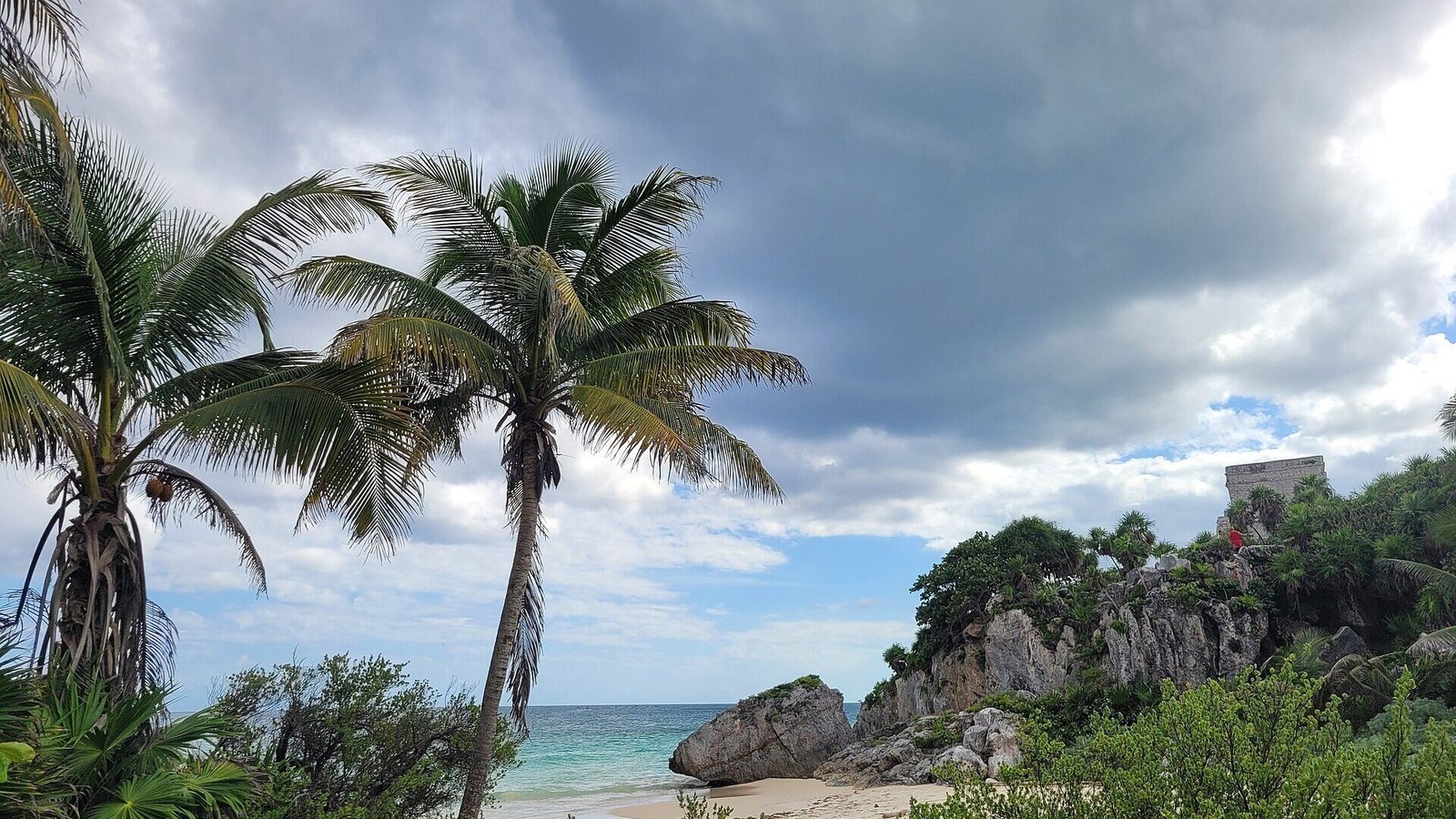
Here’s the unpopular opinion: for most people, Tulum town is the better place to stay. You’re near the bus and Tren Maya stations, the cheaper restaurants and the cenote roads, and the beach is a bike ride away. The beach road (the Hotel Zone) is worth paying for if you want to wake up to the sea and you’ll rarely leave the sand.
What nobody can honestly tell you is a precise “town vs beach” price gap. We looked for a published breakdown and found none. What we can show is the money you’ll pay wherever you sleep, and what the market data says about rates in 2026. That’s more useful than a made-up average.
The zones in one table
Tulum’s tourist areas are usually split into the archaeological site, the town (Pueblo), the Hotel Zone along the seafront, Aldea Zamá to the south of town, La Veleta to the south-west, and the Sian Ka’an reserve beyond (Wikipedia: Tulum).
| Zone | Feels like | Pick it if | Skip it if |
|---|---|---|---|
| Town (Pueblo) | Busy main street, taquerías, everyday Tulum | You want value and easy transport | You picture yourself steps from the sea |
| Aldea Zamá | Newer condos and boutique hotels between town and beach | You want quieter streets and a shorter ride to the beach | You want local atmosphere |
| La Veleta | Residential, rentals, still building | You’re staying a week or more on a budget | You don’t want to cycle or taxi everywhere |
| Hotel Zone (beach road) | Cabañas and design hotels on the sand | The beach is the whole holiday | You want to explore, or you’re watching costs |

The costs that don’t depend on where you sleep
These are the costs that apply wherever you stay. Checked November 2026; they’ve changed a lot recently, so confirm them before you go.
- VISITAX: Quintana Roo’s mandatory fee for foreign tourists, paid online at visitax.gob.mx. It’s widely reported at about MXN 285 per person for 2026 (Riviera Maya News). The official site says all foreign tourists must pay it. Pay online yourself: there have been reports of collection points at Cancún airport asking for much more.
- Tulum ruins: INAH roughly doubled the entry fee for 2026, to MXN 209 per person, up from about 104 in 2025 (Riviera Maya News).
- Jaguar National Park: the ruins and the nearby beaches sit inside Parque del Jaguar, which charges its own fee. Reports conflict on the amount and on whether a single combined ticket now applies (Tulum Times). Budget a few hundred pesos and check at the gate.
Our tip: If you stay in the Hotel Zone, you may pass through the park area on your way in and out, depending on where your hotel sits on the road. Ask your hotel how its guests reach it before you book.
What rooms cost in 2026
There’s no clean town-versus-beach figure, but two data points help set expectations. Short-term rental data from AirDNA put the average nightly rate for Tulum rentals at about US$125, with rates down on the year. For a hotel benchmark, the management of the Hotel Tulum Aeropuerto, near the new airport, reported an average rate of about MXN 2,800 a night (Riviera Maya News).
Falling rental rates usually mean more room for negotiation, especially in town and in Aldea Zamá, where there are more rooms competing for the same guests.
Our tip: Compare the same dates in the town and on the beach road, and read what’s included. Beach hotels often price in the location; town hotels often price in a pool and parking.

Getting around between them
The town and the beach road are linked by a cycle path and frequent taxis. Many town hotels lend or rent bikes. If you stay in the Hotel Zone, plan on taxis for anything that isn’t the beach, and expect them to cost more at night.
Arriving is now easier from the town side. Tren Maya has a Tulum station for the town, and a Tulum Aeropuerto station linked to Tulum’s international airport (Tren Maya). Train tickets are sold through the official Tren Maya booking site.
The sargassum question
From roughly spring to early autumn, sargassum seaweed can wash up on Caribbean beaches, and it’s the one thing that can make a beachfront room a bad deal. Check the daily traffic-light map at Sargassum Monitoring, which uses data from Mexico’s CONABIO/SIMAR system, in the days before you book.
This is the strongest argument for staying in town during sargassum season. You’re not paying a premium for a view of a beach you might not want to swim off, and the cenotes are just as close.
The honest verdict
- First visit, five days or fewer: town or Aldea Zamá, with bikes. You’ll see more and spend less.
- Pure beach holiday, outside sargassum season: the Hotel Zone. Pay for the view and stay put.
- A week or longer on a budget: La Veleta, with a rented bike.
- Wherever you stay: pay VISITAX online, carry pesos for park fees, and check the sargassum map before you commit to the beach.
Coming from the capital first? Our Mexico City layout guide shows how the city fits together. Before you go, read how to avoid travel money fees and set your daily spend in My Travel Budget Template.
Want the next honest take in your inbox? Join the TravelSpatial newsletter for one mapped itinerary a week.
Sources
- Wikipedia: Tulum (zones)
- VISITAX and Riviera Maya News: VISITAX 2026, checked November 2026
- Riviera Maya News: INAH doubles entrance fees for Tulum and Cobá in 2026, checked November 2026
- Tulum Times: Three fees, one window (Jaguar park and ruins fees)
- Riviera Maya News: Hotel Tulum Aeropuerto occupancy and AirDNA: Tulum short-term rental data
- Tren Maya and booking site, checked November 2026
- Sargassum Monitoring: Riviera Maya forecast, checked November 2026
Photo credits
- Maya ruins at Tulum – Palms and beach by Erik Cleves Kristensen, CC BY 2.0, via Wikimedia Commons
- Tulum QR Xmas Tree 2023 by xiquinhosilva, CC BY 2.0, via Wikimedia Commons
The infographic is original to TravelSpatial. Photos are used under the licences linked above.
1 comment on “Tulum Town or Beach? Where to Stay, and the Costs Nobody Mentions”