

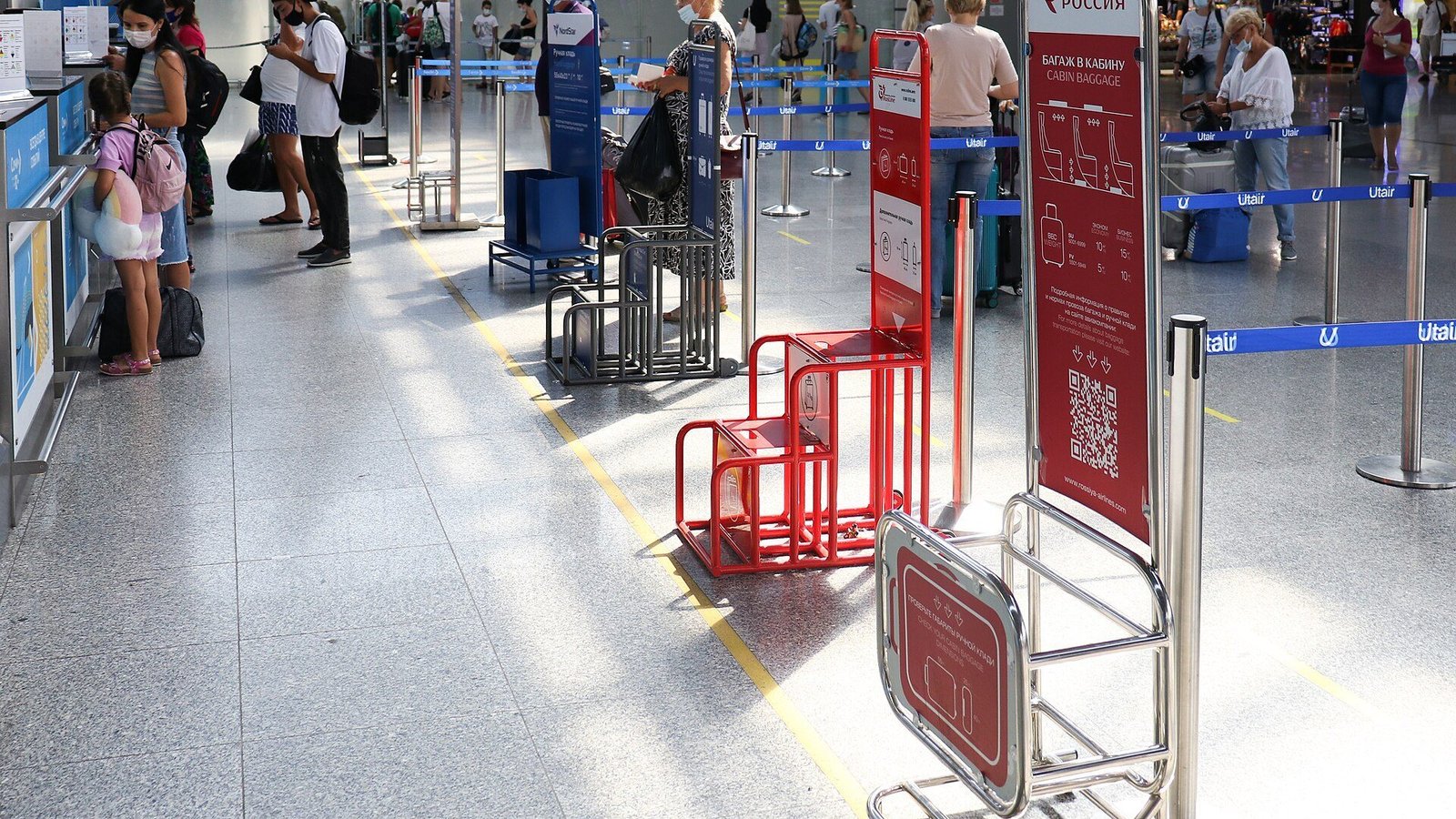
Here’s the short answer to “what size backpack for 3 months?”: the same size as for 3 weeks. For most warm-weather backpacking trips, that’s 40 litres, give or take five. Trip length barely changes how much you carry, because after the first week you’re doing laundry, not packing more clothes. What actually changes the size is climate, activities, and which airline’s sizer box you’ll be standing next to.
This guide does the maths. It busts three common myths about backpack size, turns airline cabin limits into litres, and ends with a quick decision table you can use in the shop.
Myth 1: “Longer trip, bigger bag”
The idea feels obvious. Twelve weeks should need more than two. In practice the trick is to pack about a week of clothes and wash them. Laundry is cheap and easy to find across Southeast Asia, Latin America and most of southern Europe. Gear guides land in the same place: one puts the sweet spot for Asia at 40–45 litres (The Gone Goat), and another says the simple answer to “how big?” is almost always “smaller than you think” (Southeast Asia Backpacker).
So the fixed part of your kit (clothes for a week, toiletries, a rain layer, a charger) is the same for any trip over about seven days. Here’s what actually drives the size:
| What you’ll do | Extra space it needs |
|---|---|
| Warm-weather trip only | None. Your base kit fits in 30–40 L |
| Mixed climates (beach then mountains) | A warm layer and a shell: about +5–10 L |
| Multi-day trekking with a guide or refugios | Boots, layers, a sleeping-bag liner: about +10 L |
| Camping trek (tent, stove, food) | Carry your own camp: 55–65 L or more |
| Work gear (laptop and accessories) | About +3–5 L, plus weight |
The rule: pick your size for the coldest, most gear-heavy week of the trip, not for the number of weeks.
Myth 2: “Litres are litres”
They’re not. Backpack makers measure volume in different ways. Some count only the main compartment, others include the lid, the hip-belt pockets and the stretch mesh. A 40-litre bag from one company can hold the same as a 45-litre bag from another (Gecko Routes). Compare packs by their outside dimensions in centimetres. That’s also what airlines check.
Myth 3: “40 litres always counts as carry-on”
What the airline measures is a box, not litres. Multiply the three dimensions and divide by 1,000 and you get that box’s volume in litres. It’s the ceiling for a soft bag packed full, and it shows how much the rules vary:

| Airline allowance | Size (cm) | Box volume | Weight |
|---|---|---|---|
| AirAsia / VietJet cabin bag | 56 × 36 × 23 | about 46 L | 7 kg (AirAsia: total including a small bag) |
| Ryanair paid cabin bag (Priority) | 55 × 40 × 20 | 44 L | 10 kg |
| easyJet free under-seat bag | 45 × 36 × 20 | about 32 L | (see airline) |
| Ryanair free under-seat bag | 40 × 30 × 20 (older guides say 40 × 20 × 25) | 24 L | (see airline) |
Sizes from Wise, AirAsia baggage policy, CabinZero, VietJet allowance (June 2026) and Which?, airline hand luggage allowances 2026, checked November 2026. Ryanair’s free bag size changed recently, so check the airline’s own page before you fly.
Three things to take from the table:
- In Asia, 40 litres fits the cabin bag box, but the 7 kg limit is the real constraint. A full 40-litre pack can easily weigh more. Our carry-on floor plan shows how to spend a 7 kg weight budget.
- In Europe, the free bag is small. A 40-litre pack means paying for the larger cabin bag on most budget airlines, or packing a 24–32-litre bag and nothing else.
- Box volume isn’t pack volume. A rounded backpack rarely fills a rectangular sizer. In practice, a pack labelled 40 L that’s soft and not overstuffed is about the largest that fits the 55 × 40 × 20 cm size.

The decision table
| Your trip | Pack size | Carry-on? |
|---|---|---|
| Warm countries only, flying budget airlines in Asia | 35–40 L | Yes, if you keep under 7 kg |
| Warm countries, flying budget airlines in Europe | 24–30 L, or 40 L plus a paid cabin bag | Only the small pack goes free |
| Mixed climates, some guided treks | 40–45 L | Usually |
| Long treks, Patagonia or the Andes in winter | 50–55 L | Check it |
| Camping treks with your own tent | 60–65 L+ | Check it |
Planning a camping trek? Our Torres del Paine W Trek guide compares carrying your own camp with booking refugios. It’s the difference between those last two rows.
Features that matter more than litres
- Front loading (clamshell opening). You can open it like a suitcase and reach anything without unpacking everything, which helps a lot in a dorm bunk.
- A hip belt that takes the weight. Above about 8 kg, your hips should carry the load, not your shoulders.
- A shape that fits a hostel locker. Lockers vary, and a tall, thin 60-litre pack often won’t fit. Our hostel dorm guide lists a locker that fits your bag as a must-have.
- Lockable zips. Not proof against a determined thief, but enough for buses and shared rooms.
- A small day bag. It goes under the bus seat with your passport, phone and charger while the big pack goes in the hold.
A 40-litre, 3-month packing list
This is a starting list for warm climates with one cooler stretch. It isn’t a shopping list.
- Clothes for 7 days: 5–6 T-shirts or tops, 2 pairs of shorts or skirts, 1 pair of long trousers, 7 pairs of underwear, 3–4 pairs of socks, swimwear, something to sleep in
- Layers: 1 light fleece or jumper, 1 rain shell that packs small
- Shoes: 1 pair of walking shoes, 1 pair of sandals or flip-flops
- Wash bag: solid shampoo and soap where liquids are restricted, a quick-dry towel
- Tech: phone, one charger, a universal adaptor, a power bank (in the cabin, never in the hold)
- Documents: passport, copies, cards in two separate places
- Small extras: padlock, earplugs and eye mask for dorms, a refillable water bottle
That fits in 40 litres with room to spare. Anything you’ve forgotten, you can buy on the road.
Summary
For most backpacking trips, a 40-litre pack is enough for 3 months, the same as for 3 weeks, because you pack a week of clothes and do laundry. Size up for cold weather, treks and camping, not for trip length. Compare packs by their outside centimetres rather than their litres, and check your airline’s sizer box. In Asia, 40 litres fits the cabin bag but 7 kg is the real limit. In Europe, the free bag holds only about 24–32 litres.
Get our packing checklists in the TravelSpatial newsletter.
Sources
- Southeast Asia Backpacker, backpack size guide (checked November 2026)
- The Gone Goat, best travel backpack for Asia (2026, checked November 2026)
- Gecko Routes, backpack for Southeast Asia (checked November 2026)
- Wise, AirAsia baggage policy (checked November 2026)
- CabinZero, VietJet Air baggage allowance (checked November 2026)
- Which?, the most generous airline hand luggage allowances (2026, checked November 2026)
Photo credits
- Baggage sizers in Sochi Airport 02 by Stolbovsky, CC BY-SA 3.0, via Wikimedia Commons
- 20250808 151731 Taichung Airport VietJet baggage sizer by Saimmx, CC0, via Wikimedia Commons
The infographic is original to TravelSpatial. Photos are used under the licences linked above.
2 comments on “40L, 50L or 65L? What Size Backpack You Really Need for 1, 3 or 6 Months”