


Refugio or camping on the W? Here’s the trade in one sentence: refugios cost more and let you carry a day pack; camping costs less and means carrying a tent, a sleeping bag and often your own food. In between there are pre-pitched tents with bedding, which many first-timers choose.
Whichever you pick, the booking order matters more than the price. Every bed and pitch on the W belongs to one of two private operators, and the route only works if you have a reservation for each night. Below is the trek as a set of line items, with the figures we could confirm and the ones you’ll need to ask for.
Who runs which camp
| Operator | Sites on or near the W | Book at |
|---|---|---|
| Vertice | Grey, Paine Grande (west side); also Dickson and Los Perros on the O circuit | vertice.travel |
| Las Torres Patagonia | Refugios Central, Cuernos, Francés; campsites Central, Chileno, Cuernos, Francés, Serón | lastorres.com |
Park tickets are a separate purchase from CONAF’s official seller, Pases Parques. It says refugios and campsites have limited capacity and must be booked directly with the operators (checked November 2026).

The three ways to sleep
| Option | What you carry | Relative cost |
|---|---|---|
| Refugio bed | Clothes and a day’s food. Meals can be booked | Highest |
| Pre-pitched tent (“full equipment”) | No tent or bag. Las Torres’s version includes a raised tent, sleeping bag, mattress and pillow | Middle |
| Own tent (pitch only) | Everything: tent, bag, mat, stove, food | Lowest |
Las Torres lists three camping types: Full Equipo (a tent raised 1.60 m off the ground, with bedding), Semi Equipado (tent and mattress) and Sitio (a pitch for your own tent). Each takes up to two people (Las Torres camping, checked November 2026).
The ledger
Here’s the trek line by line. Confirmed means we read the figure on the operator’s own site in November 2026. Ask means the price only appears inside a booking form, so get a quote.
| Line item | Figure | Status |
|---|---|---|
| Vertice camping and refugio packages | From CLP 360,000 per person | Confirmed (starting price) |
| Vertice self-guided “W Clásica” programme | From CLP 380,000 per person | Confirmed (starting price) |
| Las Torres refugio and camping nights | Shown in the booking form only | Ask |
| Park entry ticket | Sold on Pases Parques; 2027 prices being reset | Ask |
| Bus Puerto Natales → park | Bus-Sur, 12:00 daily, from about 2 h | Times confirmed, fare in booking form |
| Laguna Amarga ↔ Welcome Centre transfer | CLP 4,500 one way | Confirmed |
| Pudeto ↔ Paine Grande catamaran | Sources disagree on whether you can pre-book | Ask |
The Vertice starting prices are from its homepage. They’re “from” prices, and the number of nights and what’s included vary by package. The bus times and transfer fare are from Bus-Sur. On the way back, the afternoon bus leaves Laguna Amarga at 15:00 and reaches Puerto Natales at about 16:30.
Note on park tickets: during November 2026, Pases Parques paused sales of 2027 tickets while it adjusts prices for inflation, with sales due to reopen in December 2026. If you’re trekking in early 2027, set a reminder.
Booking order
- Fix your direction and nights. Most people walk the W east to west or west to east over 4 or 5 days. Write down which camp you need on each night.
- Book the scarcest nights first. Chileno is the camp closest to the Mirador Base Torres, so it’s the one everyone wants.
- Book the other operator. A full W almost always uses both companies, and they don’t share a booking system.
- Buy park tickets on Pases Parques. It says an overnight reservation in the park guarantees you can get a ticket.
- Book the bus last, once your first and last days are fixed.
Rules that change your plan
- No fires. CONAF warns that lighting a fire breaks Law 20,653, with fines of up to CLP 2,000,000 or up to three years in prison. Camping is allowed only in designated sites (CONAF).
- No walking in the dark. CONAF prohibits hiking without daylight, so a sunrise climb to the towers starts from Chileno, not from the bottom of the valley.
- Winter is different. From May to September, several W sections, including Chileno to the towers and the French Valley, can only be walked with a guide, and the back of the O circuit closes. Park hours are 07:00–21:00 from October to April and 08:00–18:30 from May to September (Pases Parques).
- No fuel in the park. If you’re driving, fill up in Puerto Natales.
So which should you choose?
Choose refugios if it’s your first multi-day hike or your budget is comfortable. A light pack makes the long days far easier. Choose pre-pitched tents if you want most of that comfort for less money. Choose your own tent if you’ve carried a full pack before and keeping costs down is the main point. Mixing is common: one refugio night where it matters, tents elsewhere.
New to trips like this? Our guide to planning your first adventure trip covers the basics. For another hut-or-tent decision, see Inca Trail vs Salkantay.
Want more routes like this? Sign up for the TravelSpatial newsletter and we’ll send new maps as they’re published.
Sources
- Pases Parques (CONAF’s official ticket seller): Torres del Paine (checked November 2026)
- CONAF: Parque Nacional Torres del Paine (checked November 2026)
- Vertice: camping and refugios (checked November 2026)
- Las Torres Patagonia: refugios and camping (checked November 2026)
- Bus-Sur: Torres del Paine (checked November 2026)
Photo credits
- Amanecer en Torres del Paine by Christian Jungmann, CC BY-SA 3.0, via Wikimedia Commons
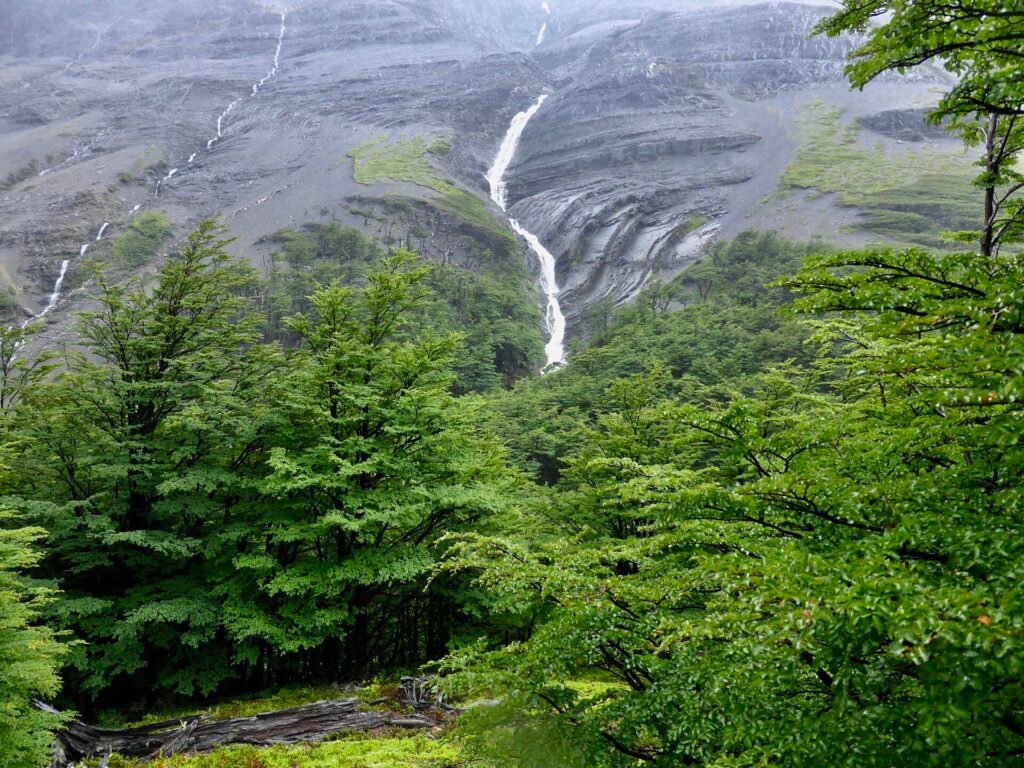
- Bajo la lluvia en la Cordillera Paine, Parque nacional Torres del Paine, Chile by CARLOS TEIXIDOR CADENAS, CC BY-SA 4.0, via Wikimedia Commons
The infographic is original to TravelSpatial. Photos are used under the licences linked above.


1 comment on “Torres del Paine W Trek: Refugios vs Camping, Costs and When to Book”