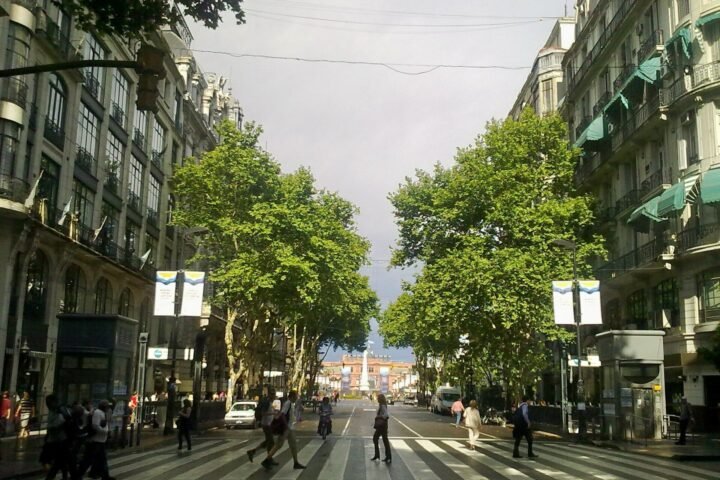
On a first trip to Rio, stay in Copacabana if you want the most hotels and the easiest metro rides, or Ipanema if you’d pay more for a calmer, leafier beach neighbourhood. Botafogo is the better-value base: it’s on the bay rather than the ocean, but it’s a metro hub. Santa Teresa is the most atmospheric of the four and the least practical, so save it for a second visit.
Rio’s south zone runs in a line: Botafogo on Guanabara Bay, then Copacabana and Ipanema on the Atlantic. Metro Line 1 links all three. Santa Teresa sits apart, on a hill above the centre. Think of the four as four different characters, and pick the one you’d like to come home to each evening.
The four, side by side
| Area | Beach | Metro | Feel | Best for |
|---|---|---|---|---|
| Copacabana | Ocean, 4 km long | Line 1: Cardeal Arcoverde, Siqueira Campos, Cantagalo | Busy, mixed, lively | First-timers, value near the sand |
| Ipanema | Ocean | Line 1: General Osório | Polished, residential | Couples, a quieter beach base |
| Botafogo | Bay (not for swimming days) | Botafogo, on Lines 1 and 2 | Local, bars and restaurants | Budget, longer stays |
| Santa Teresa | None | None; historic tram to the centre | Hilly, artistic, quiet | Repeat visitors, art and views |

Copacabana: the one that’s easy
Copacabana is Rio’s all-rounder. The beach runs for about 4 km, backed by Avenida Atlântica and the wave-patterned promenade by Roberto Burle Marx. On Sundays and holidays one side of the avenue closes to cars (Wikipedia). It’s dense, with three metro stations and more than 40 bus routes, so you’re never far from a ride.
You’ll find hotels at almost every price, from beachfront towers to small places a few blocks back. That’s why we recommend it to first-timers. It’s busy and a bit worn in places, which some people like and some don’t.
Ipanema: the one that’s calmer
Walk round the Arpoador headland and Copacabana becomes Ipanema: a grid of residential streets, the lifeguard posts that act as meeting points (Posto 9 is the famous one), and the Dois Irmãos peaks at the western end. On Sundays there’s the Feira Hippie, a market that has run since 1968, and the beach road closes to cars (Wikipedia).
It costs more than Copacabana and has one metro station, General Osório, at its Copacabana end. Stay near it if you’ll be using the metro a lot. Wikipedia notes that water quality varies, so check the daily bathing reports before swimming here or anywhere in the city.
Botafogo: the one that’s practical
Botafogo faces Guanabara Bay, sheltered by Urca and Sugarloaf Mountain (Wikipedia). The view of Sugarloaf across the bay is one of the best in the city, but the bay beach isn’t where you’ll spend your beach days. What Botafogo does have: a metro station on both Line 1 and Line 2, a large local dining and bar scene, and generally lower prices than the ocean beaches. Copacabana’s beach is a short metro ride away.
Santa Teresa: the one with character
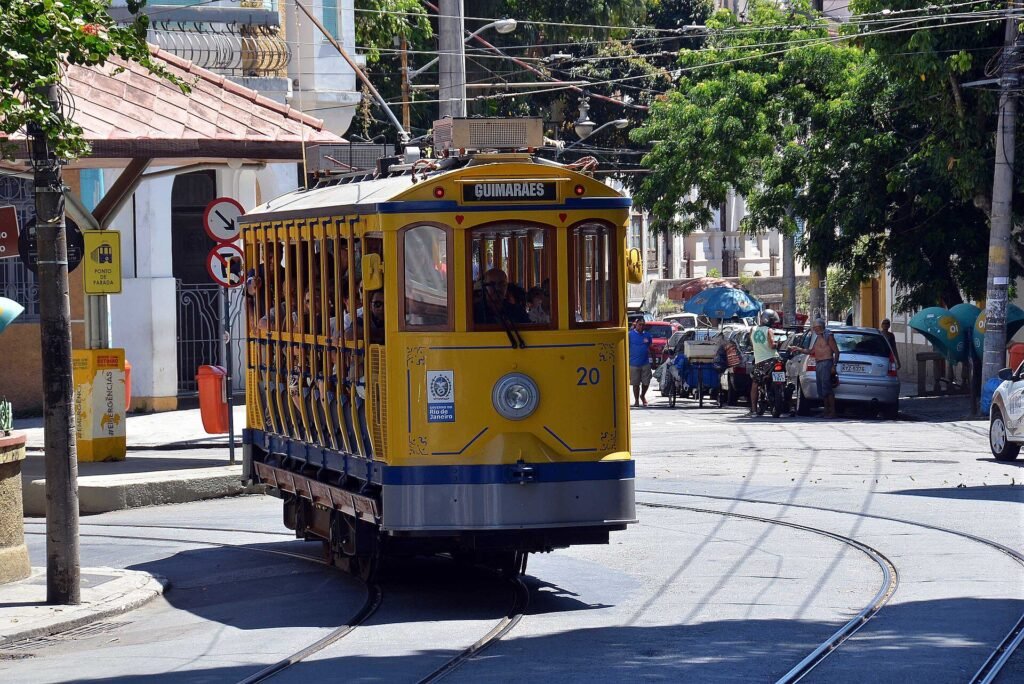
Up the hill above the centre, Santa Teresa has steep, winding streets, artists’ studios, the Chácara do Céu museum and restaurants around Largo do Guimarães (Wikipedia). The historic Santa Teresa tram crosses the Carioca Aqueduct on its 6 km run from Carioca to Dois Irmãos. It runs every 30 minutes, 08:00–18:30 on weekdays and 09:00–17:00 at weekends and on holidays (Wikipedia, 2026 timetable).
The catch: there’s no metro or beach, and the hilly streets mean you’ll take ride-hails at night. It’s a lovely second base, but a hard first one.
Getting around: the metro is the spine
A single metro fare is R$7.90, held at that price from 12 April 2026 (MetrôRio fares, checked November 2026). Line 1 runs from Ipanema (General Osório) through Copacabana and Botafogo to Glória and Cinelândia in the centre. Choosing a base near a Line 1 station makes the whole city easier.
Safety rules that apply wherever you stay
The UK government’s Brazil advice applies to all four neighbourhoods (gov.uk, checked November 2026):
- Don’t go on city beaches after dark, and take only what you need by day. Group robberies on beaches, called arrastões, do happen.
- Watch your phone, especially between 16:00 and 21:00, when thieves target phones most.
- Don’t hail taxis on the street. Book through an official app and check the plate and driver; there have been robberies by drivers using fraudulent ride-hail accounts.
- Avoid favelas, including tours, accommodation and bars marketed as being in a favela, and check your GPS route doesn’t go through one.
- November to March is the rainy season, with flash floods and landslides where the hills meet the coast.
Check whether your passport needs a Brazilian visa before you book. Our visa guide explains where to find the official rules.
The pick
First visit: Copacabana, within a few blocks of Siqueira Campos or Cantagalo stations. Bigger budget: Ipanema near General Osório. Smaller budget: Botafogo. Second visit: a few nights in Santa Teresa. If Rio is part of a bigger trip that takes in Argentina, our guide to reading Buenos Aires by the block covers the next capital south.
Want more routes like this? Sign up for the TravelSpatial newsletter and we’ll send new maps as they’re published.
Sources
- UK FCDO: Brazil safety and security (checked November 2026)
- MetrôRio: payment methods and fares (checked November 2026)
- Wikipedia: Copacabana, Ipanema, Botafogo, Santa Teresa
- Wikipedia: Santa Teresa Tram
Photo credits
- Copacabana, Rio de Janeiro by Wilfredor, CC0, via Wikimedia Commons
- Bonde santa teresa govrj by Henrique Freire / GovRJ, CC BY 3.0 br, via Wikimedia Commons
The infographic is original to TravelSpatial. Photos are used under the licences linked above.