


A four-day camping safari from Arusha (Tarangire, the Serengeti and the Ngorongoro Crater) is enough to see the big three of northern Tanzania. Just don’t expect “budget” to mean cheap. Park and crater fees alone come to roughly US$400 per person before you pay for a vehicle, guide, cook or food. Any quote that looks far below that plus the operator’s costs is cutting something.
So instead of listing highlights, this post goes through the safari like a receipt, line by line. You’ll see what’s fixed, what an operator adds, and where corners get cut.
The route
| Day | Where | Night |
|---|---|---|
| 1 | Arusha → Tarangire (game drive) | Public campsite outside or near the park |
| 2 | Through the Ngorongoro Conservation Area → Serengeti | Public campsite in the Serengeti |
| 3 | Serengeti morning drive → back to the Ngorongoro rim | Public campsite on the crater rim |
| 4 | Ngorongoro Crater descent → Arusha | — |
The road to the Serengeti from Arusha passes through the Ngorongoro Conservation Area, so you pay its entry fee on the way in, and again when you come back to camp on the rim.
The ledger: fixed fees per person
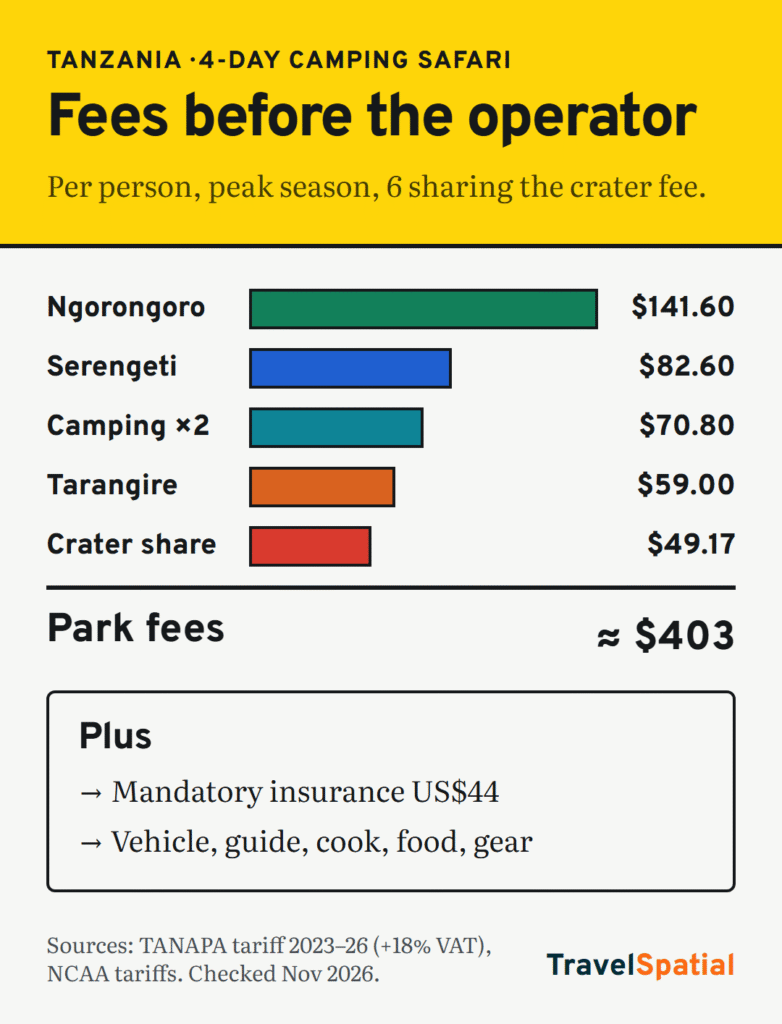
These are fees for one non-resident adult, in peak season, including Tanzania’s 18% VAT. Serengeti, Tarangire and camping are from the TANAPA tariff for 1 July 2023 – 30 June 2026, which lists fees before VAT. Ngorongoro is from the NCAA tariffs page. Both were checked November 2026. The TANAPA schedule ended on 30 June 2026, so ask your operator whether a 2026/27 tariff has changed the figures.
| Line | Fee | Count | Subtotal |
|---|---|---|---|
| Tarangire conservation fee (24 h) | US$59.00 | 1 | US$59.00 |
| Ngorongoro Conservation Area entry (24 h, transit on day 2) | US$70.80 | 1 | US$70.80 |
| Serengeti conservation fee (24 h) | US$82.60 | 1 | US$82.60 |
| Serengeti public campsite (per night) | US$35.40 | 1 | US$35.40 |
| Ngorongoro Conservation Area entry (24 h, rim camp + crater) | US$70.80 | 1 | US$70.80 |
| Ngorongoro public campsite (per night) | US$35.40 | 1 | US$35.40 |
| Crater service fee: US$295 per vehicle, split between 6 people | US$49.17 | 1 | US$49.17 |
| Fixed park fees | ≈ US$403 |
Then add one item you can’t avoid: since 1 October 2026, visitors to mainland Tanzania need the government’s mandatory inbound travel insurance, US$44 (Norwegian Embassy notice). That brings the fixed costs to about US$447 per person.
Where this ledger can move:
- Fewer people in the vehicle: with 4 people, the crater fee share rises to US$73.75. With 2 people, it’s US$147.50.
- Low season (15 March – 15 May): the Serengeti fee drops to US$70.80 and Tarangire to US$53.10, which saves about US$18.
- More time in the Serengeti: each extra 24 hours adds another US$82.60 conservation fee, plus another night’s camping.
- Vehicle entry fees: each park also charges a small fee for the vehicle (TSh 20,000 for a Tanzania-registered car under 2 tonnes). It’s normally inside the operator’s price.
The ledger: what the operator adds
Everything below is the operator’s part of the price, and the fees above don’t cover any of it:
- The 4×4 and fuel: the biggest cost, and it’s shared, so a full vehicle is cheaper per person.
- Driver-guide: paid per day, and expects a tip at the end.
- Cook and food: on camping safaris, a cook usually travels with the group.
- Camping gear: tents, mats and sleeping bags. Ask what’s included and how thick the mats are.
- Transfers: from your Arusha hotel or the airport.
We haven’t put a number on these, because they vary between operators and seasons and aren’t published as official prices. A useful test: subtract roughly US$447 from the quote. What’s left has to cover four days of vehicle, fuel, guide, cook, food and gear for you. If that remainder looks impossibly small, ask what’s been left out.
Where budget safaris cut corners
Read the quote line by line, and ask:
- Is the crater descent included? Some itineraries say “Ngorongoro” but only visit the rim. The US$295 vehicle fee is often the first thing dropped.
- How many people per vehicle? More people means a cheaper crater fee each, but fewer window seats. Ask for a guaranteed window seat.
- Is it a pop-up roof vehicle? You want one for game viewing.
- Are park fees itemised? A reputable operator will show you the fee lines. If they won’t, be wary.
- What happens if the vehicle breaks down? Ask about backup vehicles.
- Which campsites? “Public campsite” in this post means the fees above. Special campsites cost more.
Our tip: book with a licensed operator that shows you the fee lines and the vehicle you’ll ride in. The cheapest quote is often cheap because it leaves out the crater descent or fills the vehicle, not because the operator is more efficient.
Is four days enough?
For a first safari, yes. Four days gets you Tarangire’s elephants and baobabs, a night in the Serengeti, and the crater floor. What you give up is distance. The Serengeti is huge, and in a single night you’ll only reach the central area. Where the herds are depends on the month: they’re on the southern plains around January–March and in the north from late July (Wikipedia: Serengeti). If you’re also climbing, our Kilimanjaro guide shares the same Arusha/Moshi base.
Use our travel budget template to add the safari to the rest of the trip, and see Travel Insurance, Explained Simply for the cover you still need on top of Tanzania’s mandatory policy.
The short version
A four-day camping safari to Tarangire, the Serengeti and the Ngorongoro Crater costs about US$403 per person in park, camping and crater fees in peak season, assuming six people share the crater vehicle fee. Add Tanzania’s mandatory US$44 insurance and you reach about US$447 before the operator’s vehicle, guide, cook, food and gear. Compare quotes against that floor, and check that the crater descent is actually included.
Want the next route in your inbox? Join the TravelSpatial newsletter for one mapped itinerary a week.
Sources
- Tanzania National Parks tariffs 1 July 2023 – 30 June 2026 (Serengeti, Tarangire, public campsite and vehicle fees; VAT exclusive), checked November 2026
- Ngorongoro Conservation Area Authority: Tariffs (entry permit, crater service fee, public campsite)
- Royal Norwegian Embassy in Tanzania: Mandatory travel insurance
- Wikipedia: Serengeti (migration timing)
Photo credits
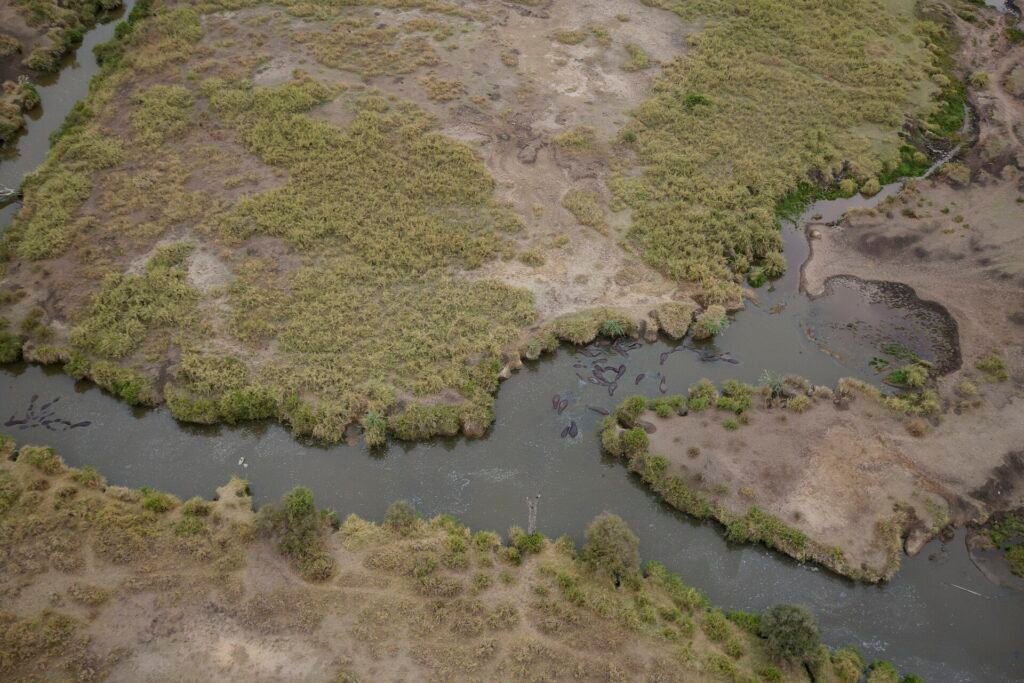
- Serengeti National Park 11 – landscape by Thomas Fuhrmann, CC BY-SA 4.0, via Wikimedia Commons
- Paisaje en la zona de conservación de Ngorongoro, Tanzania, 2024-05-27, DD 57 by Diego Delso, CC BY-SA 4.0, via Wikimedia Commons
The infographic is original to TravelSpatial. Photos are used under the licences linked above.


2 comments on “Serengeti & Ngorongoro on a Budget: What a 4-Day Camping Safari Really Costs”