Search “can you trek in Nepal solo” and you’ll get a dozen confident answers that contradict each other. Some say solo trekking is banned. Some say nothing changed. A few say a 2026 rule made it legal again. We went through the reporting line by line to sort out what’s actually established, what’s disputed, and what it means for one person with a backpack and a fixed budget.
The verdict, up front: since 2023, the Nepal Tourism Board (NTB) has required foreign trekkers to hire a licensed guide and carry a TIMS card on most routes inside national parks, conservation areas and restricted zones. The Everest (Khumbu) region is the well-known exception: the local municipality refused to apply the rule, and independent trekkers still walk to Everest Base Camp. The March 2026 change did not end the guide rule. It only lets solo trekkers apply for restricted-area permits without a second trekker, and they still need a guide.
Rules here change fast and enforcement is uneven, so treat this as a map of the evidence (checked November 2026), and confirm with a registered agency before you book flights.

Claim 1: “Nepal banned solo trekking in 2023”
Mostly true, with a catch in the wording. Nepal didn’t ban walking alone. It made a licensed guide mandatory. A solo trekker with a guide is legal. A solo trekker without one, on a covered route, is not.
What the reporting shows:
- The NTB issued the guidelines. Much Better Adventures quotes the board: “all trekkers are required to obtain services of licensed trekking guide and to obtain TIMS Card”.
- The start date is disputed. Most outlets give 1 April 2023. Nepal’s financial news site ShareSansar reported on 2 June 2023 that the decision “has come into effect since May 31, 2023”. Either way, it has applied for more than three years.
- The TIMS card costs NPR 2,000 for foreign nationals and NPR 1,000 for SAARC nationals, according to the same ShareSansar report.
- Much Better Adventures also reported a fine of NPR 12,000 for trekkers caught without a guide or TIMS card.
What we couldn’t confirm: the NTB’s own notice. The board’s site didn’t give us a readable copy, so every detail above comes from news and travel-industry reporting. That’s why the dates don’t match.
Claim 2: “The rule covers the whole country”
False. It covers routes in protected and restricted areas: national parks, conservation areas and the restricted zones. That’s where nearly every famous trek runs, which is why it feels national.
In Your Pocket’s Nepal guide describes the scope as “any trekking route in a national park, conservation area, or restricted zone”. Much Better Adventures counted 44 routes, “basically, any route in any region where a TIMS card is required”.
In practice, that puts these well-known treks under the guide rule:
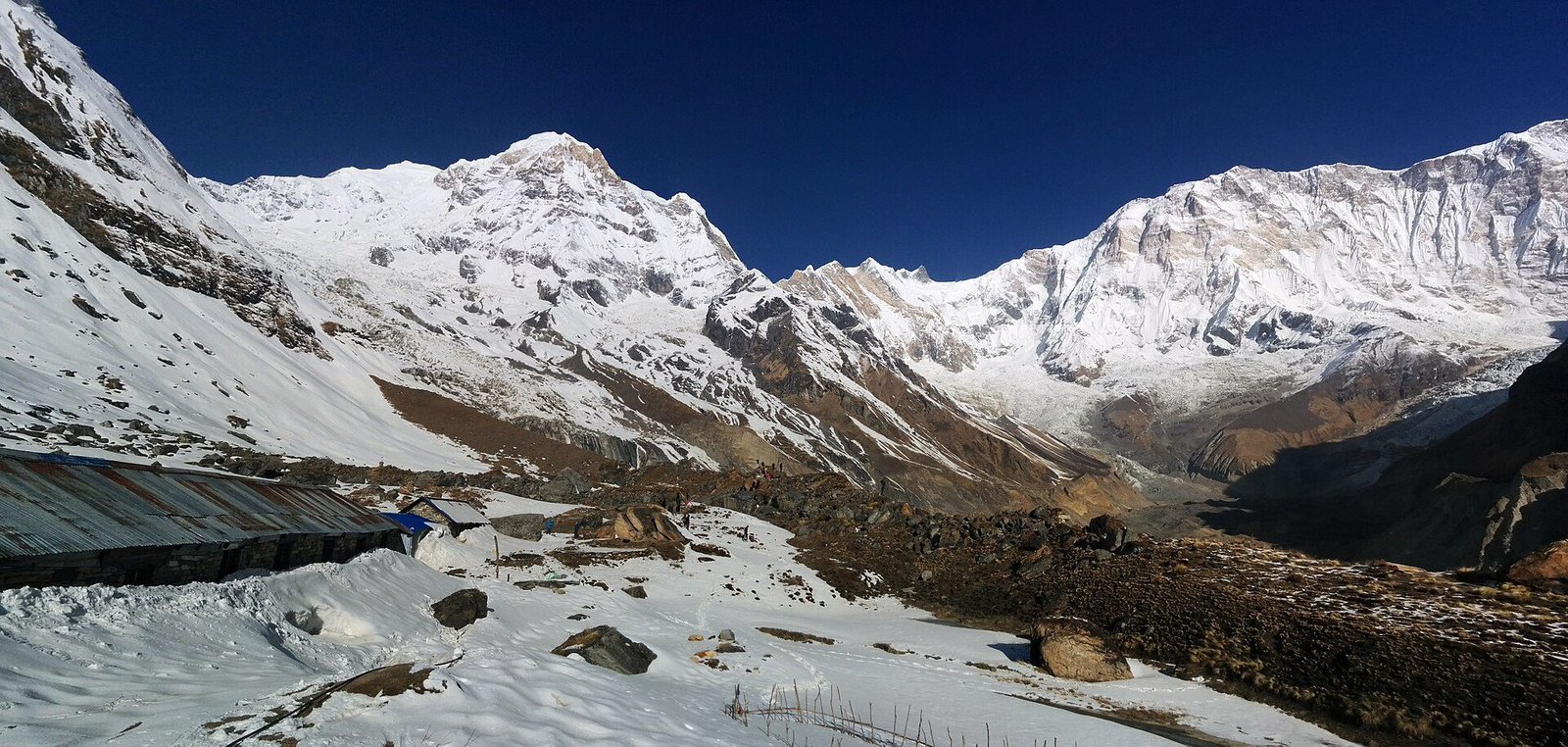
- Annapurna region, including Annapurna Base Camp and the Annapurna Circuit (Annapurna Conservation Area)
- Langtang (Langtang National Park)
- Restricted areas, where a guide was compulsory long before 2023: Manaslu, Upper Mustang, Dolpo, Nar Phu, Kanchenjunga, Tsum Valley and Humla
Our tip: if your plan is “Annapurna Base Camp, alone, no guide”, that’s the plan the rule targets. Our Annapurna vs Everest Base Camp comparison covers the two treks’ days, altitude and costs. Read it with this rule in mind.
Claim 3: “You can still do Everest Base Camp without a guide”
True as of the latest reporting, and the most fragile claim on this page.
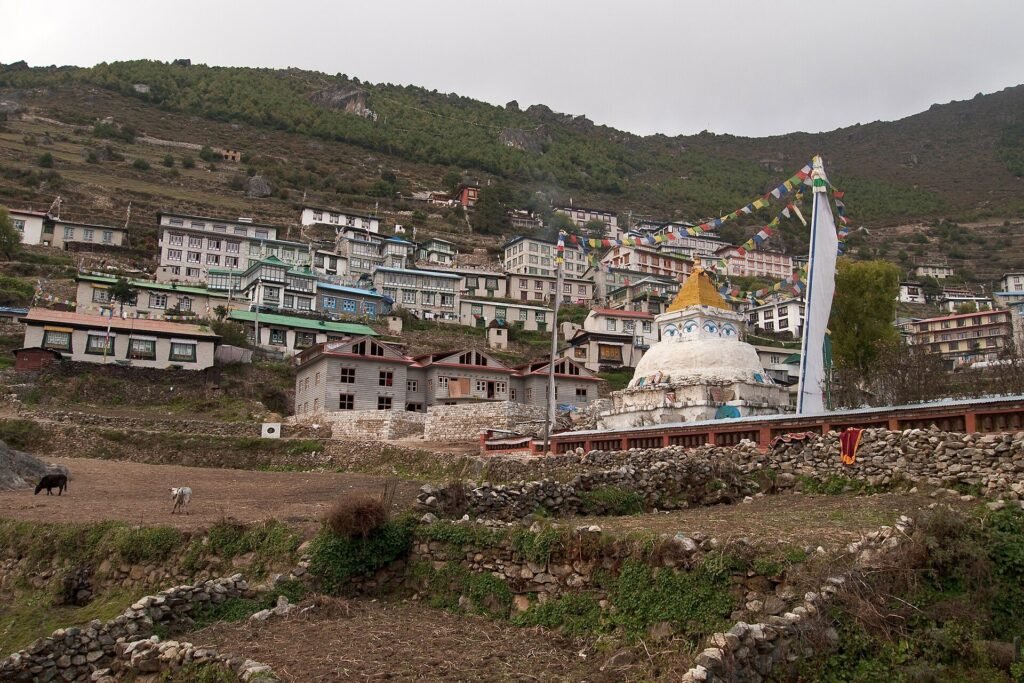
The Everest region is administered locally by the Khumbu Pasang Lhamu Rural Municipality. In Your Pocket says it “effectively opted out of the 2023 guide mandate”. Much Better Adventures reported in 2023 that “the local body refused to follow the guidelines”, and quoted an agency owner saying solo trekkers could walk the Everest region without a guide. It also warned that the arrangement is “subject to change”.
Independent trekkers in Khumbu still need two permits, bought locally rather than in Kathmandu:
| Permit | Where you get it | Reported fee (foreigners) |
|---|---|---|
| Khumbu Pasang Lhamu Rural Municipality permit | Lukla or Monjo | About NPR 3,000 |
| Sagarmatha National Park entry | Monjo checkpoint | About NPR 3,000 (some sources add 13% VAT) |
These fees come from agency guides such as Magical Nepal, not an official tariff. Carry cash in rupees and expect the exact amount to change.
Why it’s fragile: an exception that exists because one local authority said no can end with a single council decision. Before you go, ask your Kathmandu guesthouse or a registered agency whether trekkers without guides are still being let through at Monjo this season.
Claim 4: “The 2026 change legalised solo trekking”
False, and the headlines are misleading. In late March 2026, Nepal’s Department of Immigration revised the permit process for restricted areas. Himalayan Glacier, an agency that tracks the rules (page updated 20 September 2026), says the change “removes the previous rule requiring a minimum group of two trekkers”. The same page says “a licensed trekking guide is mandatory for all solo trekkers”.
So the change helps one kind of solo traveller: someone who wanted Manaslu or Upper Mustang but couldn’t find a second person to fill the permit. It doesn’t help anyone who wants to walk without a guide.
Two further details are reported only by Himalayan Glacier, and we couldn’t verify them against an official source: one guide may lead up to seven trekkers, and the restricted-area rules cover 15 zones in 13 districts. Permits still go through a registered agency.
What a guide costs when there’s no one to split it with
This is the real cost of the 2023 rule for a solo trekker. A couple can share one guide. You can’t.
| Who | Reported daily rate | Source |
|---|---|---|
| Licensed guide | US$25–50 | TAAN president quoted by Much Better Adventures (2023) |
| Licensed guide | US$25–30 | In Your Pocket (2026) |
| Porter | US$15–20 | In Your Pocket (2026) |
| Porter-guide (one person, carries some weight, limited guiding) | About US$20–30 | Agency price lists (estimate) |
Rates usually include the guide’s own food and bed but not tips. Confirm what’s included before you agree a price.
Worked example (estimate): a 12-day Annapurna Base Camp trek with a licensed guide at US$30 a day comes to about US$360 for the guide before tips. A couple sharing the same guide would pay half each. Add teahouse costs, permits, transport and your own food on top.
Four ways to cut the solo guide bill
- Join a group departure. Several Kathmandu and Pokhara agencies run fixed-date treks and put solo travellers together under one guide. You lose some flexibility, but the guide cost is shared.
- Team up at the agency. Ask agencies whether another solo trekker is booked on your dates. Pooling a guide with one or two strangers is common and legal.
- Hire a porter-guide instead of a guide plus porter. They carry part of your load and handle the paperwork, at a lower rate than two separate people.
- Choose Khumbu if you really want to go independent. It’s the one famous region where that’s still reported to work. It’s also the highest and the most expensive to fly into.
What to ask an agency before you pay
- Is the guide licensed, and can I see the licence card?
- Which permits are included (TIMS, ACAP, Sagarmatha, Khumbu municipality, restricted area)?
- What does the guide’s daily rate cover, and who pays for their food and bed?
- What happens if I need to turn back or descend early?
- Can you put me with other solo trekkers on the same dates?
Altitude is the other half of the plan. Most policies cap trekking cover somewhere between 3,000 m and 6,000 m, so check that yours covers the highest point of your route and helicopter evacuation. Our guide to planning a first adventure trip covers acclimatisation and the travel insurance basics.
The short version
Since 2023, solo trekkers in Nepal need a licensed guide on most routes through national parks, conservation areas and restricted zones. That includes Annapurna, Langtang and Manaslu. The Everest region is the reported exception, because the local municipality never applied the rule, but that could change. The March 2026 update only removed the two-trekker minimum for restricted-area permits. If you’re going alone, the cheapest legal plan is to share a guide with other solo trekkers, and the only famous route where you can still walk on your own is Everest, after you’ve checked this season’s rules on arrival in Kathmandu.
Want the next step? Read our Kilimanjaro guide for another trek where a guide is compulsory, and sign up for the TravelSpatial newsletter for rule updates as they happen.
Sources
- Much Better Adventures: Nepal trekking rule change (25 April 2023)
- ShareSansar: licensed-guide decision comes into effect (2 June 2023)
- In Your Pocket: Do you need a guide to trek in Nepal? (checked November 2026)
- Himalayan Glacier: restricted-area solo permits (updated 20 September 2026)
- Magical Nepal: Everest Base Camp permits (checked November 2026)
Photo credits
- Annapurna Base Camp PANO 20180327 074437 by Ermakae, CC0, via Wikimedia Commons
- Namche Bazaar, Nepal by Vyacheslav Argenberg, CC BY 4.0, via Wikimedia Commons
The infographic is original to TravelSpatial. Photos are used under the licences linked above.