“We’re sorry to tell you that we can’t accept your claim. At the time of the accident you didn’t hold a licence that would let you ride this vehicle in your home country.”
That letter is made up. So is Mai, the traveller who receives it in this article. But the reasoning in it is real, and the UK government spells it out in its Thailand travel advice. This story runs backwards, from the refusal to the moment it became inevitable, because that’s how most travellers find out. At each step back we show the official rule that decided it, and what would have changed the ending.
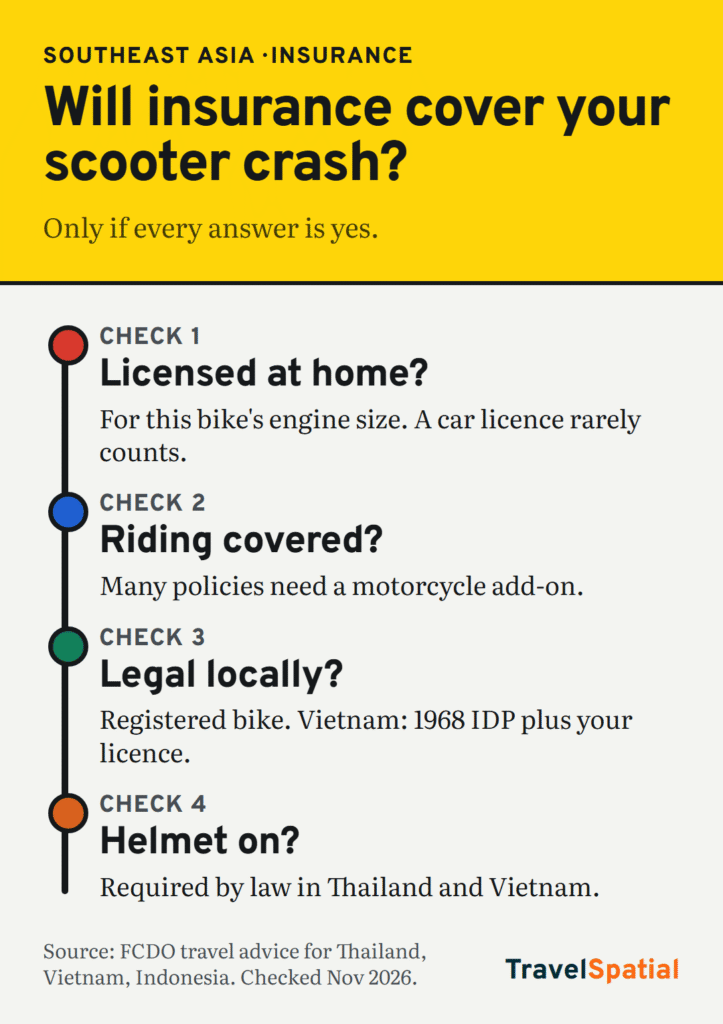
If you only want the answer: most travel insurance does not cover scooter accidents unless you hold the right licence for that bike at home, wear a helmet, ride legally under local law, and, with many insurers, have added motorcycle cover to your policy. The rest of this page shows why each condition matters.
Five weeks later: the refusal
Mai is home in Manchester. The bills from a private hospital on Koh Phangan, a fractured wrist and two nights on a drip, went to the insurer. The answer is no.
Here’s what the UK Foreign Office says on its Thailand safety page (updated October 2026, checked November 2026):
“Many travel insurance policies expect you to hold the correct UK licence for the type of car, motorbike or scooter you intend to drive abroad.”
And, a few lines later:
“If you drive a car or ride a motorcycle in Thailand without a valid licence, it could invalidate your travel insurance and you’ll be unable to claim if you have an accident or injury.”
Mai holds a full UK car licence. In the UK, a car licence alone doesn’t let you ride a 125cc scooter on the road: you need at least compulsory basic training (CBT), and the full light-motorcycle category (A1) also needs a theory and practical test (gov.uk, checked November 2026). So the insurer’s question, “would you have been allowed to ride this at home?”, has an answer of no.
What would have changed it: checking the licence clause of the policy before the trip, and either getting the right licence or not riding.
Three days earlier: the hospital
The ambulance took Mai to the nearest private hospital, which asked for a card before treatment. That’s normal in much of the region, and it’s one reason insurance matters. Mai called the insurer’s 24-hour assistance line from the ward. That was the right move. But the call handler can only confirm cover if the policy covers what happened.
Two more things counted against the claim at this stage:
- The helmet. Mai wasn’t wearing one. Thailand’s advice is plain: “By law, you must wear a helmet when riding a motorcycle.” Many policies exclude injuries when you break local law, so riding without one can be a second reason for refusal.
- The paperwork from the scene. In Indonesia, the FCDO says that if you’re involved in an accident, “you must wait for the police at the scene” (Indonesia safety). A police report is usually part of any accident claim, wherever you are.
That morning: the rental shop
The rental shop on the island didn’t ask to see a licence. It asked for a passport as a deposit, and Mai handed it over.
Each of those is its own problem.
The shop not checking doesn’t mean you’re legal. The FCDO notes that motorcycles and scooters for hire in Thai tourist areas “are often unregistered and cannot be used legally on a public road” and tells you to check the lease’s small print, “paying particular attention to any limits on engine size and necessary licences.”
Never leave your passport. Both the Thailand and Vietnam advice warn against using your passport as a deposit or guarantee. Thailand’s advice adds that companies may keep passports against claimed damage. After an accident, that leaves you negotiating a repair bill with no way to leave the country.
Engine size. Many policies only cover bikes under a set engine size, and some only if you’re licensed for that size at home. The number differs between insurers, so look for it in your own policy wording.
Before the trip: the policy and the licence
This is where the story could have ended differently. Before you go, there are four things to check.
- Is motorcycle riding covered at all? Some policies exclude it unless you buy an add-on. Our travel insurance guide explains where activities and add-ons sit in a typical policy.
- What licence does the policy require? Usually the one you’d need to ride that bike legally at home. A car licence rarely counts.
- What does the destination require? That’s a separate rule from your insurer’s (see the table below).
- Is there an engine-size limit? Write the number down and check it against the bike before you sign anything.
What each country’s advice says
| Country | What UK advice says about riding | Source |
|---|---|---|
| Thailand | Correct UK licence for the vehicle type, or insurance may not cover you; helmet required by law; rented bikes often unregistered; don’t leave your passport | FCDO Thailand |
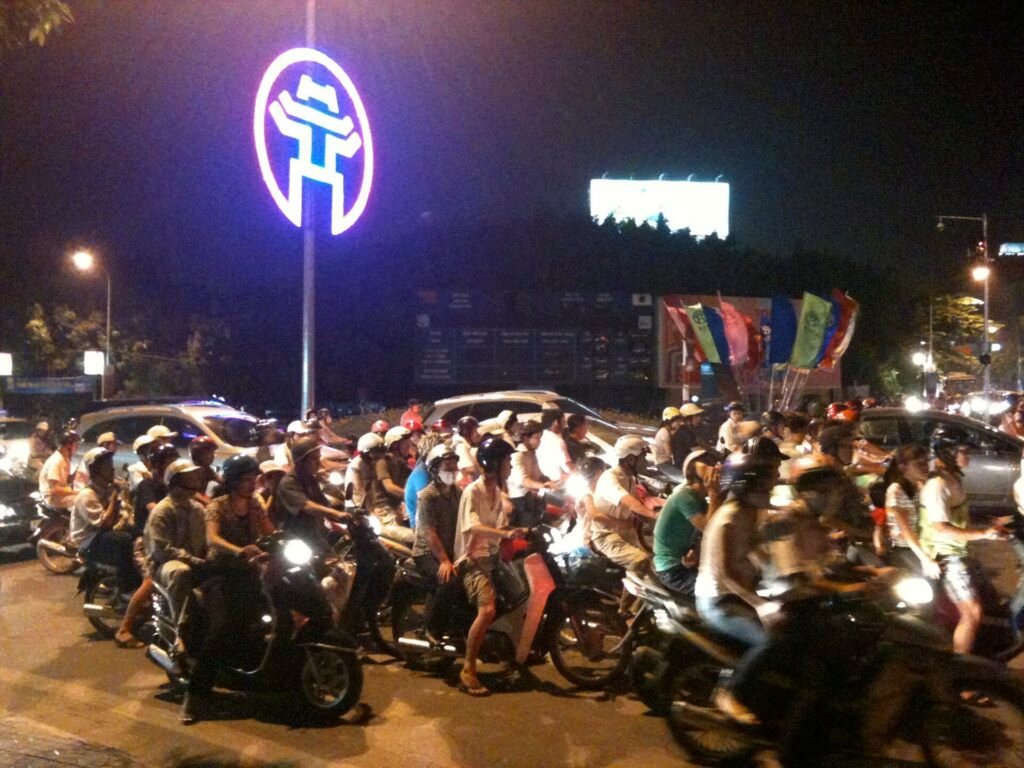
| Vietnam | Carry a 1968 International Driving Permit and your UK licence for a car or motorbike; third-party insurance is a legal requirement; helmets for drivers and passengers; motorbike accidents common, don’t hire if you’re not experienced | FCDO Vietnam |
| Indonesia (Bali) | Large increase in moped and motorbike accidents, some fatal; wear a helmet in good condition; wait for police after an accident; risk of extortion after minor accidents | FCDO Indonesia |
Vietnam’s advice is the bluntest. It also warns that after an accident “you could face criminal charges and may need to pay compensation”. That’s a liability question, and many travel policies limit or exclude personal liability for motor vehicles.
The other ending: getting around without the scooter
Mai’s trip didn’t need a scooter. Most of the places backpackers ride have other options:
- Ride-hailing and taxis. Apps work in Bangkok, Hanoi, Ho Chi Minh City and Bali’s south. Vietnam’s advice notes metered taxis from larger firms are generally reliable.
- A driver for the day. The Indonesia advice suggests considering a private driver or a car with a driver. On Bali, that’s how many visitors do the temples and rice terraces without riding.
- Island trucks and boats. In Thailand’s islands, songthaews (shared pick-up taxis) and longtail boats cover most beaches.
If you’re planning a route, our three-week Thailand backpacking route, two weeks in Vietnam solo and Bali to the Gili Islands by fast boat all work without one.
If you do ride: the pre-ride check
You’ve checked the policy, you hold the right licence and you’ve added motorcycle cover. Before you ride away:
- [ ] Your licence category matches the bike’s engine size, at home and in the policy
- [ ] An IDP if the country requires one (Vietnam does)
- [ ] A helmet that fits and fastens, for you and any passenger
- [ ] Photos of the bike’s existing damage, with the shop owner present
- [ ] A copy of the rental agreement, not your passport, left as a deposit
- [ ] Your insurer’s 24-hour number saved offline
If anything on that list is a no, take a taxi.
Heading to Southeast Asia? The TravelSpatial newsletter collects our route guides and safety checks.
Sources
- FCDO, Thailand safety and security (updated October 2026: correct UK licence, helmet law, unregistered rental bikes, engine-size limits, licence and insurance, passport as guarantee; checked November 2026)
- FCDO, Vietnam safety and security (updated September 2026: 1968 IDP and UK licence, third-party insurance, helmets, passport as deposit, criminal charges and compensation, metered taxis; checked November 2026)
- gov.uk, Riding a motorcycle or moped: bike categories and licence requirements (A1 up to 125cc needs CBT, theory and practical test; checked November 2026)
- FCDO, Indonesia safety and security (updated September 2026: rise in moped and motorbike accidents in Bali, helmets, wait for police, extortion, private driver; checked November 2026)
Photo credits
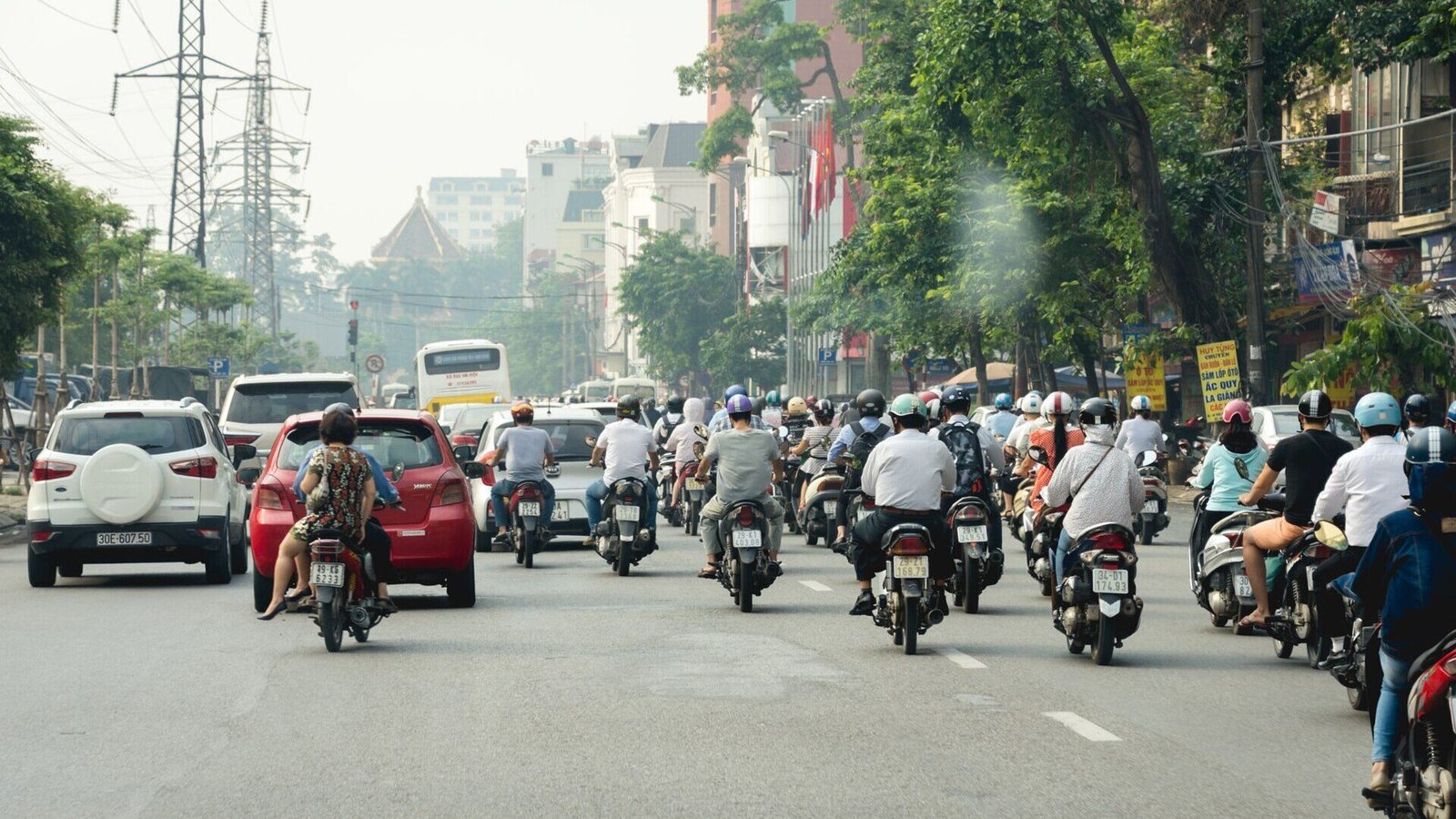
- Hanoi Traffic by Benjamin Arnold, CC BY 3.0, via Wikimedia Commons
- Kim Ma motorbike traffic HN by Dragfyre, CC BY-SA 3.0, via Wikimedia Commons
The infographic is original to TravelSpatial. Photos are used under the licences linked above.