Nobody budgets a day of their trip for lying in a hostel bunk with a fever, wondering whether this is a pharmacy problem or a hospital problem. With friends, someone else goes to the chemist, reads the leaflet and decides whether you look bad enough for a doctor. On your own, you’re patient, carer and decision-maker at the same time, often in a language you don’t speak.
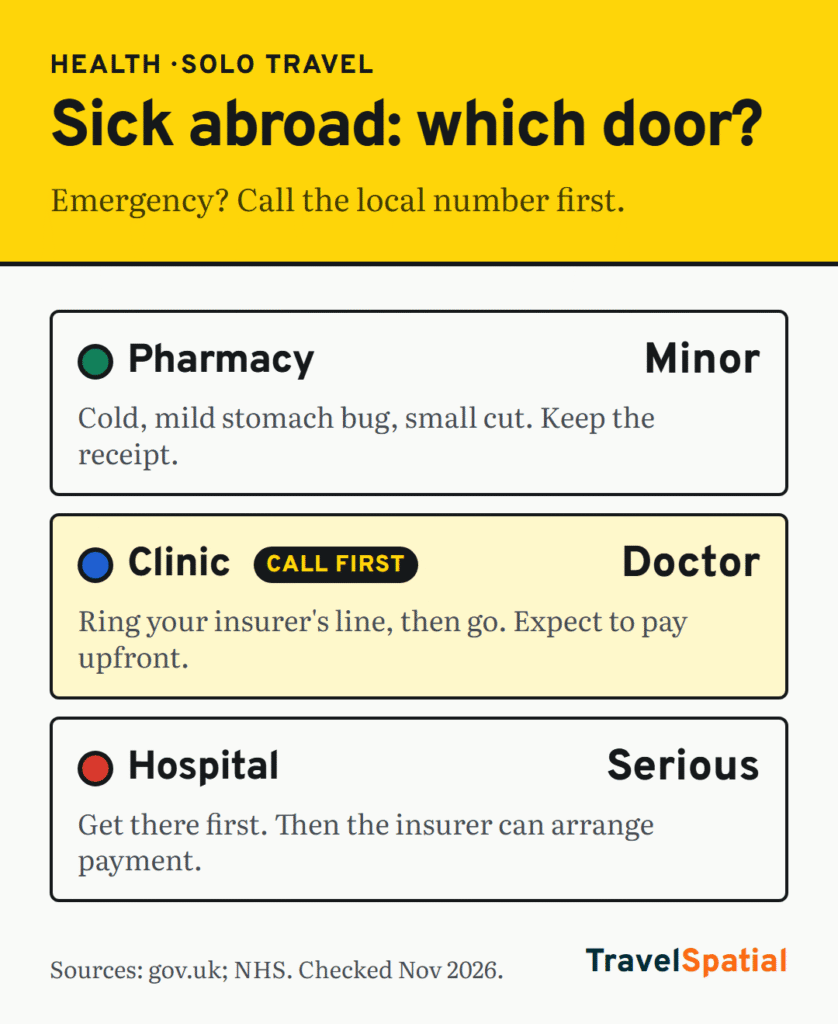
So let’s make the decision simpler. When you’re sick abroad, there are really only three doors: the pharmacy, the clinic and the hospital. Pick the right one, call your insurer at the right moment, and keep the right bits of paper, and most of the stress goes. If you’re reading this while unwell, skip to whichever door fits. If you’re reading it before a trip, the last section is for you.
If it’s an emergency, stop reading and call the local emergency number. It isn’t always 112. These come from the UK government’s travel advice for each country (checked November 2026):
| Country | Ambulance |
|---|---|
| Spain, Portugal, Turkey, Georgia | 112 |
| Thailand | 191, or 1669 |
| Vietnam | 115 |
| Indonesia | 118 |
| Mexico, Ecuador | 911 |
| Kenya | 999 |
For anywhere else, the “Health” section of your government’s travel advice for that country lists the number. Save it in your phone when you land.
Door one: the pharmacy
Good for: a cold, a mild stomach bug, a sore throat, a small cut, hay fever, running out of a regular medicine.
Pharmacists in many countries do more than they do at home. They’ll often look at a rash, suggest what to take for traveller’s diarrhoea and tell you when to see a doctor instead. Some useful details from official advice:
- In Mexico, the UK government says pharmacies in large cities provide 24-hour service, including home delivery of medication. When you’re too ill to walk to the shop, that’s a big help.
- In Thailand, it says pharmacies will usually accept UK prescriptions.
- In Portugal, if you feel unwell but it isn’t an emergency, the national health line is +351 808 24 24 24, and you can press 9 for English (FCDO Portugal).
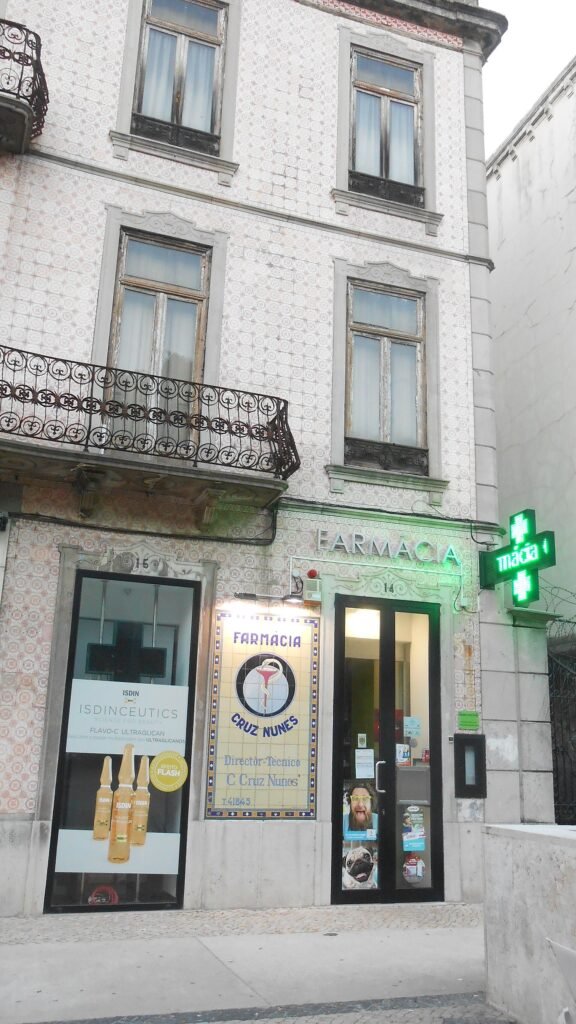
A tip for doing this alone: before you go out, type your symptoms into a translation app and screenshot the result. Show the screen instead of trying to mime it. Ask the pharmacist to write the dose on the box.
When to stop treating it yourself: a high fever that won’t come down, blood where there shouldn’t be any, signs of dehydration (very little urine, dizziness when you stand), chest pain or difficulty breathing. Any of those means door two or door three.
Door two: the clinic or doctor
Good for: anything a pharmacist says needs a doctor, an infection that might need antibiotics, a sprain, a bite, a fever that’s lasted more than a day or two.
This is the door where solo travellers most often pay twice, so slow down here.
Call your insurer’s assistance line first, if you can. The UK Foreign Office says to take your insurance policy number and your insurer’s emergency assistance number with you, and to check the insurer offers 24-hour helplines with advice about appropriate treatment (gov.uk, Foreign travel insurance, checked November 2026). Many assistance teams know which clinics nearby are good and which bill insurers directly. They can only help if you ring them before you choose.
Expect to pay at the desk. The UK government’s hospital guidance is blunt: “You will often have to pay upfront for medical care abroad, even if you are fully insured” (gov.uk, Medical emergencies abroad, checked November 2026). For a clinic visit, that usually means paying with your card and claiming it back. Have a card with enough room on it.
Ask for paperwork before you leave the room:
- An itemised receipt, not just a card slip
- The doctor’s note with the diagnosis
- Prescriptions, and receipts for the medicine
Our travel insurance claim guide explains what insurers ask for and how quickly.
Door three: the hospital
Good for: emergencies, anything the clinic sends you to, injuries from a fall or a road accident, and anything that frightens you.
Get there first. Paperwork second. When you can, or when a nurse can do it for you, ring the insurer’s assistance line. The gov.uk guidance says to contact your insurer “as soon as possible”, and that it should have a 24/7 emergency number. If you’re admitted, this call matters more than any other: the insurer may arrange direct payment with the hospital, move you to a different one or, in serious cases, organise getting you home.
What your embassy can and can’t do. People are often surprised by this part. According to the UK government, British consular staff can contact your family, help doctors speak to your UK doctors or your insurer, and give you a list of English-speaking interpreters. They can’t pay your medical bills or for medication, give you medical advice, get you better treatment than locals receive, get you discharged, or arrange or pay for medical repatriation (gov.uk, Medical emergencies abroad). Other countries’ consulates work in a similar way. That’s why insurance is the safety net, not the embassy.
Tell one person at home. It isn’t only for comfort. Someone who knows your policy number and passport details can call the insurer, the embassy or your bank for you if you can’t. Our first solo trip checklist covers what to leave with them before you go.
“I have a GHIC, so I’m covered in Europe, right?”
Partly. The UK Global Health Insurance Card gets you necessary state healthcare in the EU on the same basis as a resident of that country. That might be free, or it might cost what a local would pay. The NHS is clear about what it doesn’t cover: private treatment, being flown back to the UK, and mountain or ski rescue. It also says plainly that the card “is not a replacement for travel insurance” (NHS, checked November 2026).
In practice, carry both. Use the GHIC at state hospitals and clinics, and let your travel insurance cover the rest.
The money side, door by door
| Pharmacy | Clinic | Hospital | |
|---|---|---|---|
| Who to call first | Nobody | Insurer’s assistance line, if you can | Emergency number, then insurer |
| Expect to pay upfront? | Yes, small amounts | Usually | Possibly, unless the insurer arranges payment |
| Keep for a claim | Receipt | Itemised receipt, doctor’s note, prescriptions | Everything, including admission and discharge papers |
| Claimable? | Often below your excess | Usually, above your excess | Yes, if covered by your policy |
Your excess is the amount you pay before the insurer pays anything. For a cheap pharmacy trip, it’s often not worth claiming. For a clinic visit and medicines, add up the receipts before you decide.
Pack these habits with your passport
- Save the assistance number in two places: in your phone and on paper in your wallet. The FCDO also suggests leaving policy details with someone at home.
- Check the medical limits and whether your activities are covered. Our plain-English insurance guide explains what to look for.
- Carry a backup card with a decent limit, kept apart from your main one, for paying upfront. If your only card goes missing too, our lost card plan helps.
- Pack a small kit: painkillers, oral rehydration salts, plasters, any regular medicine in its original packaging.
- Know your nearest door: when you check in, ask where the closest pharmacy and hospital are. It takes thirty seconds while you’re well.
Being ill alone is miserable. But with the right door, one phone call and a folder of receipts, a bad few days stays a bad few days, not a bad bill.
Subscribe to the TravelSpatial newsletter for more plain-English help with travelling alone.
Sources
- gov.uk, Medical emergencies, treatment and hospitalisation abroad (pay upfront even if insured; contact insurer as soon as possible, 24/7 number; keep receipts and doctors’ notes; what consular staff can and can’t do; checked November 2026)
- gov.uk, Foreign travel insurance (take policy number and assistance number; 24-hour helplines; GHIC and EHIC not alternatives to insurance; checked November 2026)
- NHS, Apply for a free UK Global Health Insurance Card (state healthcare on the same basis as residents; not private treatment, repatriation or mountain rescue; not a replacement for travel insurance; checked November 2026)
- FCDO health pages for Spain, Portugal, Turkey, Georgia, Thailand, Vietnam, Indonesia, Mexico, Ecuador and Kenya (ambulance numbers; Mexico 24-hour pharmacies; Thailand prescriptions; Portugal health line; checked November 2026)
Photo credits
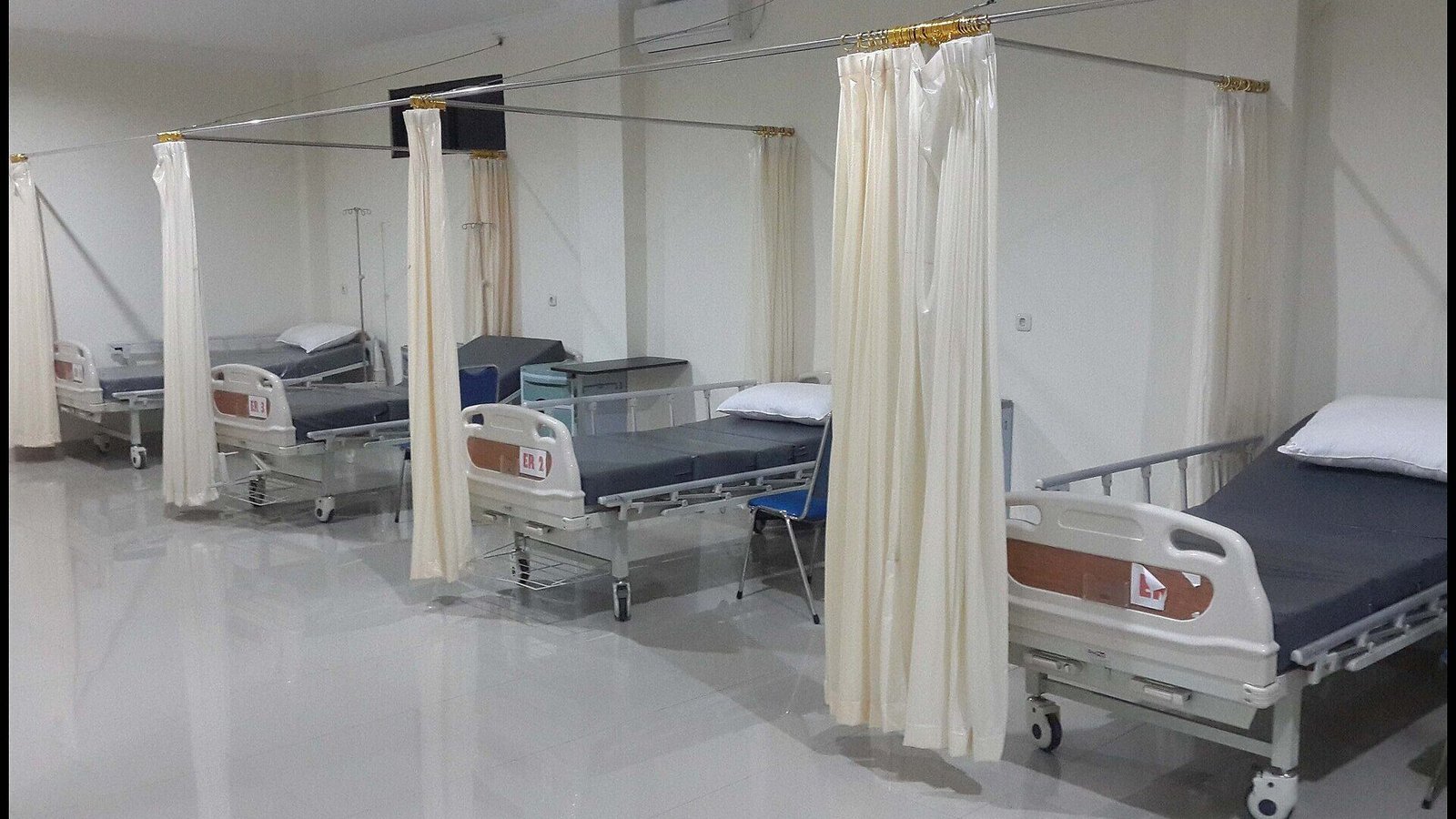
- Emergency Room – RSU MMC by RSU. Manado Medical Center, CC BY-SA 4.0, via Wikimedia Commons
- Farmácia Cruz Nunes, Lisboa by Joehawkins, CC BY-SA 4.0, via Wikimedia Commons
The infographic is original to TravelSpatial. Photos are used under the licences linked above.