


Picture it. It’s 11.40 at night in a city you arrived in yesterday. You reach for your wallet to pay for a late snack, and it isn’t there. Your debit card, your credit card and most of your cash were in it. You’re travelling alone, so there’s no partner with a second card and no friend to cover dinner.
This guide is for that moment. It’s a plan you can follow, step by step, and a setup that makes the moment much less frightening if it ever comes.
What to do, in one breath: freeze or block the cards straight away in your banking app or by phone, then use your backup card if you have one. If you don’t, ask your card network or bank for emergency cash and an emergency replacement card. Visa says emergency cash usually arrives within hours of your bank’s approval, and a replacement card within one to three business days (Visa, checked November 2026). Meanwhile, someone at home can send you money for cash pickup.

The first 15 minutes: stop the loss
1. Freeze, then think. Open each banking app and freeze the card. A freeze is reversible, so if the wallet turns up under the bed you can unfreeze it. Blocking or cancelling is permanent and means waiting for a new card.
2. No app? Call. Use the number on your bank’s website, or the one you wrote down before you left (see the setup section below). If your bank has no freephone number from abroad, Visa offers a reverse-charge line on +1 303 967 1096 that works when the country numbers don’t. Visa warns that calls from hotel or mobile phones may still cost you.
3. Check your recent transactions. Look for anything you didn’t make. Report it now, while you’re on the phone.
4. Retrace your steps, once. Call the last restaurant, bar or taxi company. Wallets are handed in more often than you’d think. Don’t spend an hour on it.
The first hour: get money for tonight
This is the part that’s harder alone. Work down this list until one works.
| Option | How fast | What you need |
|---|---|---|
| A backup card kept somewhere else | Immediately | That you packed one (see below) |
| Emergency cash through your card network | Usually within hours of your bank’s approval (Visa) | A call to your bank or network |
| Money sent by someone at home for cash pickup | Often same day | Your passport and the transfer’s tracking number |
| A digital card in your phone’s wallet | Immediately, if already set up | A phone that wasn’t stolen too |
Cash pickup is the classic fallback. Western Union asks the receiver to bring a government-issued photo ID and the transfer’s tracking number, the MTCN (Western Union). That means your passport, so if it was in the wallet too, start with the embassy (below).
Tonight’s bed. If your room is already paid for, you’re fine. If it isn’t, tell the hostel or hotel desk what’s happened. Many will hold the room until the morning when you can pay.
The next morning: replace and report
Ask for an emergency replacement card. Visa can arrange one following your bank’s approval, typically within one to three business days. Have an address ready where you’ll be for that long: your hostel, or a hotel further along your route.
Report it to the police if anything was stolen. Insurers usually ask for a police report for theft claims, so get a reference number even if it feels pointless. Our step-by-step travel insurance claim guide explains what to keep.
If your passport went too, contact your embassy or consulate first. They deal with emergency travel documents, and a passport is what you’ll need for cash pickup and most replacement-card deliveries.
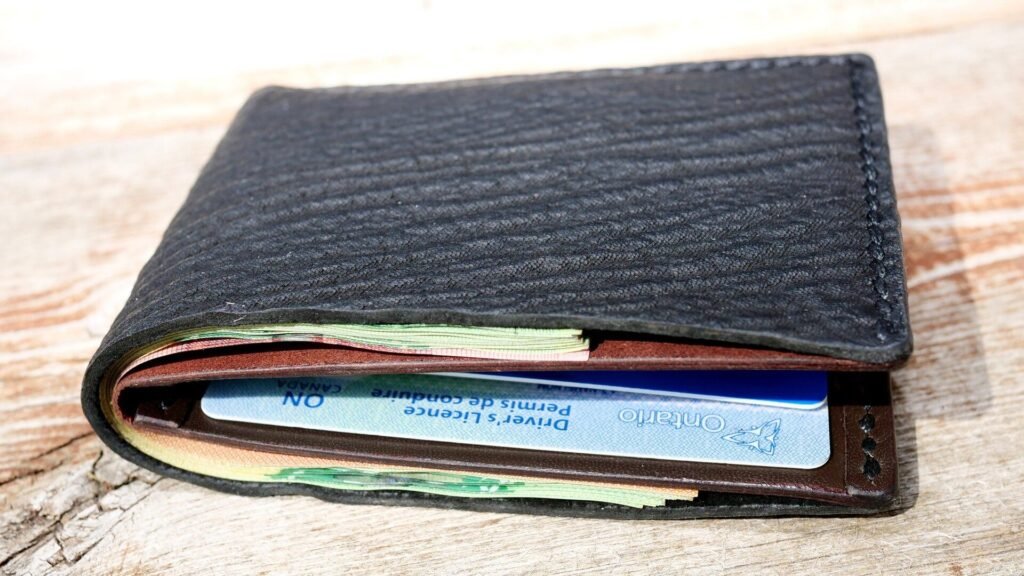
Why solo travellers need a different setup
When you travel with someone, their card is your backup. Alone, you have to pack your own. The setup below takes 20 minutes before you leave and turns a crisis into an inconvenience.
Carry two cards, from two different banks, on two different networks. If one is a Visa, make the other a Mastercard. A problem at one bank, or a terminal that refuses one network, then won’t leave you stuck.
Split them up. Keep one card and a day’s cash in your pocket. Keep the backup card and an emergency note in a different place: a zipped inner pocket of your daypack, or a locker. Never carry everything in one wallet.
Add a digital card. Put a card in your phone’s wallet app. If your wallet goes but your phone doesn’t, you can still pay contactless.
Write down the numbers. On paper, not just in your phone: each bank’s lost-card number from abroad, and the Visa or Mastercard emergency number. If your phone is stolen with your wallet, paper is what you’ll have.
Carry a small emergency stash. Enough cash for a night’s bed and a meal, in a currency that’s easy to change. US dollars or euros work in most places.
Tell someone at home your plan. One trusted person who knows they might be asked to send money, and how.
If you’re choosing a backup card, an app-based account can be a good choice because you can freeze and unfreeze it in seconds. Our guide to avoiding travel money fees explains which cards cost least abroad.
What not to do
- Don’t take a cash advance on a credit card unless you have to. Card issuers usually charge cash-advance fees and interest from day one. It’s a last resort, not a plan.
- Don’t accept help that involves handing over card details to a stranger, even a kind one. People who show up offering to “help with the bank” are a known scam.
- Don’t cancel every card at once if you’re not sure they’re gone. Freeze first. You can always cancel later.
When it happens on your arrival night
The worst version is losing a card on the night you land, before you’ve found your feet. Two habits help: withdraw some local cash at the airport ATM before leaving it, and pay for your first night’s room in advance. Our airport-to-bed checklist for landing alone at night covers the rest.
The plan on one page
- Freeze every card in the app, or call. Check for fraud.
- Use your backup card. No backup? Ask your bank or network for emergency cash, or ask someone at home to send money for pickup.
- Next morning: request an emergency replacement card to an address you’ll be at, and get a police report.
- Passport gone too? Embassy first.
- Before your next trip: two cards, two banks, two networks, kept apart, plus the phone numbers on paper.
Get our solo travel money checklists in your inbox. Sign up for the TravelSpatial newsletter.
Sources
- Visa, Lost or stolen card (emergency replacement and cash, reverse-charge number; checked November 2026)
- Western Union, Receive money (ID and tracking number for cash pickup; checked November 2026)
Photo credits
- ATM – Cash Dispenser in Platanos – panoramio by We_have_been_there_i…, CC BY 3.0, via Wikimedia Commons
- Leather bi-fold wallet by Eugene Pik (2021) 04 by Eugenepik, CC BY-SA 4.0, via Wikimedia Commons
The infographic is original to TravelSpatial. Photos are used under the licences linked above.

3 comments on “Lost or Stolen Card Abroad, Alone: The Emergency Money Plan”