


Your flight lands at 23:40. The trains stop at midnight. Your phone is on 12%, you don’t have local cash, and the arrivals hall is full of people offering you a taxi.
Nothing here is dangerous on its own. Together, they’re the most stressful hour of most solo trips. The good news: almost all of it is fixed before you board. This checklist runs as a countdown, from a week before you fly to the moment you lock your door.
T-minus 7 days: decide how you’ll get from the airport
This is the single most important decision. Everything else is backup.
- Find the official options on the airport’s own website: train, airport bus, official taxi rank, pre-paid taxi desk. Note the last departure time of any train or bus, and whether it runs on your arrival day.
- If you’ll land after the last train, or within an hour of it, plan on a taxi or a pre-booked transfer. Delays happen.
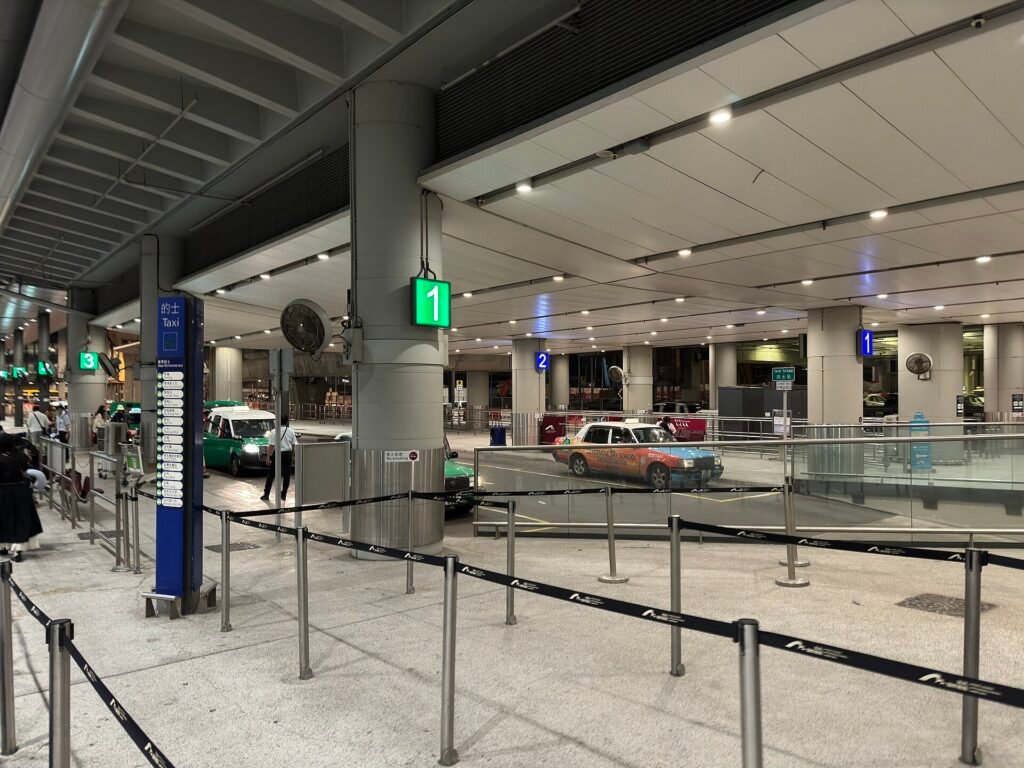
- Know what an official taxi looks like. In many countries, the safe choice is a pre-paid desk or official rank inside the terminal. The UK government’s Mexico travel advice, for example, says to use only authorised pre-paid airport taxis, because unlicensed drivers have robbed passengers. Look up the equivalent advice for your destination.
- Consider a pre-booked transfer for a very late arrival, with a driver waiting inside arrivals with your name. It costs more, but you won’t have to make any decisions while you’re tired.
Our tip: if your accommodation offers an airport pickup, it’s often the simplest option of all. The driver knows exactly where you’re going.

T-minus 3 days: make the night as short as possible
- Book somewhere close to the airport or the transport link for the first night if you land very late. A short ride beats a long one, and you can move into the city in daylight.
- Check the check-in time and reception hours. Many hostels and small guesthouses don’t staff the desk overnight. Message them with your flight number and ask exactly how a late arrival gets the key. Save the answer as a screenshot.
- Choose 24-hour reception if there’s any doubt. For a late first night, that alone can make a hotel the better choice than a small hostel.
T-minus 1 day: set up your phone
- Install an eSIM or plan where to buy a SIM in arrivals, and test that the eSIM is ready to switch on.
- Download the offline map for the city and star your accommodation.
- Screenshot the booking confirmation, the address in the local script, the check-in instructions and the transfer confirmation. Screenshots work with no signal and no battery-hungry apps.
- Pack a power bank in your hand luggage, charged.
- Share your itinerary (flight number, arrival time, address) with someone at home, and agree that you’ll message when you’re in.
T-minus 1 hour: on the plane
- Charge your phone if the seat has a port.
- Swap your eSIM on before landing, ready to connect.
- Move your cash card and phone to a front pocket or a small bag you’ll keep on you.
- Re-read the plan, so you know which exit, which desk and which colour of taxi.
Landing: the first 20 minutes
- Get cash inside the terminal, at an ATM in a busy, well-lit area. Withdraw a modest amount, enough for the ride and the next day. Our travel money fees guide explains how to choose the right card and decline the ATM’s own conversion.
- Walk past anyone offering a ride in the arrivals hall. Go straight to the official desk, rank or your waiting driver.
- Send the taxi details home: a photo of the licence plate or a screenshot of the app ride.
- Stay in lit, staffed areas if you’re waiting.
If the plan falls apart
- Missed the last train? Go to the official taxi desk, not the people calling out offers.
- Phone dead? Use your printed or written backup: the accommodation address, its phone number and a contact at home. Keep a paper card in your wallet.
- Accommodation not answering? Book an airport hotel for the night and sort it out in daylight.
- Arriving in the middle of the night with an early connection? Some airports are fine for waiting overnight. The long-running Sleeping in Airports site has airport-by-airport guides to what’s open and where it’s comfortable.
At the door
- Message home that you’ve arrived.
- Check the room’s lock and where the fire exits are.
- Plan tomorrow’s first step (breakfast, a SIM if you didn’t get one, a walk) so you wake up with something to do.
Two last rules
The UK government’s advice for women travelling abroad, updated September 2026, contains one rule worth applying on every arrival night, whoever you are: don’t leave a drink unattended and don’t accept drinks from strangers. The second rule is your own: if something feels wrong, such as the driver, the route or the “shortcut”, stop and choose another option. You don’t need a reason.
And make sure your travel insurance is active from the day you fly. Our plain-English insurance guide shows what it should cover.
The checklist, in one place
| When | Do this |
|---|---|
| 7 days before | Choose the airport transfer; note the last train time |
| 3 days before | Confirm late check-in by message; consider an airport-area first night |
| 1 day before | eSIM, offline map, screenshots, power bank, share itinerary |
| On the plane | Charge phone, eSIM on, cash card in a front pocket |
| Landing | ATM inside, official taxi only, send details home |
| At the door | Message home, check the lock, plan tomorrow’s first step |
More guides for travelling alone are in our Solo Travel section, and the weekly newsletter sends them as they go up.
Sources
- Foreign travel advice: Mexico, safety and security, UK FCDO (updated 20 October 2026), as an example of airport taxi advice
- Advice for women travelling abroad, UK government (updated 8 September 2026)
- Sleeping in Airports, airport guides (checked November 2026)
Photo credits
- Fukuoka Airport International Terminal by night; April 2016 by tsuna72 from Fukuoka, Japan, CC BY 2.0, via Wikimedia Commons
- Hong Kong International Airport Taxi Stand 19-05-2024(1) by LN9267, CC BY-SA 4.0, via Wikimedia Commons
The infographic is original to TravelSpatial. Photos are used under the licences linked above.

5 comments on “Landing Alone at Night: An Airport-to-Bed Checklist for Solo Travellers”