Is Morocco a good idea for a woman travelling alone? For most women, yes, with clear expectations. Serious crime against visitors is uncommon, but unwanted attention is not. The UK government’s Morocco travel advice says plainly that women may receive unwanted attention, especially when travelling alone. Most of it is verbal: comments, persistent sellers and self-appointed guides. It’s tiring rather than dangerous, and it varies a lot from city to city.
That variation is the useful part. If you choose your first stops well, a solo trip to Morocco feels very different. This guide rates the main cities on how much hassle to expect, how hard they are to find your way around, and when a guide or group is worth it.
How we rated each city
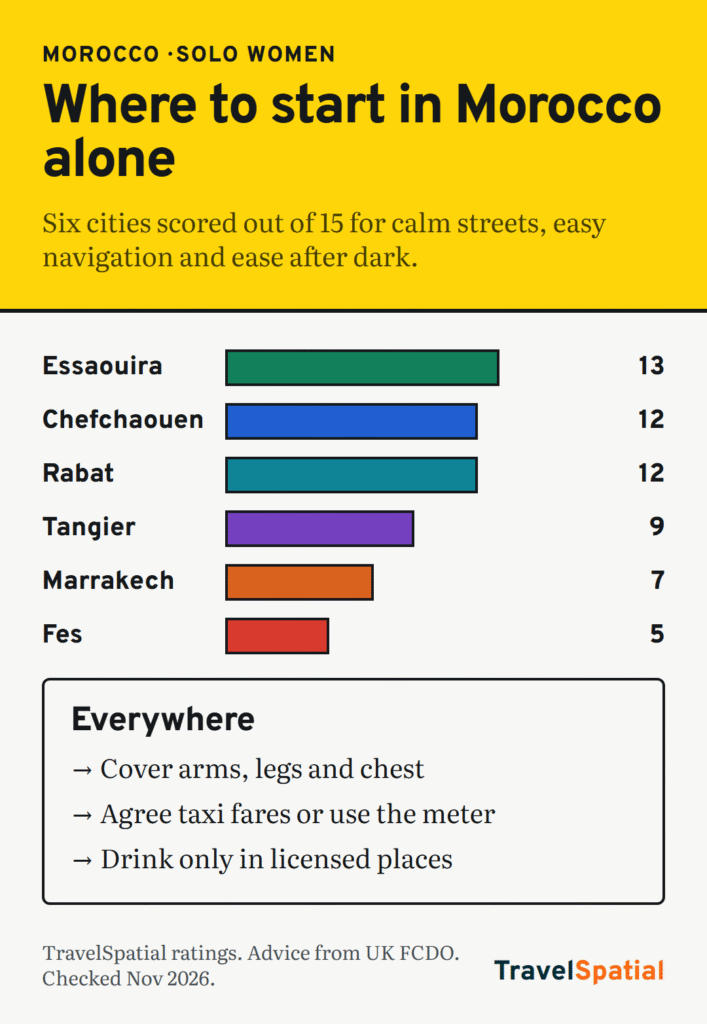
Each city gets a TravelSpatial rating out of 5 on three questions:
- Calm: how little street hassle to expect from touts, guides and comments. 5 is very relaxed.
- Easy to navigate: how easily you can find your way without a guide. Medinas have no street grid and few signs.
- Night-time ease: how comfortable it is to be out after dark, in the main areas, on foot.
These are our ratings, based on published advice and how each city is laid out. They aren’t crime statistics. A low score means “plan more”, not “don’t go”.
| City | Calm | Easy to navigate | Night-time ease | Good first stop? |
|---|---|---|---|---|
| Essaouira | 5 | 4 | 4 | Yes, the easiest |
| Chefchaouen | 4 | 4 | 4 | Yes |
| Rabat | 4 | 4 | 4 | Yes |
| Tangier | 3 | 3 | 3 | With care |
| Marrakech | 2 | 2 | 3 | Common, but the hardest start |
| Fes | 2 | 1 | 2 | Best with a guide on day one |
Essaouira: the gentle start
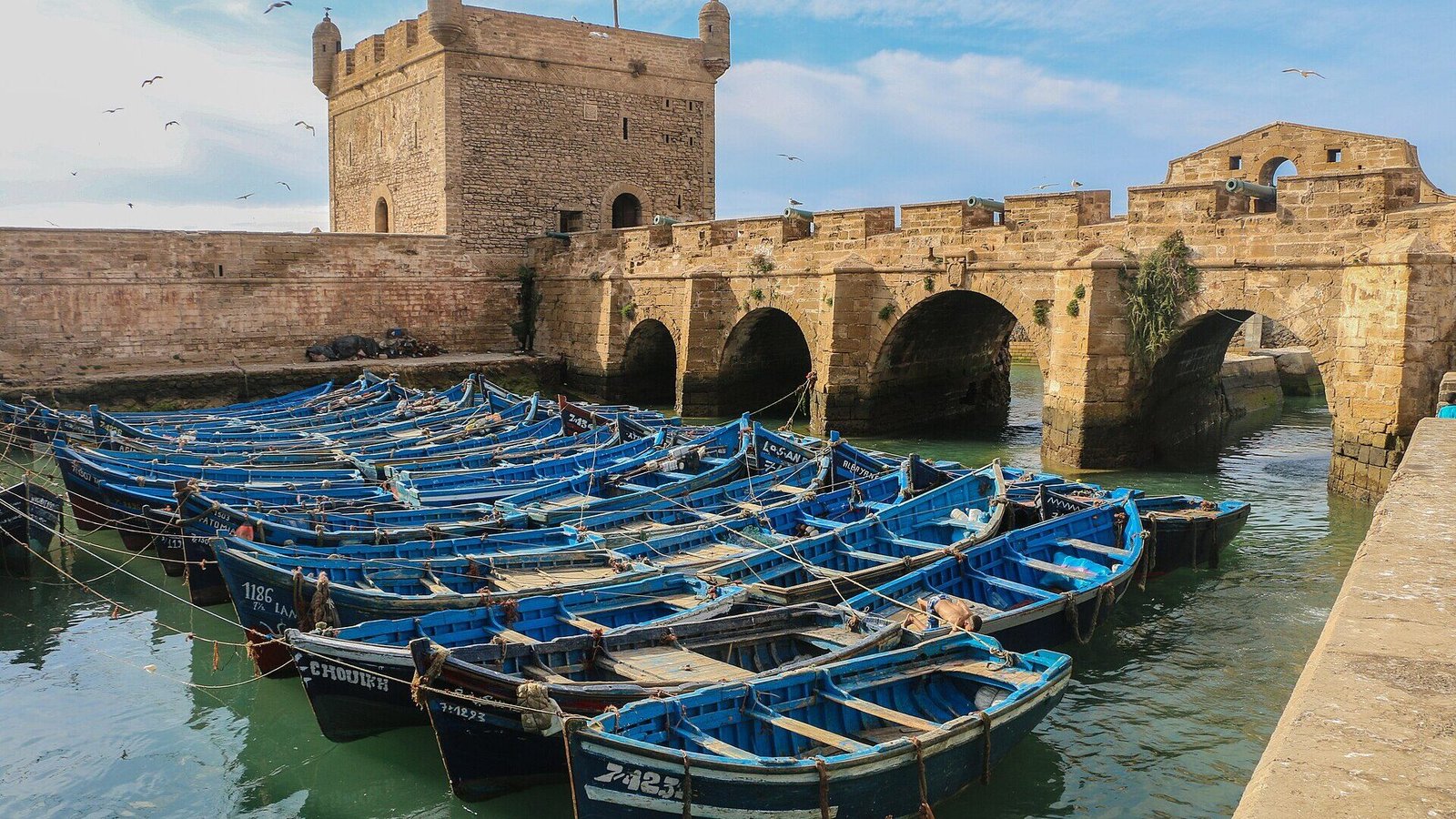
A walled port town on the Atlantic, with a compact medina you can understand in an afternoon, a wide beach and a wind that keeps the heat down. Sellers are noticeably more relaxed than in Marrakech. It’s the best place in the country to find your feet.
Getting there: Supratours buses run from beside Marrakech railway station roughly every 2–3 hours and take about 3 hours (Seat61).
Chefchaouen: blue, quiet and walkable
The blue-washed town in the Rif mountains is small, hilly and slower-paced than the big cities. It’s a good place to rest between bigger stops and to walk into the hills. It isn’t on the railway, so you’ll reach it by bus.
Rabat: the underrated capital
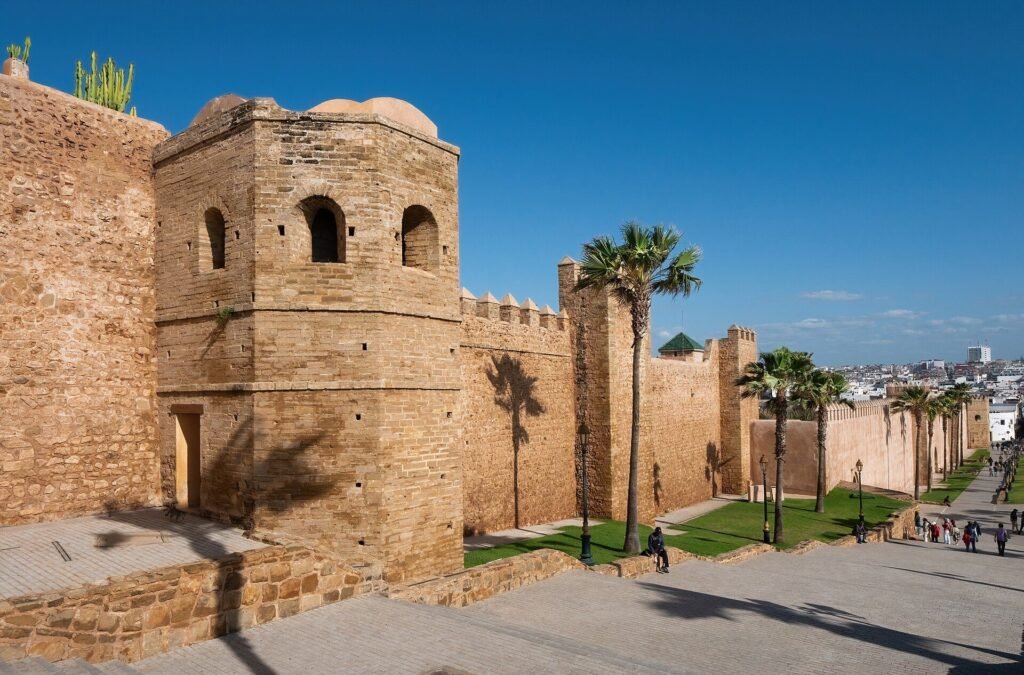
Morocco’s capital has a calmer medina than Fes or Marrakech, a seafront kasbah and a clean tram network. It’s also on the high-speed line: Al Boraq trains reach Rabat from Tangier in about 1 hour 20 minutes. Many solo travellers find it the easiest big city in the country.
Tangier: the gateway
If you’re arriving by ferry from Spain, Tangier is your first stop. Its medina is busier than Rabat’s, and the port area brings touts. Al Boraq makes it easy to move on: about 2 hours 10 minutes to Casablanca, and around 5 hours 14 minutes to Marrakech with a change at Casa Voyageurs.
Marrakech: the one everyone starts with
Marrakech is where most first trips begin, and it’s the hardest place to begin as a solo woman. Jemaa el-Fnaa square, the souks and the lanes around them have the country’s highest concentration of touts and of people offering directions for money. The FCDO notes that people posing as official tourist guides commonly harass tourists, and that real guides carry an official badge.
What helps: book a riad that will meet you at the edge of the medina on arrival, since taxis can’t drive into its lanes. Do one guided orientation walk early, and learn the route to your door. Keep evenings in the square to busy hours, and use the riad for directions rather than strangers.
Fes: book a guide for day one
Fes el-Bali is one of the largest car-free medinas in the world, and the hardest place in Morocco to find your way around. Unofficial guides are persistent, and getting lost is almost certain. An official guide for your first morning, booked through your riad, is money well spent. After that you’ll know the main routes and be left alone more.
Things that apply everywhere
Dress
The FCDO suggests loose-fitting clothing that covers your arms, legs and chest. You’ll see a range of dress in cities, but covering up noticeably reduces attention, and it’s expected at religious sites. A light scarf is useful.
Fake guides and directions
If someone tells you a street is closed, or offers to “show you the way”, say a polite no and keep walking. Use an offline map and ask in shops or your riad rather than people who approach you. Official guides carry a badge and local-authority permission.
Taxis
The FCDO advises agreeing a fare in advance or checking the meter is on, and taking extra care with petit taxis (small city taxis) late at night. Drivers may pick up other passengers, so end the trip if you’re uncomfortable. It also flags unregulated ride-hailing apps.
Drinks
Alcohol is legal only in licensed bars, hotels and restaurants. Drinking in the street is illegal. The FCDO also reports deaths and serious illness from methanol in alcoholic drinks, which you can’t detect by taste or smell. Drink in reputable licensed places only. The UK government’s advice for women travelling abroad adds: never leave a drink unattended and don’t accept one from a stranger.
Behaviour
Avoid public displays of affection, especially near religious sites and in tourist areas. Ramadan begins in February 2027. During daylight hours, eating, drinking or smoking in public can cause offence. Our guide to visiting Morocco during Ramadan 2027 explains what changes and where.
Hiking
For the Atlas mountains, the FCDO advises hiring a professional guide. That goes double on your own.
Group tour or independent?
Many women choose a small-group or women-only tour for a first visit, especially for the Sahara leg, which is a long drive from Marrakech and hard to do by public transport. A good compromise: travel independently between Essaouira, Rabat, Chefchaouen and Tangier, and join a group for the desert.
Our tip: start your trip somewhere calm. Rabat or Essaouira for two or three days lets you get used to the pace before Marrakech or Fes. Our 10 days in Morocco itinerary can be reordered that way.
Getting around by train
| Route | Time | Notes |
|---|---|---|
| Tangier–Rabat | ~1 h 20 | Al Boraq high-speed |
| Tangier–Casablanca | ~2 h 10 | Al Boraq; 2nd class 99–224 dirhams |
| Tangier–Fes | ~3 h 25 | Al Boraq then a classic train, via Kenitra |
| Tangier–Marrakech | ~5 h 14 | Change at Casa Voyageurs |
| Marrakech–Essaouira | ~3 h | Supratours bus, every 2–3 hours |
Train times and fares are from Seat61 (updated 28 October 2026). Book on oncf-voyages.ma, which opens about three months ahead. The overnight Tangier–Marrakech sleeper was reported suspended in late 2026.
The short version
Morocco is very doable as a solo woman if you expect attention and plan for it. Start somewhere calm, such as Essaouira, Rabat or Chefchaouen, and take Marrakech and Fes on once you’re used to the pace, with a guide for your first morning in the Fes medina. Dress conservatively, agree taxi fares, drink only in licensed places, and use your riad as your base for directions and help.
More guides for travelling alone are in our Solo Travel section, and the weekly newsletter sends them as they go up.
Sources
- Foreign travel advice: Morocco, safety and security, UK FCDO (checked 17 November 2026)
- Advice for women travelling abroad, UK government (updated 8 September 2026)
- Morocco by train, Seat61 (updated 28 October 2026), and train travel in Morocco, Seat61
Photo credits
- Essaouira Citadel by Ahmed.magdy, CC BY-SA 4.0, via Wikimedia Commons
- Fortifications of Rabat, Kasbah Udayas (أسوار الرباط) by Petar Milošević, CC BY-SA 4.0, via Wikimedia Commons
The infographic is original to TravelSpatial. Photos are used under the licences linked above.