So you’ve booked a one-way flight. Maybe it’s your first big solo trip and you genuinely don’t know where you’ll be in six weeks. That’s the whole point. Then someone in a hostel group chat mentions being refused at check-in for not having an onward ticket, and suddenly the freedom feels a bit shaky.
Let’s sort it out. Short answer first: some countries do require proof that you’ll leave, and the airline is usually the one that checks, at check-in, before you board. The fix is cheap and simple if you plan it. Below are the questions people actually ask, answered plainly.
So, do I actually need an onward ticket?
Depends where you’re flying. Plenty of countries never ask. But several popular ones say it in their official rules, and a few enforce it hard. Going by the UK government’s entry pages (checked November 2026), these are the ones to take seriously:
| Destination | What the official guidance says |
|---|---|
| Philippines | Most visitors are expected to have proof of return or onward travel; airlines and immigration may ask |
| Indonesia | Proof of an onward or return journey is a condition of the visa on arrival |
| Thailand | You may be asked for onward or return travel and funds; some travellers have been refused |
| Nicaragua | You may be refused entry without an onward ticket |
| Mexico | At border control you may need to show a return or onward ticket |
| New Zealand | You need a ticket to leave, or proof you can buy one, unless your visa says otherwise |
New Zealand’s own immigration site is the clearest of all: for the NZeTA, your ticket out must “already be paid for” (Immigration New Zealand, NZeTA). Costa Rica is the country backpackers mention most, and travel guides describe it as strict, but check its current rule before you fly.
Wait, why does the airline care?
Because if a country refuses you entry, the airline that flew you there usually has to fly you back. Mexico’s migration law, as reported by Riviera Maya News, obliges the airline to take custody of a refused passenger and return them (Riviera Maya News, September 2026). That return trip is the airline’s problem and the airline’s cost. So the check-in agent isn’t being difficult. They’re protecting the airline.
That’s also why it’s often the check-in desk, not immigration, where it goes wrong. The officer at the border might never ask. The agent in your home airport is the one with the rule on their screen.
Okay, what counts as proof?
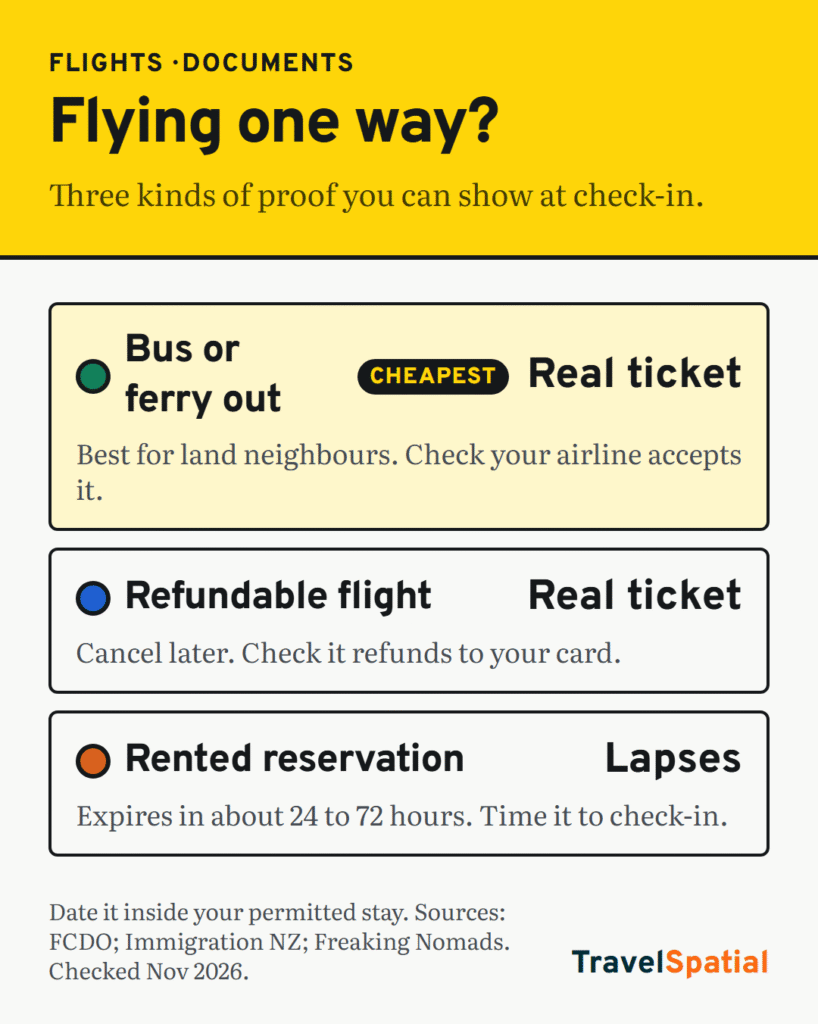
Anything that shows a confirmed way out before your permitted stay ends. In practice, that’s one of three things:
- A real flight out. Simple, but you’ve given up your flexibility.
- A cheap bus, train or ferry ticket out. For land neighbours, this is often the best deal. Travel blog Freaking Nomads says a bus ticket from Costa Rica to Nicaragua or Panama counts if you buy it before you arrive (Freaking Nomads, updated November 2026). Not every airline accepts a bus ticket, so check yours.
- A refundable or temporary flight booking. More on these below.
Whatever you use, have it as a PDF on your phone and printed. Phones die at check-in more often than you’d like.
Can I just book a refundable flight and cancel it?
Yes, and it’s the cleanest option because it’s a genuine ticket. Two flavours:
- A fully refundable fare. Pricier up front, but you get the money back if you cancel within the fare rules. Read them before you pay: some refund only as a voucher.
- The 24-hour rule. For flights to or from the US, US regulations (14 CFR 259.5) require airlines to let you hold a reservation, or cancel without penalty, for 24 hours if you book at least seven days before departure. That only helps if your check-in falls inside that 24-hour window, so time it carefully.
Our tip: check the refund goes back to your card, not into airline credit you’ll never use.
What about those “rent an onward ticket” websites?
They sell a real reservation, with a booking reference, that lapses on its own after a set time. Freaking Nomads describes them as reservations that expire after roughly 24 to 72 hours, with a longer hold costing more. They’re commercial services, not official ones. They can work, but three cautions:
- Time the expiry. If it lapses before your check-in, it’s useless.
- It’s not the same as a ticket. A strict agent or officer who checks the airline’s system may find it cancelled.
- Pick a reputable seller with a clear refund policy. You’re handing over your passport details.
If you’ll be refused boarding without it, a real refundable ticket is the safer bet.

I honestly don’t know my next stop. Now what?
Totally normal, and it’s fine. Pick the cheapest plausible exit and buy that:
- In Southeast Asia, a cheap regional flight from your arrival city to a neighbouring country is often the price of a couple of dinners. Our guide to one-bag budget airline fares shows how to keep that fare at its headline price.
- In Central America, a bus ticket to the next country is usually cheapest. Our chicken bus vs shuttle guide compares the options.
- Anywhere, you’re allowed to never use it. The ticket is insurance, not a promise.
Does a return ticket home count?
Yes, a return ticket is the most common proof there is. But if your round trip is six months long and the country allows you 30 days, it may not be enough on its own. The ticket has to show you leaving within your permitted stay. Thailand now gives most tourists 30 days, for example, so a flight out on day 45 doesn’t cover you unless you extend.
What do I say at check-in?
Keep it short and have the evidence ready before you reach the desk:
- “I’m flying one way. Here’s my onward booking out of [country] on [date].”
- If it’s a bus ticket: “My onward travel is by bus to [country]. Here’s the ticket.”
- If they still say no: ask politely what they will accept. Sometimes it’s a specific kind of booking, and you can buy it on your phone right there. Arriving early gives you time to do that.
Is this the same as the digital nomad onward ticket problem?
Similar rule, different trip. If you’re moving between monthly bases and need a way to handle every hop, our nomad travel-day procedure covers that. This guide is for the first one-way flight of a trip.
The checklist
- Check the destination’s official entry rules for an onward-travel requirement.
- Check your airline’s own rule. It’s often stricter.
- Buy the cheapest real exit: a bus, ferry, regional flight or refundable fare dated within your permitted stay.
- Save it as a PDF and print it.
- Arrive at check-in early enough to fix a problem on your phone.
That’s it. It’s a ten-minute job when you plan it, and a stressful one at the desk when you don’t. For the rest of your departure prep, our first solo trip checklist runs from eight weeks out to the night before.
Got your first solo trip coming up? Get our checklists in your inbox. Sign up for the TravelSpatial newsletter.
Sources
- FCDO entry requirements: Philippines, Indonesia, Thailand, Nicaragua, Mexico (onward or return travel requirements; checked November 2026)
- Immigration New Zealand, Visitor visa and NZeTA (ticket to leave or funds; ticket must be paid for; checked November 2026)
- Riviera Maya News, Cancún and Mexico City airports tighten entry controls (airline must return refused passengers; 1 September 2026)
- Freaking Nomads, Proof of onward travel (bus tickets, refundable fares, rental reservations; updated 16 November 2026, checked November 2026)
- eCFR, 14 CFR 259.5 (24-hour hold or cancellation for US flights booked 7+ days ahead; checked November 2026)
Photo credits
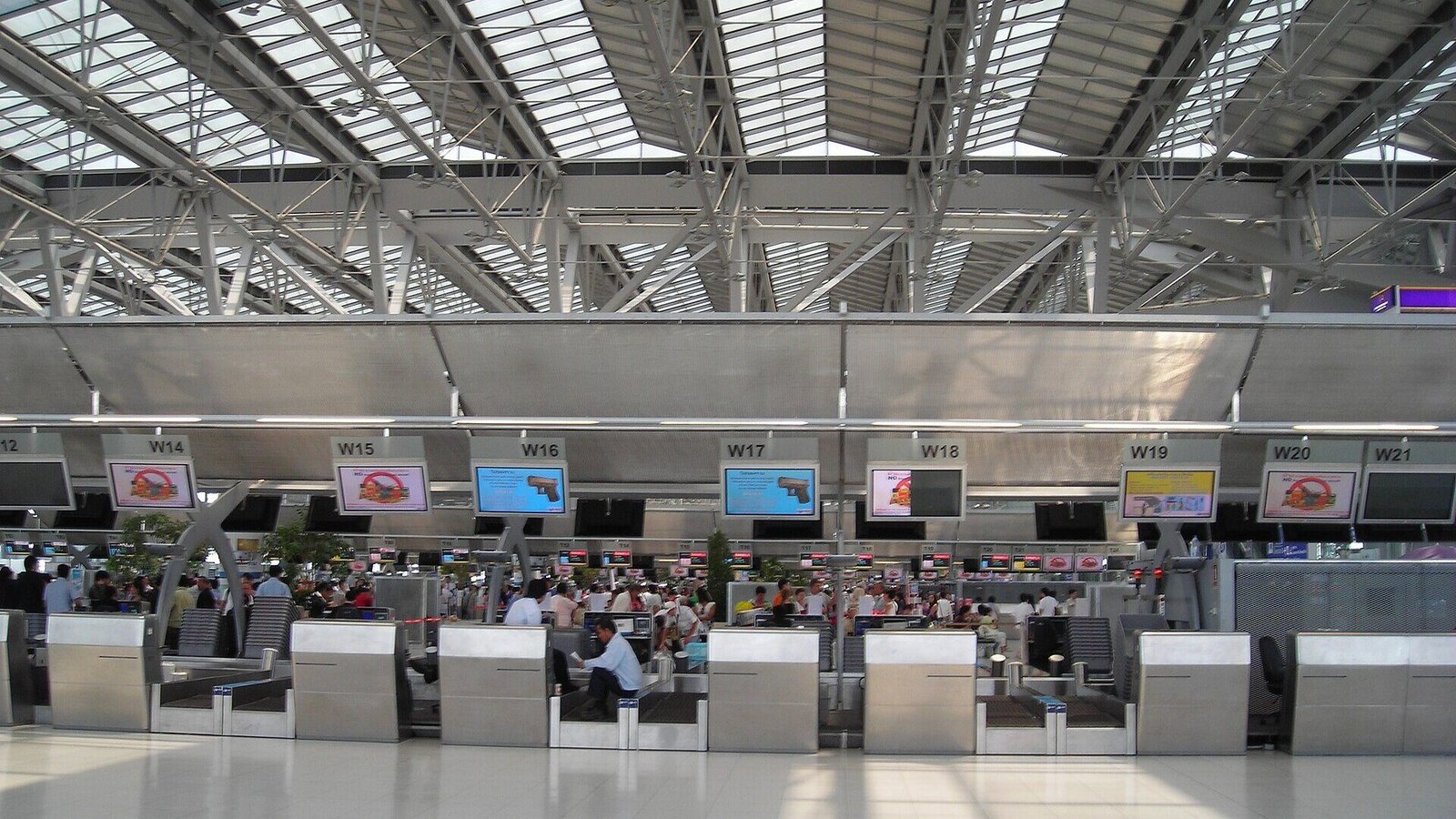
- Check-in counters at Suvarnabhumi International Airport by User:Mattes, CC BY-SA 3.0, via Wikimedia Commons
- Terminal Coca-Cola by Haakon K, CC BY-SA 3.0, via Wikimedia Commons
The infographic is original to TravelSpatial. Photos are used under the licences linked above.