An overnight journey saves you a night’s accommodation and a day of travelling. That’s why budget travellers love it. In return it asks you to sleep somewhere cold, bright and noisy, next to a stranger, with your bag out of sight. Whether you arrive rested or wrecked depends mostly on one small bag.
Here’s what to pack for an overnight bus or sleeper train: a warm layer for the air-con, earplugs and an eye mask, water and food for the whole night, a small wash kit, and a way to keep your valuables on your body while you sleep. The rest of this feature takes the night’s five problems one at a time, and shows how a Thai sleeper train and a long-distance bus differ.
The night kit
| Problem | Pack this | Keep it… |
|---|---|---|
| Cold air-con | Fleece or big scarf, socks, sleeping-bag liner | In your day bag, not in the hold |
| Light and noise | Eye mask, earplugs, earbuds with downloaded audio | In a pocket |
| Hunger and thirst | 1–1.5 litres of water, dinner, breakfast snack | In your day bag |
| Your valuables | Passport, phone, cards in a zipped pouch | On your body, or inside your berth |
| The morning | Toothbrush, wet wipes, deodorant, phone charged | At the top of your day bag |

Problem one: the cold
On a hot evening, the air-conditioning on a long-distance bus or sleeper train is set for the hottest hour of the day, and it stays there all night. People who board in shorts and sandals can spend the night shivering.
Pack a fleece or a large scarf that doubles as a blanket, and a pair of socks. A sleeping-bag liner gives you a clean, warm layer on top of whatever bedding there is. Wear long trousers on board, not shorts. The one rule here: the warm layer goes in the bag that stays with you. Once the bus pulls away, you can’t get into the hold.
Problem two: light and noise
Buses play films. Trains stop at stations under bright lights. Someone always has a phone on full brightness at 3 a.m. An eye mask and foam earplugs make the biggest difference to your sleep for the least weight. Bring earbuds and download podcasts or music before you board, because signal on a night route is patchy.
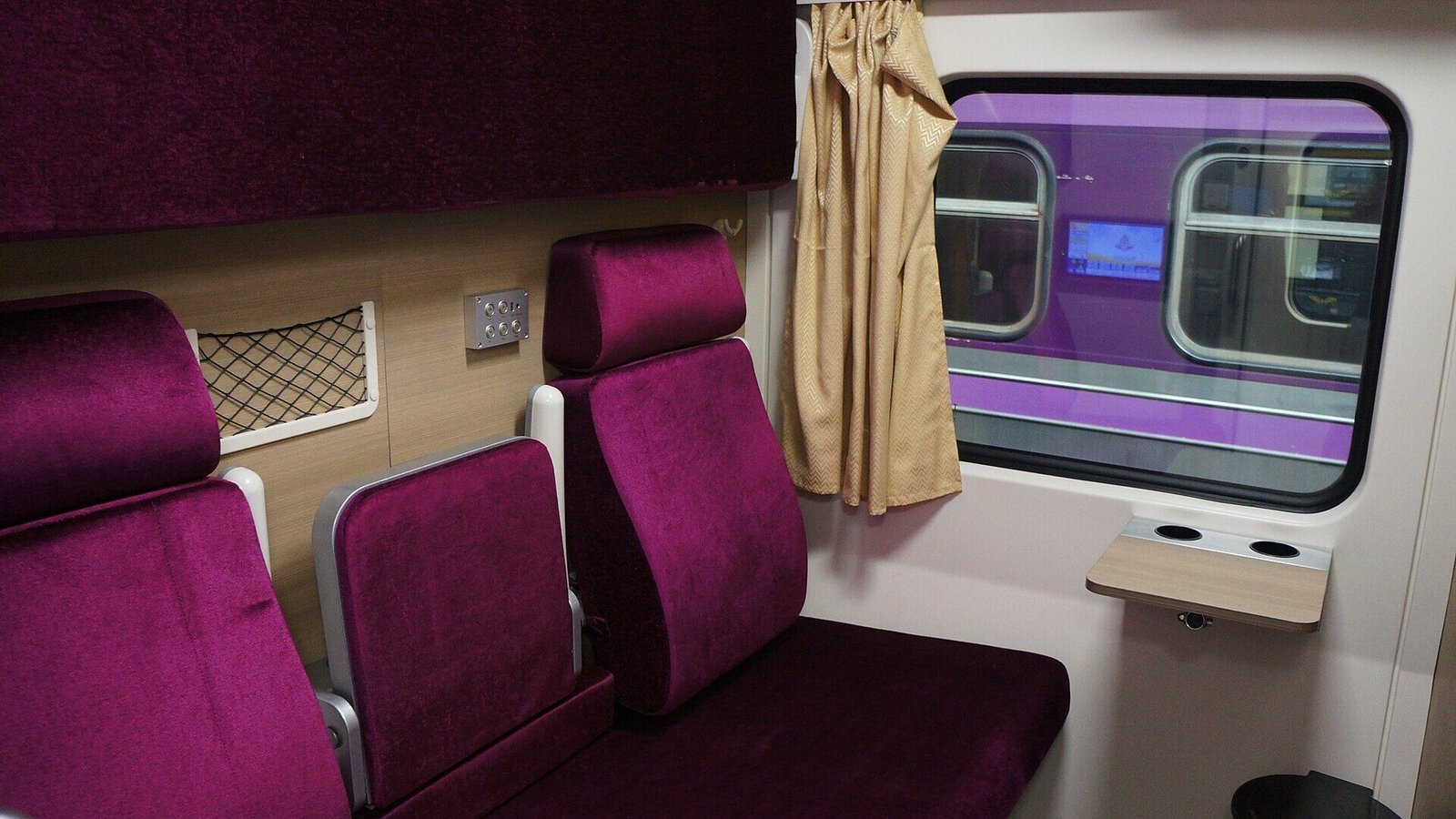
On Thailand’s sleeper trains, light is less of a problem than you’d think. Seat61 explains that in 2nd class, at night the attendant turns each pair of facing seats into a lower berth, folds an upper berth down from the wall, adds a mattress, pillow and fresh bedding, and hooks up a curtain for each bunk. Seat61 also notes that the upper berths are narrower and the lower ones wider. If you’re tall, pay a little more for a lower berth.
Problem three: hunger and thirst
An overnight trip often leaves in the early evening and arrives just after dawn. That’s dinner and breakfast in transit. Some trains have a dining car, and some buses make a meal stop, but you can’t count on either one. Pack:
- 1 to 1.5 litres of water, more in hot countries
- a proper dinner (a sandwich, a rice box or a market snack)
- something for the morning, because you’ll arrive before the cafés open
Don’t drink too much just before you board a bus. Some buses have a toilet, but many make only a few stops.
Problem four: your bag, while you sleep
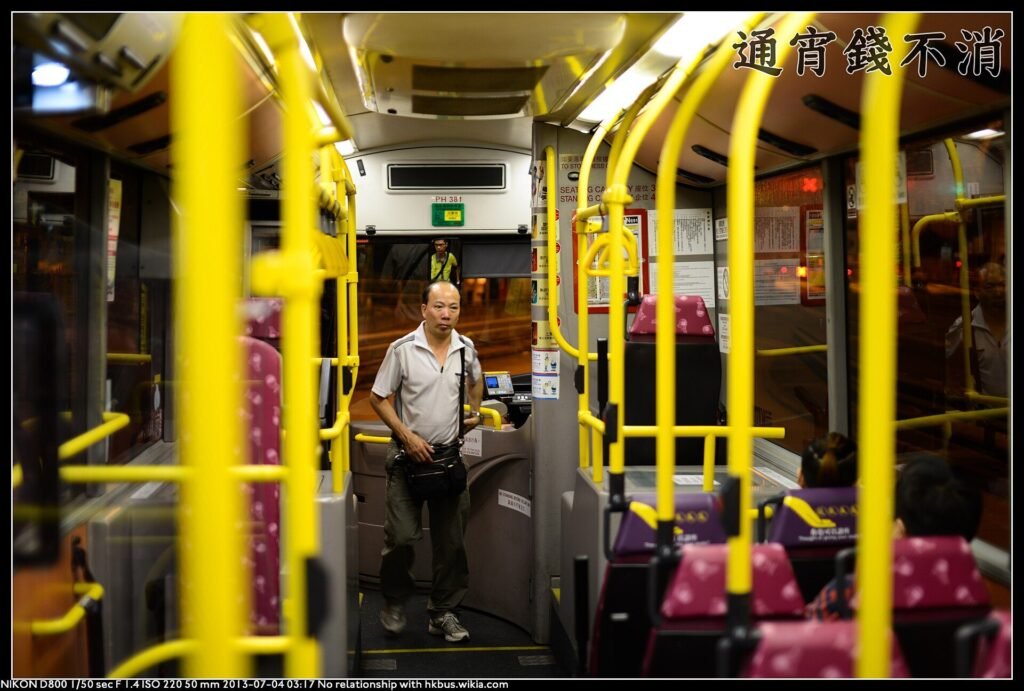
Big luggage goes in the hold on a bus. On a train it goes on the overhead rack or under the seat. Seat61’s advice for Thai sleepers matches the general rule: take your day bag with your valuables into the berth with you. Some travellers also bring a bike lock to chain their main bag to the rack.
For a bus, keep your passport, phone and cards in a zipped pouch on your body: a front trouser pocket, a cross-body bag under your blanket, or a money belt. Never put them in the hold or the overhead rack. Keep the day bag between your feet or on your lap, with the strap looped around your leg. On the long, cheap bus routes, our guide to chicken buses, Pullmans and shuttles in Central America explains which buses put your bag on the roof.
Problem five: the morning
You’ll arrive somewhere new at 5 or 6 a.m., in yesterday’s clothes, with a dry mouth. A small wash kit at the top of your bag fixes most of that: a toothbrush and paste, wet wipes, deodorant, and a clean T-shirt. A charged phone matters more. A power bank lets you find your way, book a ride or message your hostel to ask about an early check-in.
Most hostels won’t give you a bed at 6 a.m. Many will store your bag and let you use the shower or the common room. It’s worth asking when you book.
Train or bus: what changes
| Sleeper train (e.g. Thailand 2nd class) | Overnight bus | |
|---|---|---|
| Bedding | Provided, made up by the attendant | Usually none. Bring your own layer |
| Lying flat | Yes | Only on “sleeper” or “cama” seats |
| Bags | Rack or under the seat, near you | In the hold, out of reach |
| Toilet | Yes | Not always |
| Light | Curtain on each bunk | Cabin lights and screens |
| What to add to your kit | A lock for your bag | Warmer layer, more water, a neck pillow |
Is it worth it?
An overnight journey only saves money if it really replaces a night’s accommodation and you’re fit to use the next day. Our night train break-even test works out when it pays. For specific routes, see Mexico City to Oaxaca by overnight bus or flight, Hanoi to Ho Chi Minh City by train and our three-week Thailand route for first-time backpackers.
Pack it, sleep, arrive
Pack for the night’s five problems: a warm layer for the cold, a mask and earplugs for the light and noise, water and two meals, a pouch that keeps your valuables on your body, and a wash kit for the morning. On a sleeper train you get bedding and a curtain, so add a lock for your bag. On a bus you’re on your own, so bring more water, warmer layers and a neck pillow.
Want more travel-day tips? Sign up for the TravelSpatial newsletter.
Sources
- The Man in Seat 61, Train travel in Thailand (2nd-class sleepers, luggage; checked November 2026)
Photo credits
- 201701 Lower Berth of SRT CNR First Class Sleeper Coach by MNXANL, CC BY-SA 4.0, via Wikimedia Commons
- 2013-07-04 Overnight Bus (1) (9216137697) by Pacific Chillino from Hong Kong, Hong Kong, CC BY-SA 2.0, via Wikimedia Commons
The infographic is original to TravelSpatial. Photos are used under the licences linked above.