Yes, you can see mountain gorillas in Rwanda on a three-day trip from Kigali. Spend day one driving north to the Volcanoes National Park area, day two on the trek, and day three on a second activity or the drive back. The fixed cost is the permit: US$1,500 per person for international visitors (Visit Rwanda, checked November 2026). Everything else depends on where you sleep and how you get there.
Below is the trip hour by hour, so you can see where the time goes and what to book.
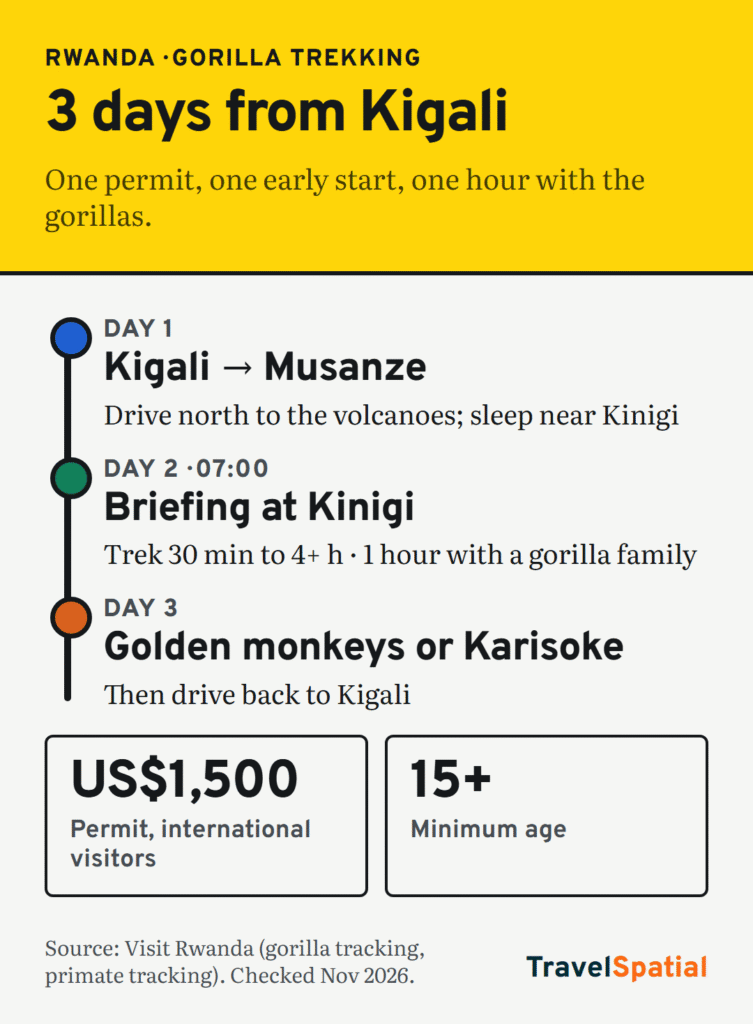
The trip at a glance
| What happens | Book ahead | |
|---|---|---|
| Day 1 | Kigali → Musanze/Kinigi by road; afternoon free | Driver or car, lodge near Kinigi |
| Day 2 | 07:00 briefing at Kinigi, gorilla trek, 1 hour with a family | Gorilla permit (US$1,500) |
| Day 3 | Golden monkeys or Dian Fossey’s grave hike; drive back to Kigali | Activity permit, return transfer |
Day 1: Kigali to the volcanoes
Morning. Leave Kigali after breakfast. The road north to Musanze, the town at the foot of the Virunga volcanoes, is winding and hilly. Estimate: allow two to three hours, and ask your driver about traffic on the day.
Afternoon. Check in near Kinigi, where the park headquarters is, or in Musanze. Sleeping close to Kinigi matters because tomorrow’s start is early. Use the spare hours for a gentle walk. Visit Rwanda lists village experiences, Buhanga Eco-Park and the Musanze Caves among the things to do around the park (Volcanoes National Park page).
Evening. Lay out your kit tonight: waterproof jacket, long trousers, gloves for nettles, boots with grip, water, and a snack. Dinner, then an early night.
Day 2: the gorilla trek
06:00. Breakfast and drive to the park headquarters.
07:00. Briefing at the Volcanoes National Park headquarters in Kinigi. Visit Rwanda says trekkers gather there at 7am. Rangers assign each visitor to a gorilla family. Eight permits are issued per gorilla group per day, and 96 a day across the park (Visit Rwanda).
After the briefing. Drive to the trailhead for your family and start walking. The hike can take anything from 30 minutes to four or more hours, at altitudes between 2,500 m and 4,000 m, and you can’t book a short one. If fitness or knees are a worry, tell the rangers at the briefing, before groups are assigned.
With the gorillas. Each group spends a strict maximum of one hour with the family. Keep the distance the trackers ask for, don’t use flash, and put your bag down when they tell you to.
Afternoon. Walk back down, then rest. Most people are muddy, tired and very happy by lunchtime. Book nothing demanding for this afternoon.

Day 3: a second activity, then Kigali
You have two good choices for the morning, both starting from the same area:
- Golden monkey tracking. Two habituated groups, one on the slopes of Karisimbi and one in the bamboo forest on Sabyinyo. It’s a standalone excursion that leaves the Kinigi headquarters once a day (Visit Rwanda: primate tracking). It’s shorter and easier than the gorilla trek.
- Dian Fossey’s grave at Karisoke. A 30-minute drive from the park headquarters, then two or three hours of hiking through the forest to above 3,000 m (Visit Rwanda). Choose this if you have energy left after day two.
After lunch. Drive back to Kigali in time for an evening flight or a final night in the capital.
Visit Rwanda doesn’t list prices for these activities on the pages we checked, so ask your operator or the booking portal before you go.
What it costs, line by line
| Item | Cost | Notes |
|---|---|---|
| Gorilla permit, international visitor | US$1,500 | Per person, per trek |
| Gorilla permit, African citizens and residents | US$500 | 2026 promotion, not valid June–October |
| Gorilla permit, Rwandan and EAC citizens | US$200 | 2026 promotion, not valid June–October |
| Rwanda visa on arrival | Up to US$50 single entry | Fee waived for many nationalities (below) |
| Transport, lodge, second activity | Varies | Get quotes |
The promotional rates come from the Rwanda Development Board’s notice reported by KT Press in January 2026. They run until 31 December 2026 and don’t apply in the June–October peak season. International visitors pay US$1,500 all year.
Booking and rules
- Book the permit first. Everything else fits around it. Visit Rwanda recommends booking in advance through the Irembo platform or the RDB booking portal. A licensed tour operator can also book it as part of a package.
- Minimum age is 15. Families with younger children need a different plan.
- Visa: citizens of all countries can get a visa on arrival. Fees are capped at US$50 single entry or US$70 multiple entry, and they’re waived for 30-day visits by nationals of African Union, Commonwealth and La Francophonie countries, which includes UK, Canadian and Australian passport holders. EAC citizens enter free (Rwanda Directorate General of Immigration). Check your own passport on our visa map.
Our tip: if you’re combining this with a Kenya or Tanzania safari, fly into Kigali last. The gorilla trek is the most physical day of an East Africa trip, and it’s easier after a week of sitting in game-drive vehicles than before a long flight. Our adventure travel guide for beginners covers fitness, gear and pacing for trips like this.
The short version
Three days from Kigali is enough for gorilla trekking in Rwanda. Drive north on day one, be at Kinigi park headquarters for the 07:00 briefing on day two, and add golden monkeys or the Dian Fossey hike on day three before heading back. The permit costs US$1,500 for international visitors (US$500 for African citizens and residents, and US$200 for EAC citizens, outside June–October until the end of 2026), you need to be 15 or older, and you get one hour with the gorillas.
Want the next route in your inbox? Join the TravelSpatial newsletter for one mapped itinerary a week.
Sources
- Visit Rwanda: Gorilla tracking (permit price, minimum age, permits per day, briefing time, hike length, Dian Fossey hike), checked November 2026
- Visit Rwanda: Volcanoes National Park and Primate tracking (other activities, golden monkeys)
- KT Press: Rwanda floats promotional gorilla trekking rates into 2026 (RDB promotional rates and dates)
- Rwanda Directorate General of Immigration and Emigration: Visa on arrival (visa fees and waivers)
Photo credits
- Mountain gorilla (Gorilla beringei beringei) female 3 by Charles J. Sharp, CC BY-SA 4.0, via Wikimedia Commons
- Volcanoes National Park Rwanda by Nina R, CC BY 2.0, via Wikimedia Commons
The infographic is original to TravelSpatial. Photos are used under the licences linked above.