


There are two ways from Kilimanjaro to Zanzibar. You can take a direct flight from Kilimanjaro International Airport (JRO) to Zanzibar (ZNZ), which is quick and costs from about US$200. Or you can do it by land and sea: a long bus day to Dar es Salaam, then a fast ferry that costs US$35 in economy and takes about 1½–2 hours.
If you’ve just come down the mountain, fly. Your legs will thank you, and you save a full day. If you have time and want to keep costs down, the bus and ferry works fine, but plan for two days, not one.
Below are both routes as a checklist, step by step, plus the one piece of paperwork that catches people out.
The two routes compared
| Fly JRO → ZNZ | Bus to Dar + ferry | |
|---|---|---|
| Door-to-door time | Half a day, including airport transfers | Two days (bus day, night in Dar, ferry morning) |
| Fare | From about US$200 (Flightlink advertised fare) | Bus fare + ferry from US$35 (economy) |
| Extra cost | Taxi to JRO | One night’s hotel in Dar es Salaam |
| Luggage | Small planes may have tight limits; ask the airline | Ferry allows 25 kg per person |
| Best for | Post-climb recovery, short trips | Tight budgets, travellers with spare days |

Our tip: book the Zanzibar leg when you book your climb. Kilimanjaro summit days can move by a day if your operator adds an acclimatisation day, so choose a flexible fare or leave one buffer night in Moshi.
Route A: fly from Kilimanjaro to Zanzibar, step by step
- Pick an airline. Airline route tables list direct JRO–ZNZ services by Air Tanzania and Auric Air, and Flightlink advertises “Kilimanjaro to Zanzibar” from US$200 on its website (checked November 2026). Schedules on these small regional routes change by season, so check the day you need on each airline’s site before you plan around it.
- Check the bag rules. Smaller regional aircraft can have lower luggage limits than international flights, and climbing kit is bulky. If your operator offers to store a bag in Moshi, leave your trekking poles and down jacket there, or post-climb laundry bags, rather than paying excess.
- Get to JRO. Kilimanjaro International Airport sits between Moshi and Arusha. Most climb operators include or arrange the transfer. Ask for it on your last day off the mountain, not the day after.
- Buy Tanzania’s inbound insurance from NIC before you fly, since you land on the mainland first (see “The paperwork” below).
- Land at Abeid Amani Karume International Airport (ZNZ). Stone Town is a short taxi ride away. The beach areas on the north and east coasts are further, so pre-book a transfer if you land late.
Route B: bus and ferry, step by step
- Day 1: bus from Moshi or Arusha to Dar es Salaam. This is a full day on the road. Leave early and expect to arrive in the evening. Book with an established coach company through your hotel or climb operator. Tanzania’s new standard-gauge railway doesn’t help here: according to Seat61, it runs inland from Dar es Salaam towards Morogoro and Dodoma, not to Moshi or Arusha.
- Night in Dar es Salaam. Stay near the ferry terminal in the city centre so you can walk to the port for an early boat.
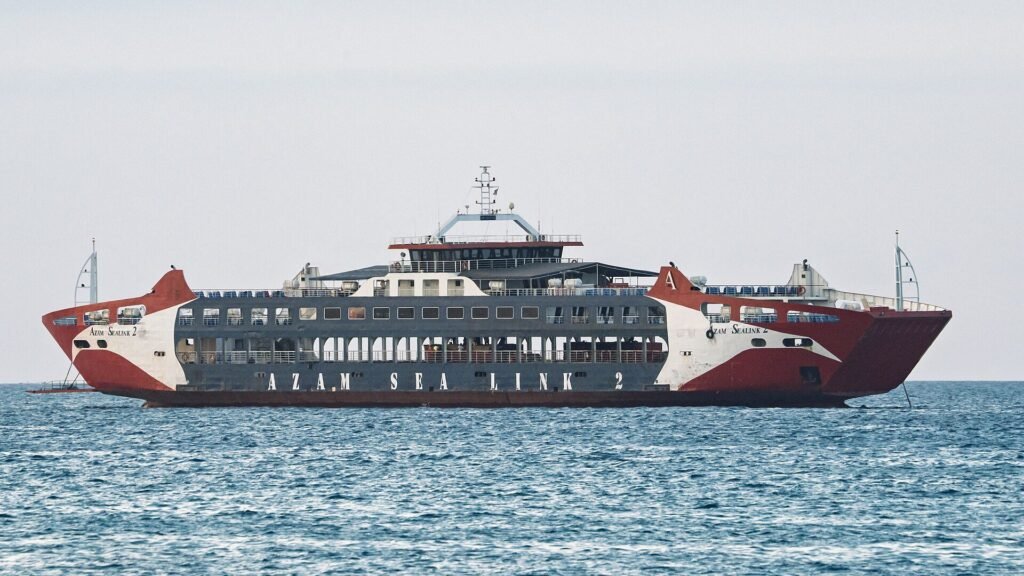
- Day 2: fast ferry to Zanzibar. Azam Marine’s published fares for non-residents (checked November 2026):
| Class | Adult (12+) | Child (5–11) |
|---|---|---|
| Economy | US$35 | US$30 |
| Business | US$40 | US$40 |
| VIP | US$60 | US$60 |
| Royal | US$100 | US$100 |
The fast catamarans take about 1½ to 2 hours (Seat61). Azam allows 25 kg of luggage per person, and any cancellation has to be made at least 2 hours before departure. If you miss the boat, there’s no refund. Azam’s website doesn’t publish a timetable, so confirm departure times at the terminal or through its booking system the day before.
- Buy tickets at the official terminal office or online. Avoid the touts outside the port who offer to “help” with tickets.
- Arrive in Stone Town. The ferry docks next to the old town, so if you’re staying in Stone Town you can usually walk to your hotel.
The paperwork: Tanzania’s US$44 insurance
This is the step people miss. Since 1 October 2026, visitors to mainland Tanzania need the government’s mandatory inbound travel insurance, issued by NIC. Zanzibar has its own scheme, run by ZIC. The policy costs US$44 and covers up to 92 days (Royal Norwegian Embassy’s notice, September 2026). You buy one, not both: the UK Foreign Office says you only need insurance for your first port of entry. Arrive on the mainland first and you buy from NIC. Fly straight into Zanzibar and you buy from ZIC. Your own travel policy doesn’t replace it, and you may be refused entry without it (FCDO Tanzania entry requirements, updated 30 October 2026). Residents of EAC and SADC countries are exempt.
- Mainland portal: inbound.nicinsurance.co.tz
- Zanzibar portal: inbound.visitzanzibar.go.tz
Since you’ll land on the mainland first for the climb, buy your policy before you fly into Tanzania, keep the certificate on your phone, and show the same certificate when you arrive in Zanzibar. Use the official portals only. This cover is for medical emergencies and doesn’t replace your own travel insurance with mountain-trekking cover. Our Kilimanjaro guide explains what that should include.
Which route should you choose?
- Just summited? Fly. A day on a bus is hard on tired knees, and you’ll want the beach day instead.
- Travelling in a group on a budget? Bus and ferry saves money per person, but add the Dar hotel night to the total before you decide. The saving can be smaller than it looks.
- Want to see Dar es Salaam anyway? Then the overland route earns its extra day.
- Arriving late or with lots of kit? Fly, but confirm the bag allowance first.
Planning the whole trip? Our travel budget template helps you set the climb, transfers and beach nights side by side.
The short version
From Kilimanjaro, the fastest way to Zanzibar is a direct flight from JRO, from about US$200, which gets you to the beach the same day. The cheapest way is a full-day bus to Dar es Salaam, a night there, and a 1½–2-hour Azam fast ferry from US$35. Whichever you choose, buy Tanzania’s mandatory US$44 inbound insurance before you arrive: one policy covers both the mainland and Zanzibar.
Want the next route in your inbox? Join the TravelSpatial newsletter for one mapped itinerary a week.
Sources
- Azam Marine: Rates (ferry fares, luggage and cancellation rules), checked November 2026
- Seat61: Tanzania (ferry crossing time, standard-gauge railway route)
- Flightlink (Kilimanjaro–Zanzibar advertised fare)
- Wikipedia: Abeid Amani Karume International Airport and Kilimanjaro International Airport (airlines on the route)
- FCDO Tanzania entry requirements (first port of entry only, NIC or ZIC, may be refused entry, own policy doesn’t replace it), checked November 2026
- Royal Norwegian Embassy in Tanzania: Mandatory travel insurance (NIC/ZIC scheme, US$44, start date)
Photo credits
- The view of mountain Kilimanjaro from Moshi town in Tanzania by Prosper Phissoo, CC BY-SA 4.0, via Wikimedia Commons
- Azam Sea Link 2 Ferry Stone Town Oct26 OM3 1121 by This Photo was taken by Timothy A. Gonsalves. Feel free to use my photos, but please mention me as the author. I would much appreciate if you send me an email tagooty@yahoo.com or write on my talk page, for my information. Please contact me before commercial use. Please do not upload an edited image here without consulting me. I would like to make corrections only at my own source to ensure that the changes improve the image and are preserved.Otherwise you may upload an edited image with a new name. Please use one of the templates derivative or extract., CC BY-SA 4.0, via Wikimedia Commons
The infographic is original to TravelSpatial. Photos are used under the licences linked above.


1 comment on “Kilimanjaro to Zanzibar: Flight vs Bus + Ferry, Step by Step”