Costa Rica’s rainy season, which locals call the “green season”, runs roughly May to November on the Pacific side and in the Central Valley. The Caribbean coast follows a different calendar. Its rain is spread across the whole year, and September and October are its driest months, which are also the wettest months on the Pacific. So if you’re travelling in the heart of the green season, cross the mountains to the Caribbean.
This is a month-by-month almanac for May to November, built from two climate guides and checked in November 2026. It describes typical years. Weather doesn’t follow a calendar, so read it as odds, not promises.
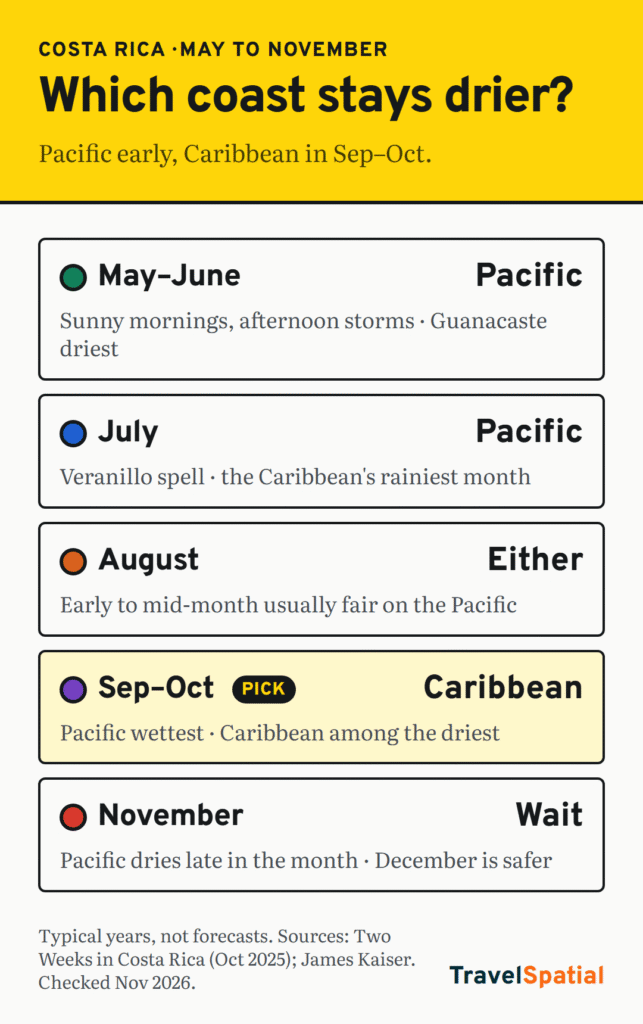
The pattern in one table
| Month | Pacific coast and Central Valley | Caribbean coast | Go here |
|---|---|---|---|
| May | Rains begin; sunny mornings, afternoon storms | Moderate, spread-out rain | Guanacaste (north Pacific) |
| June | Afternoon storms; the veranillo “little summer” may start late in the month | Moderate | Either coast |
| July | Veranillo: often a drier spell on the Pacific | The rainiest month by days and amount | Pacific |
| August | Early to mid-August usually fair | Moderate | Pacific early, then either |
| September | Wetter, and varies by year | Among the driest | Caribbean |
| October | Usually the wettest month | Among the driest | Caribbean |
| November | Wet early, drying by the end of the month | Rain picks up | Wait for December on the Pacific |
Sources: Two Weeks in Costa Rica (updated October 2025) and James Kaiser’s Costa Rica guide.
Why the coasts disagree
For most of the year, northeast trade winds push moisture against the Caribbean side of the mountains, while the Pacific sits in a rain shadow. In September and October that pattern reverses, and James Kaiser describes the Caribbean as “sunny and dry” while the Pacific is soaked.
Yearly totals show the range. Kaiser gives about 1.7 m of rain a year on the north Pacific, about 3.5 m on the Caribbean, which has no clearly defined dry season, and about 5 m on the south Pacific, which is among the rainiest parts of the country.
May
The Pacific’s first rains usually arrive in mid-April, and by May the pattern is set: clear mornings and an hour or two of heavy rain in the afternoon or evening. Guanacaste, on the north Pacific, is the driest region and often gets its first serious rain later in May.
Plan: beach in the morning, hammock in the afternoon. Book the cheaper green-season rates.
June
The afternoon storms continue. Late in the month a veranillo, or “little summer”, often arrives: a spell of drier weather that can run into early July.
Plan: either coast works. Go to Guanacaste if you want the best odds of sunshine.
July
This is the month the two coasts trade places. The Pacific often enjoys the veranillo, while the Caribbean has its rainiest month, both in rainy days and in total rain, according to Two Weeks in Costa Rica.
Plan: stay on the Pacific. Save the Caribbean for later in the year.
August
Early to mid-August is usually fairly good on the Pacific. From mid-August into September it can get wetter, depending on the year.
Plan: go Pacific early in the month. From mid-month, keep your plans flexible.
September
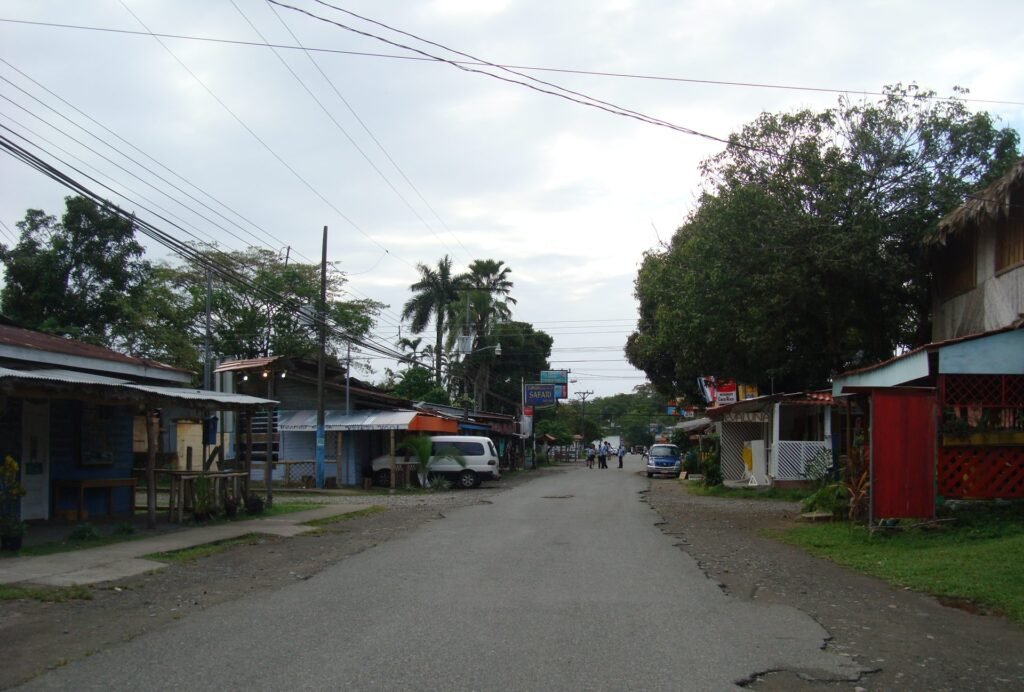
The Pacific gets wetter, and the south Pacific is wettest of all. The Caribbean coast, including Tortuguero, Cahuita and Puerto Viejo, has some of its least rainy weeks.
Plan: this is the month to cross over. Snorkel at Cahuita and eat rice-and-beans in Puerto Viejo, then come back inland.
October
October is usually the rainiest month on the Pacific. Tropical waves often bring days of steady rain, not just afternoon showers. On the Caribbean, October is typically among the driest months of the year.
Plan: spend most of the trip on the Caribbean. If you need the Pacific, choose Guanacaste over the south. The UK Foreign Office warns that rainy-season flooding and landslides can close roads, so build a spare day into the plan.
November
The early weeks can still be wet on the Pacific. Things usually dry out late in the month, and the switch to dry weather typically comes in the first or second week of December. The Caribbean starts to pick up rain again.
Plan: if you can, push the trip to December. If you can’t, go to Guanacaste late in the month.
Inland stops in the green season
- Arenal / La Fortuna: rain is frequent all year. Two Weeks in Costa Rica calls September and October a good time to see the volcano, and says December and January can be rainy.- Monteverde: high and wet all year. The dry season or the early-to-mid green season is the better window.
- San José and the Central Valley: follows the Pacific pattern, but downpours can last several hours.
Green-season survival kit
- Get out early. Most Pacific rain falls in the afternoon from May to August, so plan the important things for the morning.
- Drive in daylight. The UK Foreign Office says heavy rain causes potholes and landslides that can block roads.
- Respect the sea. Rip currents are very common, and lifeguards often aren’t there. The UK Foreign Office says 50–60 people drown each year, and about a third of them are tourists.
- Pack a light rain jacket, quick-dry clothes and a dry bag for your phone.
- Look for lower prices. Green-season rates are often lower than in December to April. Our shoulder-season guide explains how to get the best value from off-peak months.
The short version
From May to August, go to the Pacific: mornings are usually clear, and July often brings the veranillo. In September and October, go to the Caribbean, when the Pacific has its wettest weeks and the Caribbean coast its driest. If you can, avoid November on the Pacific and wait for December. Guanacaste is the driest region whenever you go. For the regions themselves, start with our Costa Rica overview.
Want the next route in your inbox? Join the TravelSpatial newsletter for one mapped itinerary a week.
Sources
- Two Weeks in Costa Rica: Rainy season in Costa Rica (month-by-month pattern by region; updated 22 October 2025), checked November 2026
- James Kaiser: Costa Rica weather (rain-shadow mechanism, annual rainfall by region)
- UK FCDO: Costa Rica safety and security (flooding, landslides, rip currents), checked November 2026
Photo credits
- Costa Rica – Puerto Viejo de Talamanca (53996236712) by Jan Helebrant, CC0, via Wikimedia Commons
- Cahuita Costa Rica by Eric T Gunther, CC BY-SA 3.0, via Wikimedia Commons
The infographic is original to TravelSpatial. Photos are used under the licences linked above.