Cheap flight-search sites love a self-transfer: two separate tickets, stitched together, often for much less than one through-fare. The catch most people don’t see is the visa. On a self-transfer you may have to leave the airport’s transit zone to collect your bag and check in again, and the moment you do, you’re entering that country.
Kiwi.com, which sells many of these itineraries, puts it simply: “You’ll need the same documents as if the transfer country were your final destination” (Kiwi.com, self-transfer itineraries, checked November 2026). Below are four questions that tell you whether you need a visa for a layover, and three case files that put them to work.
The four questions
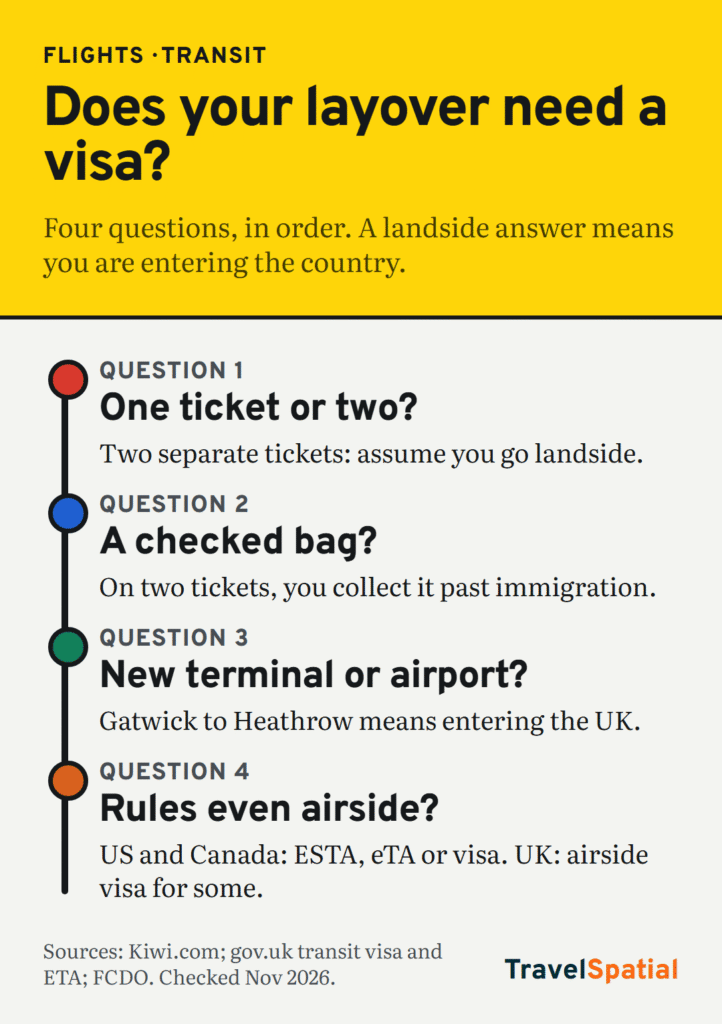
Ask these in order. The first “yes” that puts you through passport control is your answer.
- One ticket or two? On a single ticket, your bag is usually checked through and you stay airside. On two separate tickets, assume you’ll go landside unless you can prove otherwise.
- Do you have a checked bag? On separate tickets, a checked bag almost always means collecting it at baggage claim, which is past immigration, and checking it in again.
- Do you change terminals or airports? Many airports have no airside link between terminals. Changing airports, say Gatwick to Heathrow, always means entering the country.
- What does your passport need for that country, even airside? Some countries require a visa or travel authorisation just to transit, whether or not you pass through immigration.
If any of questions 1 to 3 puts you landside, you need whatever a visitor from your country needs to enter. Question 4 can catch you out even if you stay airside.
Case file 1: Two tickets through the United States
The trip: a cheap flight from Cancún to New York, then a separate low-cost ticket from New York to Europe the same evening.
Question 1: two tickets. Question 2: one checked bag. You’re already landside.
But it doesn’t matter. The US doesn’t offer visa-free airside transit. The UK government’s advice is that “to enter or transit through the US, you must have either an Electronic System for Travel Authorisation (ESTA) or a visa” (FCDO, USA, updated 14 November 2026). Even on a single ticket, you’d need one.
What to do: apply for an ESTA, or the visa if you’re not eligible, before you buy either ticket. The FCDO adds that an ESTA or visa doesn’t guarantee entry, so build in time: if your first flight is late, there’s no airline obliged to rebook the second one.
Verdict: you need an ESTA or a visa, whether you stay airside or not.
Case file 2: Gatwick to Heathrow
The trip: a budget flight into London Gatwick, then a long-haul flight out of London Heathrow on a different airline, booked separately.
Question 3: two different airports. You have to enter the UK to get between them, so you’ll go through UK border control.
What your passport needs: this is where the UK’s rules split three ways (gov.uk, transit visa):
| Your situation | What you need |
|---|---|
| You’re eligible for an electronic travel authorisation (ETA) | An ETA, £20. It covers transit through border control (gov.uk, ETA) |
| You need a visa to visit the UK and will leave within 48 hours | A Visitor in Transit visa, £74.50 |
| You need to stay more than 48 hours | A Standard Visitor visa |
What to do: check your nationality on gov.uk, then apply before you book. Allow several hours between airports: you’ll need to clear immigration, collect your bag, cross London and check in again.
Verdict: you need whatever a UK visitor from your country needs, because you’re entering the UK.
The airside version of this case
Change the trip: both flights leave from Heathrow, you have no checked bag, and both boarding passes are on your phone. You might stay airside. In that case gov.uk says you don’t need an ETA if you’re “transiting through a UK airport without passing through border control”, but some nationalities still need a Direct Airside Transit visa, £41.50. Check with your airline whether you’ll pass through border control.

Case file 3: The long night in Doha
The trip: a single ticket with a 26-hour layover at Doha’s Hamad International Airport, because it was the cheapest fare.
Questions 1 to 3: one ticket, bag checked through, same airport. You’d normally stay airside.
The catch is the clock. The FCDO’s Qatar page says travellers “cannot stay in the transit area for more than 24 hours between flights, even if you are booked into the transit hotel in the airport” (FCDO, Qatar, updated 18 November 2026). At 26 hours, you’d have to enter Qatar.
What to do: check whether your passport gets entry on arrival in Qatar. British citizens can get a visa on arrival, according to the FCDO. Others may need to apply in advance. Or pick a connection under 24 hours.
Verdict: layover length can turn an airside transit into an entry.
Two more transit rules worth knowing
- Canada: the FCDO says that if you’re transiting through Canada by air, you must have an eTA or a transit visa (FCDO, Canada). Like the US, there’s no “just changing planes” exemption.
- Passport validity in transit: the FCDO’s Australia page warns that many countries require at least six months’ validity even if you’re only transiting and don’t pass through immigration. Check the transit country, not just your destination.
The hidden cost: missed connections alone
Separate tickets mean separate contracts. Kiwi.com’s own help page says self-transfer “isn’t an official itinerary offered by the airlines and they won’t take responsibility for the unofficial connections”. If your first flight is late and you miss the second, nobody owes you a new seat.
Travelling solo, that risk falls entirely on you. Three ways to shrink it:
- Leave a long gap. Allow for immigration queues, baggage delays and, for a change of airport, the transfer itself.
- Travel light. No checked bag means you can sometimes stay airside and you never wait at a carousel. Our guide to one-bag budget airline fares shows what each airline lets you carry for free.
- Plan the night if it goes wrong. Know where you’d sleep if you’re stuck landside overnight. Our airport-to-bed checklist for arriving alone at night works for missed connections too.
Before you click “buy”
On a self-transfer, assume you’re entering the transfer country, and get whatever entry document your passport needs there. Even airside, the US and Canada require an ESTA, eTA or visa, and the UK requires an airside transit visa for some nationalities. Check how long you can stay in a transit zone, and leave enough time between flights to survive a delay you’ll have to pay for yourself.
Booking budget flights for a solo trip? Get our flight and money guides in your inbox. Sign up for the TravelSpatial newsletter.
Sources
- Kiwi.com, Self-transfer itineraries (same documents as final destination; airlines not responsible; checked November 2026)
- gov.uk, Check if you need a UK transit visa (Direct Airside Transit visa £41.50; Visitor in Transit £74.50, leave within 48 hours; checked November 2026)
- gov.uk, Electronic travel authorisation (£20; not needed airside without border control; covers transit through border control; checked November 2026)
- FCDO entry requirements: USA, Qatar, Canada, Australia (transit rules, 24-hour transit limit, passport validity in transit; checked November 2026)
Photo credits
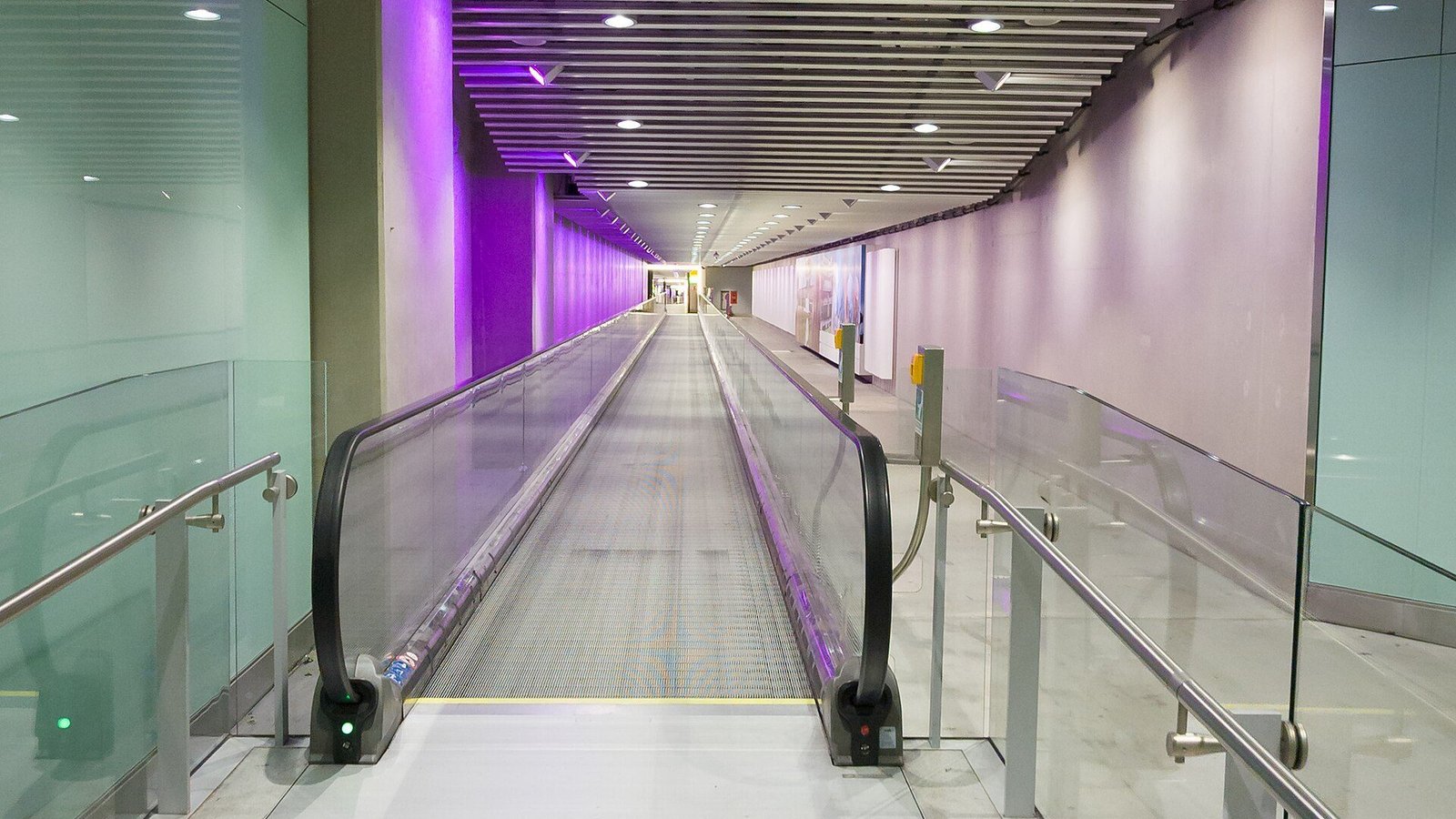
- Heathrow Terminal 5 travelator 2024-11-01 by Tom Page, CC BY-SA 2.0, via Wikimedia Commons
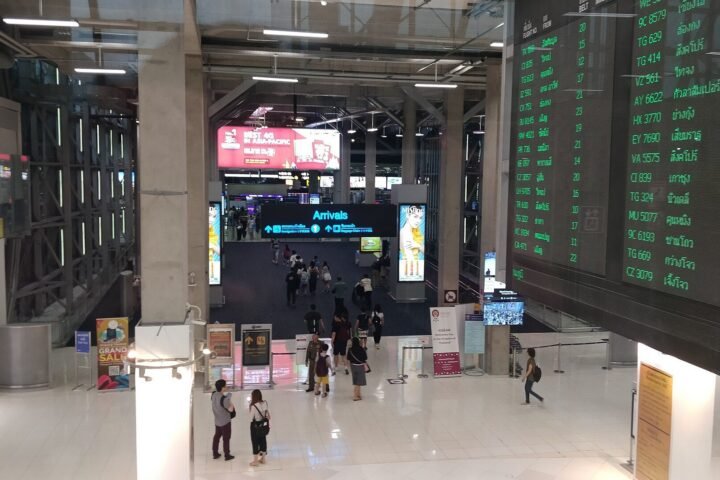
- Doha Hamad International Airport by Slyronit, CC BY-SA 4.0, via Wikimedia Commons
The infographic is original to TravelSpatial. Photos are used under the licences linked above.