

Verdict first: if this is your first work exchange and you’re travelling alone, Worldpackers is the easier start, because its paid plans include a safeguard that pays for somewhere to stay if a host lets you down. If you’ve done this before and want the biggest choice of hosts for one flat fee, Workaway is the better tool. Either way, the money only works out if you stay long enough, and the visa question matters more than the platform.
That’s the short answer to Workaway vs Worldpackers. The rest of this review takes them round by round, does the maths on what you actually save, and covers the two cheaper alternatives most comparisons skip.
How work exchange works (in one paragraph)
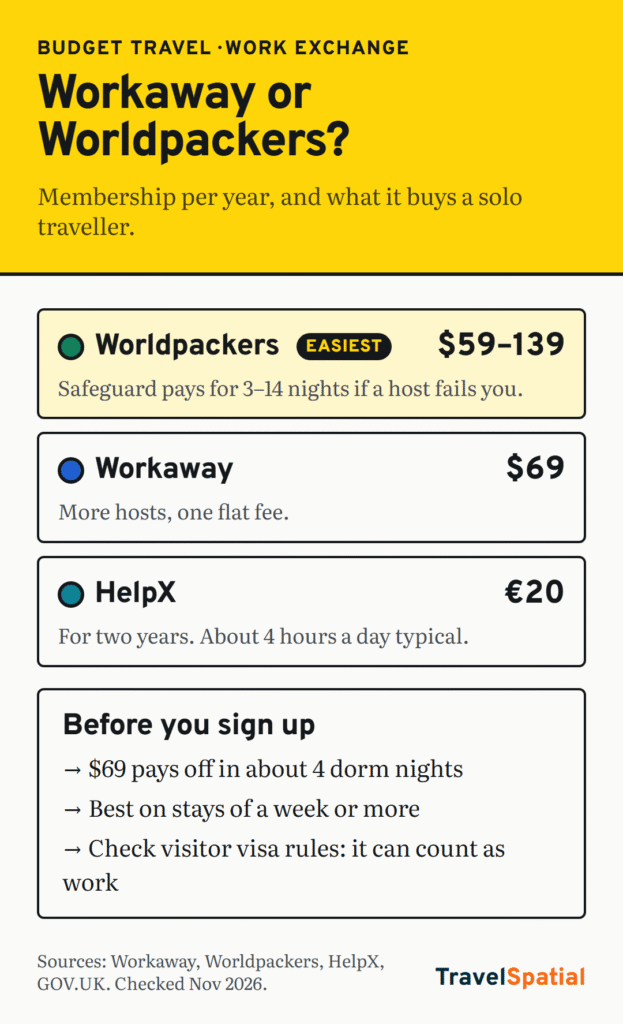
You help a host for a few hours a day (at a hostel reception, on a farm, in a family home, at an eco-project) and in return get a bed and often some meals. You pay the platform a membership fee to contact hosts; the host doesn’t pay you. HelpX, one of the older platforms, describes the typical arrangement as about four hours a day, ranging from two hours for accommodation only to six hours for accommodation and meals (HelpX, checked November 2026). Each host sets its own hours, so read every listing.
Round 1: Price
| Plan | Price per year | Notes |
|---|---|---|
| Workaway, single | US$69 | Contact any host for a year |
| Workaway, Solo Plus | US$89 | Extra features |
| Worldpackers, Solo Trips | US$59 | Safeguard up to US$59 or 3 nights |
| Worldpackers, Solo Pack | US$109 | Safeguard up to US$199 or 7 nights |
| Worldpackers, Solo Pack Plus | US$139 | Safeguard up to US$399 or 14 nights |
Prices from Workaway’s sign-up page and Worldpackers’ membership page, checked November 2026. Some recent blog posts quote lower Worldpackers prices, so check the live page when you join.
Round 1 to Worldpackers on the entry price, to Workaway if you’d have bought a mid-tier Worldpackers plan anyway.
Round 2: Safety net
This is the real difference. Worldpackers’ WP Safeguard covers you if a confirmed stay falls through because of the host: up to US$59 or 3 nights on the cheapest plan, up to US$199 or 7 nights on Pack, and up to US$399 or 14 nights on Pack Plus. It is not travel or health insurance, and it applies only when the problem is the host’s responsibility and your plan was confirmed on the website (Worldpackers, WP Safeguard, checked November 2026).
For someone travelling alone, that’s the scenario that matters most: arriving somewhere remote and finding the host has changed their mind, or the place isn’t what was described. You still need your own travel insurance and an emergency fund, but a safeguard that pays for a few nights elsewhere is a meaningful extra.
Round 2 to Worldpackers.
Round 3: Choice of hosts
Workaway is generally described as the bigger of the two, with a wider spread of countries and host types, while Worldpackers leans towards hostels and social projects. Neither publishes exact host counts in a way we could verify, so treat any number you see on a comparison site as an estimate.
Round 3 to Workaway, especially if you’re heading somewhere less common.
Round 4: Vetting and reviews
Both platforms show host reviews from previous volunteers, and both let you message hosts before you agree to anything. On either, your own checks do most of the work:
- Read the most recent reviews, especially from solo travellers.
- Ask for the hours, days off and sleeping arrangement in writing before you book a ticket.
- Ask where you’ll sleep: a private room, a shared dorm, or a family’s spare room.
- Have a plan B for the first night, especially if the host is remote.
Round 4: a draw. The platform doesn’t replace your judgement.
The maths: when does it pay off?
Work exchange saves money on beds, not on everything. Here’s a simple way to check it’s worth it:
- Work out your nightly saving. If you’d otherwise pay for a dorm bed, that’s your saving per night. Hostelworld puts dorm beds in most European cities at about €15–30 (Hostelworld).
- Divide the membership by that saving. A US$69 Workaway membership against a €20 dorm bed pays for itself in about four nights.
- Add your costs. Travel to a rural host, food if meals aren’t included, and any days off spent in a nearby town.
- Value your hours honestly. Four hours a day, five days a week, is twenty hours. If you’d rather spend those hours exploring, a cheap hostel might suit you better.
A stay of two weeks or more is where work exchange clearly wins. A two-night stay rarely does.
The question that matters more than the platform: visas
Work exchange can count as work under immigration rules, even when you aren’t paid in money. The UK is a clear example: the government says visitors need a work visa “for any other paid or unpaid work” beyond the activities the rules allow (GOV.UK, visiting on business), and the volunteering visitors can do is limited to 30 days for a registered charity (UK Immigration Rules, Appendix Visitor: Permitted Activities, updated October 2026).
Other countries have their own rules. Before you agree to a stay, check the official immigration website of the country you’re visiting for what visitors may do, and if it’s unclear, ask the host how other volunteers have handled it. A platform listing is not permission to work.
Two cheaper alternatives

- HelpX. Premier membership costs €20 for two years and lets you contact all hosts and read their reviews (HelpX). Smaller and more old-fashioned, but very cheap.
- WWOOF. For organic farms. There’s no single global membership: WWOOF is organised country by country, so you join the national organisation for the country you want to visit (WWOOF).
Who should choose what
- First work exchange, travelling alone: Worldpackers, Solo Pack or above for the safeguard.
- Experienced, want maximum choice: Workaway.
- Tight budget, flexible: HelpX.
- Farms in one country: that country’s WWOOF organisation.
If you’re after company as much as a free bed, work exchange is also one of the easiest ways to meet people; our guide to meeting people when travelling solo covers more options. And if you’d rather keep your days free, our comparison of hostel private rooms and budget hotels looks at the paid alternatives.
Final score
Worldpackers wins for first-timers and anyone travelling alone who values a safety net. Workaway wins for choice and for experienced volunteers. Both pay off only on stays of a week or more, and neither changes the visa rules: check what you’re allowed to do as a visitor before you agree to work for your bed.
Get our budget travel guides first in the TravelSpatial newsletter.
Sources
- Workaway, sign up for Workawayers (checked November 2026)
- Worldpackers, become a member (checked November 2026)
- Worldpackers, how WP Safeguard works (checked November 2026)
- HelpX (checked November 2026)
- WWOOF, how it works (checked November 2026)
- GOV.UK, Standard Visitor: visiting on business (checked November 2026)
- GOV.UK, Immigration Rules Appendix Visitor: Permitted Activities (updated 29 October 2026)
- Hostelworld, hostels vs hotels vs Airbnb (checked November 2026)
Photo credits
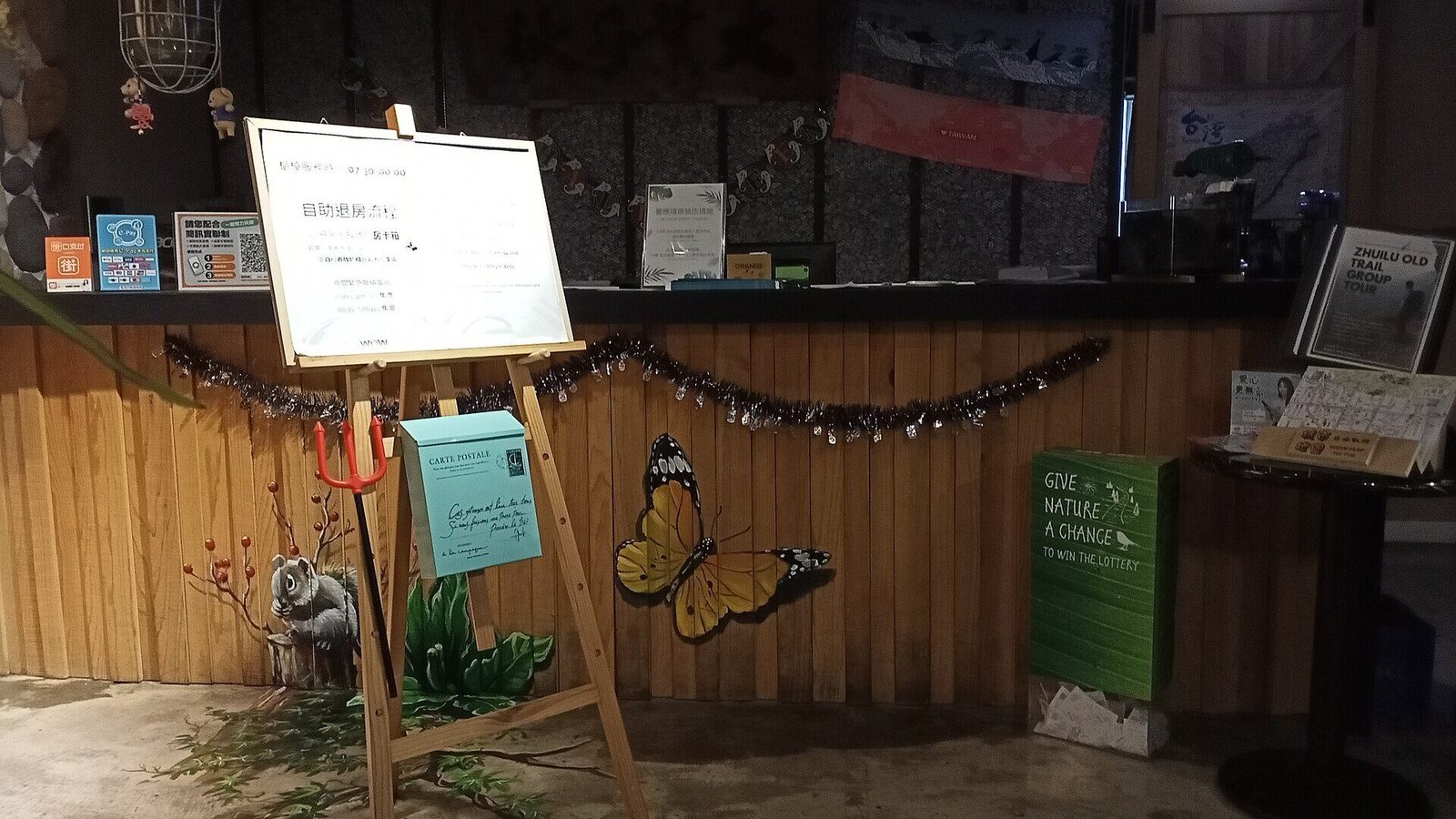
- Hualien WOW Youth Hostel reception and check-in area, as taken on 30 October 2021 by Kai3952, CC BY-SA 4.0, via Wikimedia Commons
- 20120601-DM-LSC-0295 (7154333931) by USDAgov, Public domain, via Wikimedia Commons
The infographic is original to TravelSpatial. Photos are used under the licences linked above.
1 comment on “Workaway vs Worldpackers for Solo Travellers: Price, Safety Net and What You Really Save”