A norovirus particle is about 0.03 microns across. The pores in a typical travel filter bottle are several times bigger. That one size gap answers most of the question.
Do you need a water filter bottle for Southeast Asia or Central America? It can pay for itself, but only if it’s the right kind. Most filter bottles remove bacteria and parasites but not viruses, and viruses such as norovirus are part of the risk from untreated tap water. So the real question isn’t “filter or bottled water?” but “filter, purifier or bottled water?” This guide explains the difference using CDC guidance, then works out when a bottle pays for itself.
The science in one table
The US CDC’s chapter on water disinfection for travellers sorts the germs in drinking water by size. Size is what decides which filter stops them.
| Germ | Typical examples | Size | Filter needed to remove it |
|---|---|---|---|
| Protozoa | Giardia, Cryptosporidium | Large | Microfilter (≤1 µm for Cryptosporidium) |
| Bacteria | E. coli, Salmonella | Medium | Microfilter (≤0.2–0.4 µm) |
| Viruses | Norovirus, rotavirus, hepatitis A | About 0.03 µm | Ultrafilter (about 0.01 µm) or a disinfection step |
The key sentence in the CDC chapter: “Portable microfilters do not reliably remove enteric viruses (e.g., norovirus).” Most travel filter bottles are microfilters.
Filter, purifier or both?
A microfilter bottle (pores of about 0.1 to 1 µm) removes protozoa and bacteria. It’s enough for clear mountain streams in places where viruses from human sewage aren’t the main concern, and for improving the taste of treated tap water.
A purifier also deals with viruses. It does that in one of three ways:
- Ultrafiltration, with pores of about 0.01 µm. The CDC says ultrafilters “should be effective for removing viruses, bacteria, and parasites”.
- Chemical treatment. Chlorine and iodine are “effective against bacteria and viruses”, but they work poorly against Cryptosporidium. That’s why the CDC suggests a microfilter plus chlorine as a pair that covers both.
- Ultraviolet light (UV pens and UV bottle caps). The CDC says UV kills bacteria, viruses, Giardia and Cryptosporidium, but it needs clear water.
And there’s always boiling, which kills everything that matters. The CDC recommends a full minute at a rolling boil.
So for city tap water in much of Southeast Asia and Central America, where viruses are part of the risk, a microfilter bottle on its own isn’t enough. Choose a bottle sold as a purifier (check that it claims to remove viruses and names the standard it was tested to), or pair a microfilter with chlorine tablets or a UV pen.
When does it pay for itself?
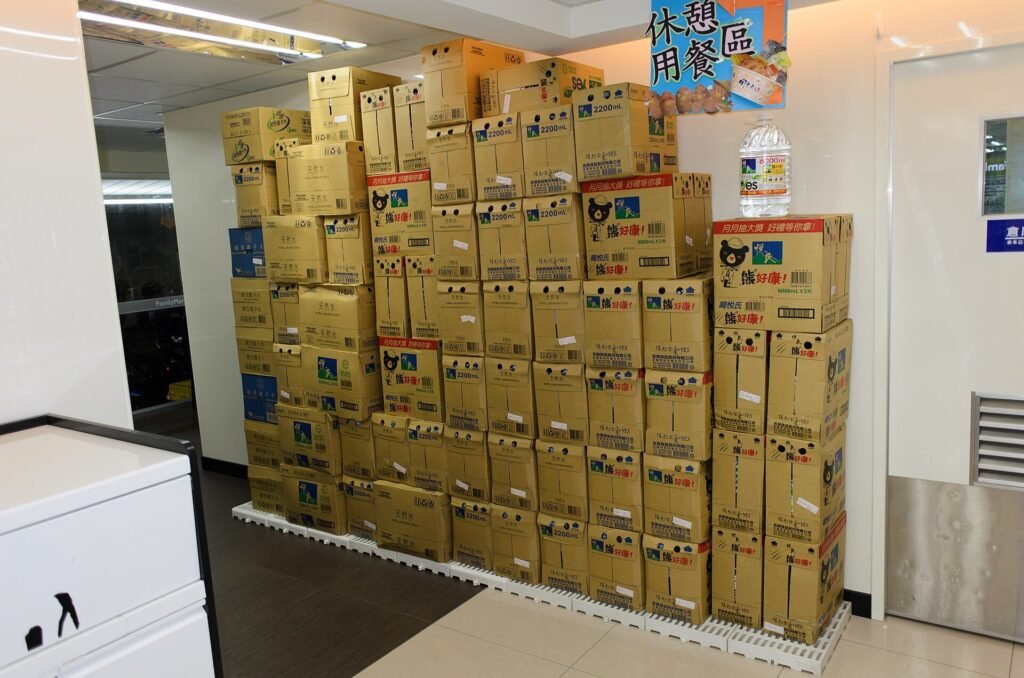
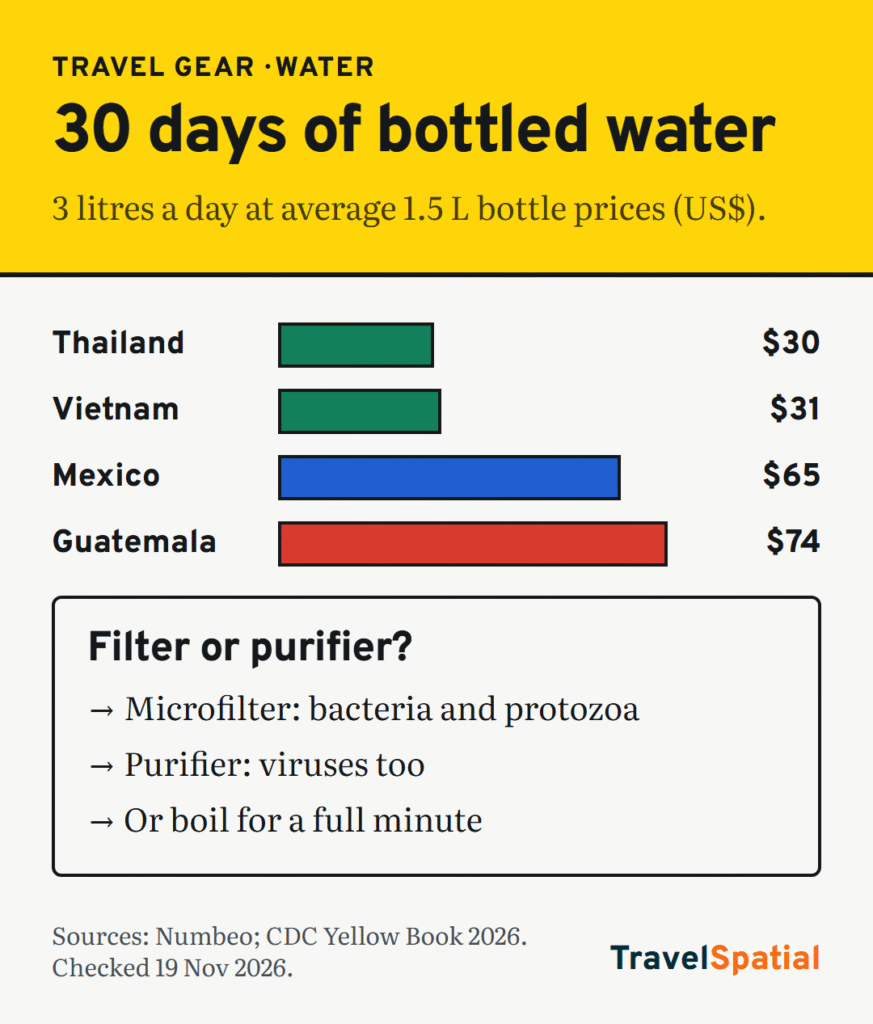
Bottled water is cheap in Southeast Asia, so the saving is smaller than people think. In Central America it’s more expensive. Here are Numbeo’s average prices for a 1.5-litre bottle (checked November 2026):
| Country | 1.5 L bottle (average) | 3 litres a day | 30 days |
|---|---|---|---|
| Thailand | US$0.50 | US$1.00 | US$30 |
| Vietnam | US$0.51 | US$1.02 | about US$31 |
| Mexico | US$1.09 | US$2.18 | about US$65 |
| Guatemala | US$1.24 | US$2.48 | about US$74 |
Now take an example purifier bottle that costs US$60 including one spare cartridge (an example figure, not a quote; check current prices). On these averages it breaks even after about 60 days in Thailand and about 24 days in Guatemala. Buy small bottles at tourist prices instead of 1.5-litre bottles from a supermarket, and you’ll break even much sooner.
The other reason people carry one is plastic: about two 1.5-litre bottles a day, every day, adds up fast on a long trip.
The bit people forget: ice, bottles and teeth
Some more practical points from the CDC’s food and water precautions and its water disinfection chapter:
- Bottled water: drink it only from “an unopened, factory-sealed container”. The water disinfection chapter adds that in some places bottled water “might not be superior to tap water”.
- Ice: avoid it unless you’re reasonably sure it was made with safe water. The alcohol in a drink doesn’t make contaminated ice safe.
- Hot drinks: tea and coffee made with just-boiled water are generally safe.
- Murky water: the CDC warns that cloudy or discoloured water “could be contaminated with chemicals” that boiling and disinfection don’t fix. Don’t rely on a filter to make it safe.
Our tip: brush your teeth with treated or bottled water too, and keep the filter bottle’s mouthpiece clean. If you keep refilling a bottle with untreated water, the outside of the mouthpiece gets contaminated.
Which setup for which trip?
| Your trip | Suggested setup |
|---|---|
| Two weeks, mostly cities, Southeast Asia | Sealed bottled water, or refills from your accommodation’s filtered dispenser |
| A month or more, Central America | A purifier bottle (virus-rated) |
| Trekking in the mountains | A microfilter plus chlorine dioxide tablets, or a purifier |
| Very low budget, long trip | A microfilter plus chlorine tablets (cheapest per litre) |
| Pregnant | Avoid long-term iodine. The CDC suggests heat, chlorination or filtration instead |
What to take away
A water filter bottle only replaces bottled water in Southeast Asia or Central America if it deals with viruses. Choose a purifier (an ultrafilter, or a microfilter plus chlorine or UV), not just a microfilter. On Numbeo’s average prices, a US$60 setup pays for itself in about two months in Thailand and under a month in Guatemala, and saves a lot of plastic along the way. Still avoid ice you’re unsure of, and drink bottled water only if the seal is intact.
Planning a long trip on a tight budget? See what solo travellers spend per day in Southeast Asia, our guide to getting around Central America on any budget, and, if you’re trekking, whether your travel insurance covers your trek.
More practical gear guides arrive with the TravelSpatial newsletter. Sign up to get them.
Sources
- CDC Yellow Book 2026, Water disinfection for travelers (chapter dated 23 April 2025; checked November 2026)
- CDC Yellow Book 2026, Food and water precautions for travelers (checked November 2026)
- Numbeo cost of living, bottled water 1.5 L: Thailand, Vietnam, Mexico, Guatemala (checked 19 November 2026)
Photo credits
- Acea USB charge and drinking water bottle refill by Adenatale, CC0, via Wikimedia Commons
- Bottled Water Boxes Stacked at Family Mart Xindong Store 20150820 by 玄史生, CC0, via Wikimedia Commons
The infographic is original to TravelSpatial. Photos are used under the licences linked above.