For most of the last century, the trip from Split to Dubrovnik came with a strange interruption. Somewhere south of the Makarska Riviera, the coast road left Croatia, ran for a few kilometres through Bosnia and Herzegovina’s tiny strip of seafront at Neum, and then came back in again. Two border checks, a queue in summer, and a passport stamp for a country you never meant to visit.
That changed on 26 July 2022, when the Pelješac Bridge opened: 2,404 metres of steel and concrete that carries the road across the bay to the Pelješac peninsula and on towards Dubrovnik, bypassing Neum altogether (Wikipedia). A bypass around the town of Ston followed in April 2023, opening the route to buses and lorries.
So the old question, bus, boat or drive?, now has new answers. Here is how each one works, and which to choose.
In brief: between April and October, take the fast boat if you want the islands and a scenic arrival. From November to March, or if you’re on a tight budget, take the bus. Drive only if you want to stop along the way and can return the car in Dubrovnik.
Chapter one: the morning boat
The fast passenger boats on this route are not car ferries. They are catamarans that leave Split, call at a string of islands and arrive in Dubrovnik in the afternoon.
Kapetan Luka’s Krilo service lists its route as Split → Brač (Milna) → Hvar → Korčula → Mljet (Pomena) → Dubrovnik, taking about four and a half hours (Krilo, checked November 2026). TP Line runs the route too. Ferryhopper puts the crossing at 4 hours 30 minutes to 5 hours 15 minutes, with up to three daily departures, and the first usually leaving Split at 09:00 (Ferryhopper).

The season matters more than anything else. The route is seasonal, running from April to October. If you’re travelling in winter, there is no fast boat. On prices, the sources disagree: Krilo advertises fares “from €20”, while Ferryhopper’s indicative lowest one-way adult fare is €48. Treat €20 as an off-peak headline and check the fare for your actual date.
Boats arrive at Gruž, Dubrovnik’s ferry port, about 2 km from the Old Town. You’ll need a taxi or a city bus for the last stretch.
Why choose it: the views. You pass the outer islands at sea level, with a stop at each port, and you never sit in traffic. It’s the closest you’ll get to an island-hopping day without booking a tour.
Why not: in strong winds, fast boats can be cancelled or delayed, and with a big suitcase, gangways and port crowds get old fast.
Chapter two: the road that no longer leaves Croatia
Driving yourself is the most flexible option and, since the bridge, the simplest it has ever been. The usual route takes the A1 motorway south from Split, then joins the coast and crosses the Pelješac Bridge.
Expect roughly 3 hours 45 minutes on the motorway route, or about 4.5 hours if you follow the coast road through the Makarska Riviera (Easy Balkan Transfers). In July and August, add time for traffic.
One warning: some navigation apps still send drivers through Neum, because it can look shorter on the map (Croatia Unscripted). If you’re driving a hire car, check your route before you set off, and check whether your rental agreement allows you to cross into Bosnia and Herzegovina if you go that way.
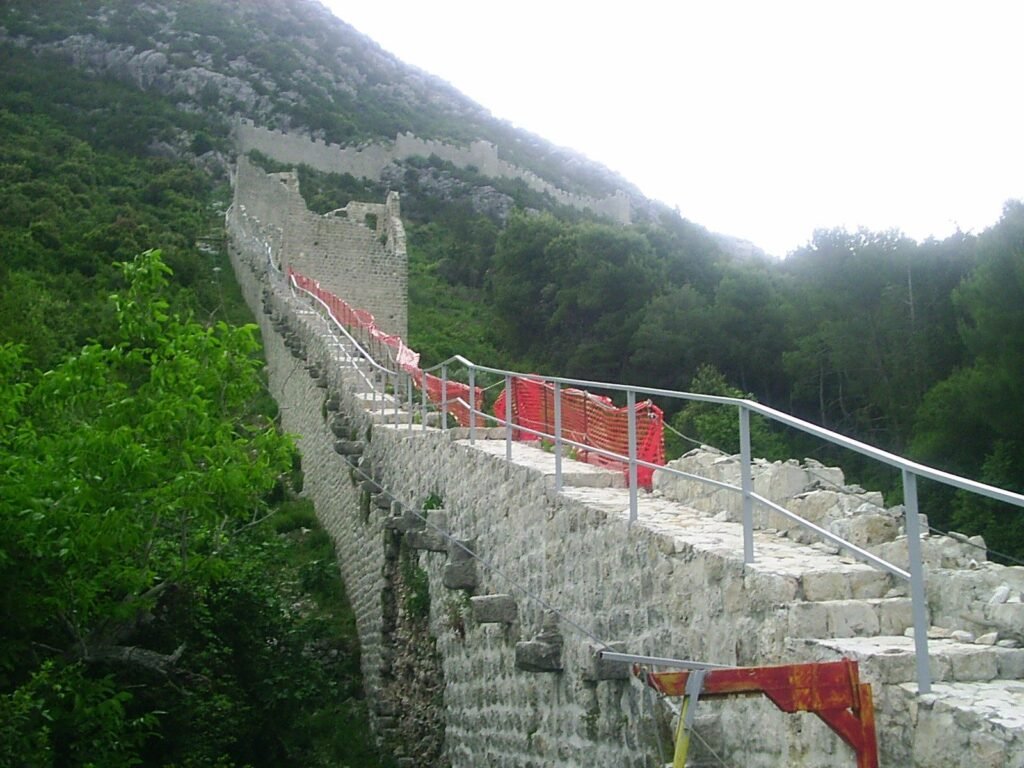
Worth a stop: the walled town of Ston, at the neck of the Pelješac peninsula, just before the bridge. Its defensive walls climb the hills behind the town, and its salt pans are still in use.
Why not drive: one-way car hire often carries a drop-off fee, and parking near Dubrovnik’s Old Town is limited and expensive. Many travellers return the car on arrival and walk from then on.
Chapter three: the bus, the quiet winner
The bus is unglamorous and usually the best value. Coaches run all year from Split’s main bus station, which is right next to the ferry port and the railway station (AK Split).
Allow about 4 to 4.5 hours, more in summer traffic. Sources agree that some buses now take the Pelješac Bridge while others still go through Neum, so bring your passport either way and ask the operator which route your bus takes (Easy Balkan Transfers).
Buses arrive at Dubrovnik’s main bus station in Gruž, near the ferry port. From there, Libertas city buses run to the Old Town. A ticket bought from the driver costs €2.50; a one-hour ticket from a kiosk costs €1.73, and a 24-hour ticket €5.31 (Libertas Dubrovnik, checked November 2026).
Our tip: sit on the right-hand side heading south for sea views on the coastal stretches.
The comparison at a glance
| Fast boat | Bus | Car | |
|---|---|---|---|
| Season | April–October | All year | All year |
| Time | 4h 30m–5h 15m | About 4–4.5h | About 3h 45m–4.5h |
| Arrives at | Gruž port, 2 km from Old Town | Gruž bus station | Wherever you park |
| Fare | From €48 (Ferryhopper; Krilo advertises from €20) | Check the operator; usually the cheapest | Hire, fuel, tolls, parking |
| Neum border | No | Depends on the bus | Avoid by taking the bridge |
| Best for | Scenery, island stops | Budget, winter travel | Stops, flexibility |
Which should you choose?
Travelling between April and October with light bags? Take the boat. Book ahead in July and August.
Travelling between November and March? Take the bus. It’s the only scheduled public option.
Want to see Ston, the Pelješac vineyards or a beach along the way? Drive, then hand the car back when you reach Dubrovnik.
Dubrovnik is also where many Balkan backpacking routes begin or end; our 5 Classic Backpacking Routes shows what comes next. Bosnia and Herzegovina sits outside the Schengen Area, so if your bus does cross at Neum, read Do I Need a Visa? first. And if you’re hiring a car, our travel insurance explainer covers what rental cover usually leaves out.
Get our next route guide in the TravelSpatial newsletter.
Sources
- Pelješac Bridge (Wikipedia): opening date, length, Ston bypass, checked November 2026
- Krilo (Kapetan Luka): Dubrovnik route, checked November 2026
- Ferryhopper: Split to Dubrovnik, checked November 2026
- AK Split bus station
- Libertas Dubrovnik: price list, checked November 2026
- Easy Balkan Transfers: Split to Dubrovnik, all options compared (2026)
- Croatia Unscripted: Split to Dubrovnik travel guide
Photo credits
- Pelješac Bridge 2 by kallerna, CC BY-SA 4.0, via Wikimedia Commons
- Ston, mala cinska zed z 15. stoleti by Martin Brož, CC BY 3.0, via Wikimedia Commons
The infographic is original to TravelSpatial. Photos are used under the licences linked above.