You’ve found a room. Good price, nice photos, 8.9 rating. Before you press “book”, spend ten minutes on the map. That’s how you choose where to stay when travelling solo: not by the room, but by the 500 metres around it, and by the walk you’ll make back to it after dark.
When you travel with someone, a so-so location is an inconvenience. Alone, it decides how late you stay out, how much you spend on taxis, and how relaxed you feel walking home. So here’s a 10-minute map check you can run on any listing, in any city, before you commit. Set a timer.
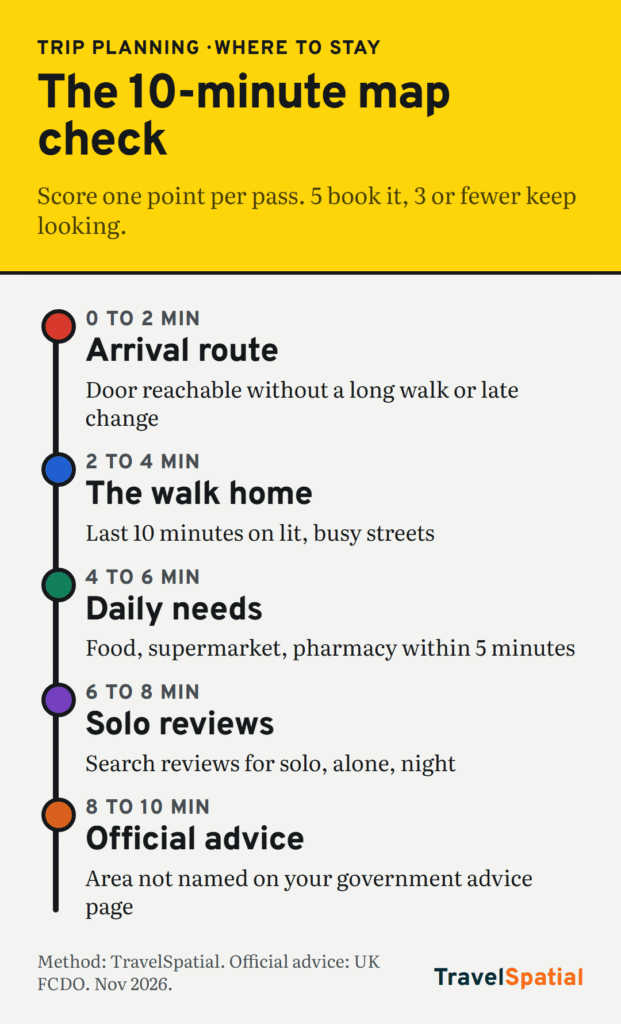
The 10-minute check at a glance
| Minutes | Check | Pass if… |
|---|---|---|
| 0–2 | Arrival route | You can get from the airport or station to the door without a long walk or a change after dark |
| 2–4 | The walk home | The last 10 minutes are on lit, busy streets |
| 4–6 | Daily needs | Food, a supermarket, a pharmacy and a cash machine within about 5 minutes’ walk |
| 6–8 | Reviews | Solo travellers mention the area and say they felt fine |
| 8–10 | Official advice | The area isn’t named on your government’s advice page |
Score one point for each pass. 5 = book it. 4 = fine, know the weak spot. 3 or fewer = keep looking.
Minutes 0–2: trace your arrival
Open the listing’s location in a map app and plan the route from wherever you’ll arrive: airport, train station or bus terminal. Then check:
- How long is the walk at the end? Under 10 minutes on the flat is ideal. Fifteen minutes with a suitcase over cobbles is a long way at the end of a travel day.
- How many changes? One train or bus is easy. Two changes, at night, in a language you don’t read, is where people get lost.
- Does it still work late? Look up the last departure from the airport. If you land at 23:00 and the last airport train leaves at 23:30, a hotel near that train line is worth a lot.
Arriving late? Our airport-to-bed checklist for landing alone at night covers it step by step.
Minutes 2–4: walk the last 10 minutes home in Street View
This is the check that matters most, and most people skip it.
Pick the place you’ll most often come back from in the evening: the old town, the metro stop, the restaurant street. Drop into Street View and “walk” the route back to the door. Look for:
- Street lighting. Street lamps every few metres, lit shop fronts.
- Activity. Shops, cafés and restaurants mean people and eyes on the street at night. Long blank walls, closed warehouses, empty car parks and underpasses mean the opposite.
- The final turn. Is the entrance on a main street, or down a dead-end alley?
Street View images can be a few years old, and they’re taken in daylight. You’re not judging the mood. You’re judging the layout: lighting, shop fronts, dead ends.
Minutes 4–6: check the daily-needs radius
Search the map for “supermarket”, “pharmacy” and “ATM” and see what’s within about five minutes’ walk. Add one place you’d happily eat alone: a café, a food market, a counter restaurant.
This matters more solo than in a group. On a tired evening, the difference between “dinner is two minutes away” and “dinner is a 15-minute walk” decides whether you eat properly or skip it. It’s also the walk you’ll do most often.
Minutes 6–8: read reviews for the word “solo”
Open the reviews and use the search box (most booking sites have one). Search for:
- “solo“, “alone“, “single woman” or “female“
- “night“, “walk back“, “area“, “neighbourhood“
Couples and families rarely mention the walk home. Solo travellers do. One review saying “I walked back from the old town at midnight and felt fine” is worth twenty saying “great breakfast”. Equally, two separate reviews saying “taxi recommended after dark” is a clear warning.
Read the most recent ones first. Areas change, and a review from four years ago may describe a different street.
Minutes 8–10: check official advice and the map’s dark spots
Your government’s travel advice page sometimes names specific districts to avoid. For example, the UK’s FCDO travel advice pages often list areas with high crime. Search the page for the name of your neighbourhood.
Crime maps and “safety scores” from crowd-sourced sites can help, but use them carefully. They reflect who reports crime and where police patrol as much as actual risk (Monde du Voyage). Treat them as a prompt to look closer, not as a verdict.
One quick map habit helps here: look at the satellite view. Big blank areas next to your listing, such as rail yards, motorways, industrial estates or large parks, often mean dark, empty walking routes at night, even in a safe city.
The trade-off: tourist centre or the next district over
The very centre usually scores well on every check. It’s also the most expensive and the noisiest. Often the sweet spot is the first residential district beyond the old town, next to a metro or tram line: cheaper, quieter at night, still busy enough to feel safe, and one stop from everything.
We’ve applied exactly this thinking in our city guides:
- Where to stay in Lisbon without climbing hills every night
- Where to stay in Seoul, scored by subway access
- Where to stay in Cape Town without a car
Once you’ve found the street, choose the room
The map check tells you where. Then decide what. Our comparison of hostel private rooms and budget hotels helps with the room type, and our dorm guide covers bed size, female-only dorms and pods.
Our tip: when you arrive, walk the route home once in daylight. The first time you do it at night, it’ll already be familiar.
Summary
Choose the neighbourhood before the room. In ten minutes on a map you can check five things: the arrival route, the last 10 minutes of your walk home, the shops nearby, what solo travellers say in reviews, and official travel advice. Five passes, book. Three or fewer, keep looking. If the centre is too expensive, look one district out, next to a metro line.
Get more solo trip-planning tools in the TravelSpatial newsletter.
Sources
- UK FCDO, foreign travel advice by country (checked November 2026)
- Monde du Voyage, solo travel safety: choosing safe neighbourhoods and transport (2026) (checked November 2026)
Photo credits
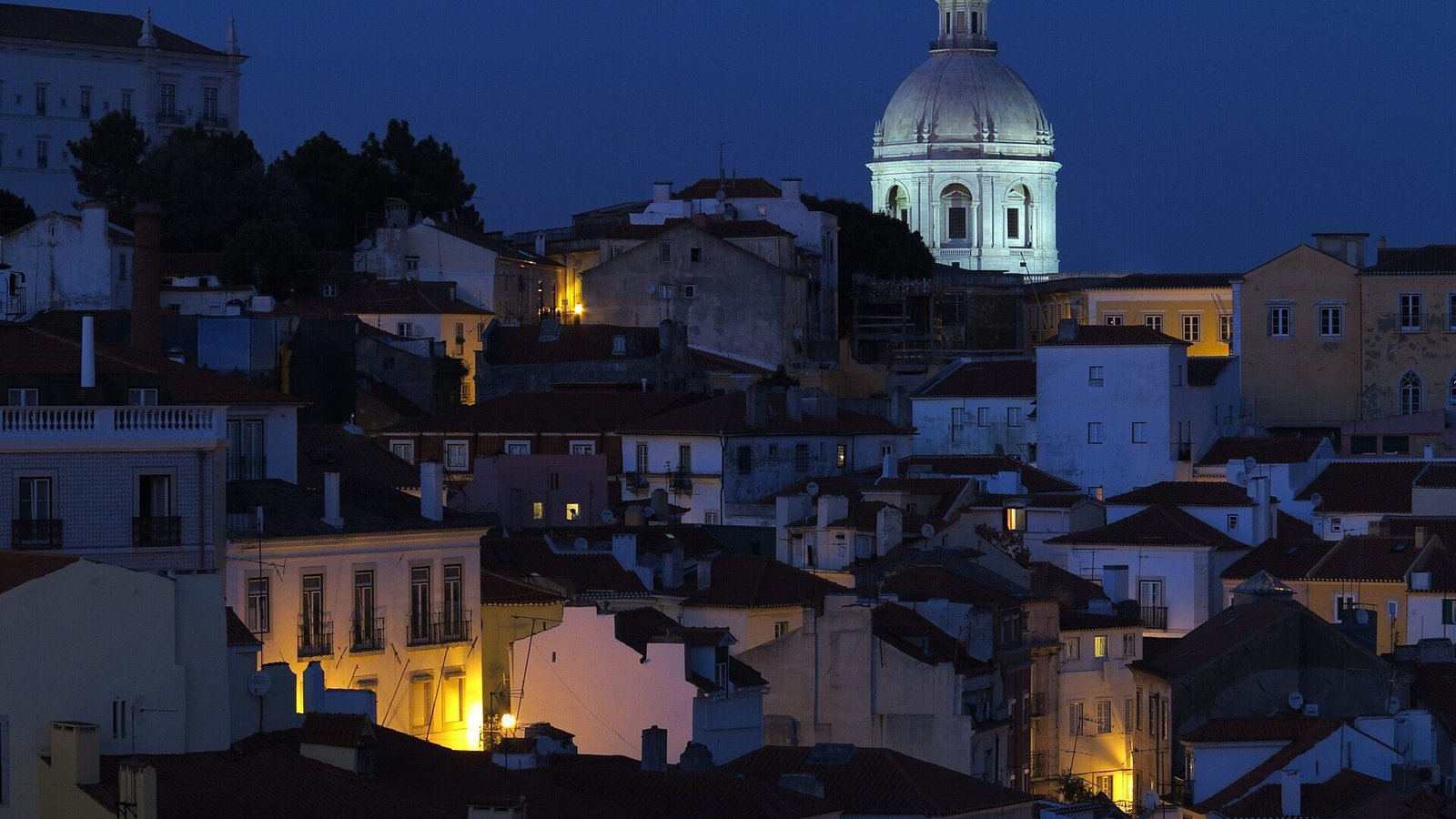
- Lisbon Alfama Night by TeWeBs, CC BY-SA 4.0, via Wikimedia Commons
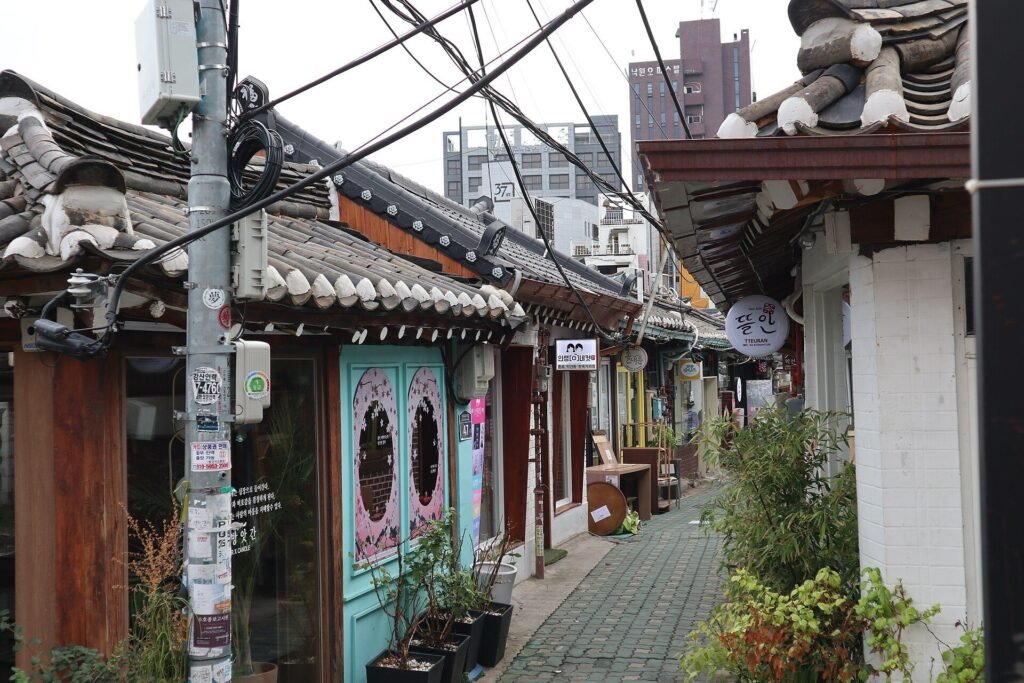
- Ikseon-dong 익선동 October 1 2020 3 by S h y numis, CC BY-SA 4.0, via Wikimedia Commons
The infographic is original to TravelSpatial. Photos are used under the licences linked above.