


Yes, you can travel in Morocco during Ramadan, and plenty of visitors do. Ramadan 2027 is expected to start on about Monday 8 February 2027, and Eid al-Fitr is expected on about Wednesday 10 March. Morocco confirms both dates by moon sighting the evening before, so treat them as estimates until then.
If you’re not Muslim, you don’t have to fast. What changes is the rhythm of the day: quieter, slower daytimes, early closing, a near-empty street at sunset while everyone breaks the fast, then busy, sociable evenings. The clocks change too, and so do some train times.
Below you’ll find the expected dates, how a Ramadan day runs hour by hour, what changes for eating, drinking, sights and transport, and how it plays out in Marrakech, Fes, the desert and the coast.
Morocco during Ramadan 2027 at a glance
| Item | What you need to know |
|---|---|
| Expected dates | About 8 February – 9 March 2027 (tentative, set by moon sighting) |
| Eid al-Fitr | About 10–11 March 2027, national holidays (tentative) |
| Clocks | Morocco normally moves from GMT+1 to GMT for the month; 2027 dates not yet announced |
| Sunset (iftar) in Marrakech | About 18:12 on 8 February to 18:35 on 9 March |
| Do visitors fast? | No, but avoid eating, drinking or smoking in public in the daytime |
| Alcohol | Only in licensed venues all year; expect fewer of them open this month |
| Trains | ONCF runs a special Ramadan timetable; check times on oncf.ma |
Our tip: book riads that serve breakfast and at least one other meal to guests. It saves you hunting for an open café at lunchtime in the medina.
When is Ramadan 2027 in Morocco?
Ramadan follows the lunar calendar, so it moves about 11 days earlier every year. The UK Moonsighting Committee expects the new moon to be visible from the UK-to-Morocco region on 7 February, which makes 8 February 2027 the most likely first day (checked November 2026). Timeanddate lists the same start date for Morocco, with Eid al-Fitr on 10 March and an extra Eid holiday on 11 March, all marked tentative.
| Event | Expected date (2027) | Status |
|---|---|---|
| First day of Ramadan | Monday 8 February | Tentative, confirmed the evening before |
| Last day of fasting | About Tuesday 9 March | Depends on the moon |
| Eid al-Fitr | Wednesday 10 March | National holiday, tentative |
| Eid al-Fitr holiday | Thursday 11 March | National holiday, tentative |
If your flights are fixed, leave a one-day margin either side of these dates for anything that depends on them, like a train on Eid.
The clocks go back an hour
Morocco has kept GMT+1 all year since 2018, except during Ramadan, when it switches to GMT. In 2026 the clocks went back an hour at 03:00 on Sunday 15 February and forward again at 02:00 on Sunday 22 March, under Decree No. 2.18.855 (Morocco World News, March 2026). The 2027 dates are announced shortly before Ramadan.
Why it matters: train tickets, tour pickups and flight times are all in local time. If you booked something before the change was announced, check the time again. Your phone should update on its own, but a manual clock or a time set in an app might not. Working remotely? Our time-zone map for remote work shows how a one-hour shift moves your overlap with home.
How a Ramadan day runs
The fast runs from dawn to sunset. The meal that breaks it, called ftour in Morocco (iftar elsewhere), is the hinge of the day. Here’s the shape of a day that matters for a visitor, using Marrakech sunset times from timeanddate (local time, checked November 2026).

| Time of day | What happens | What it means for you |
|---|---|---|
| Before dawn | Suhoor, the pre-dawn meal; the fast starts at dawn | Riads may be up and serving early |
| Morning | Quiet streets; offices open later | Best time for sights, before the afternoon slump |
| 09:00–15:00 | Public offices on continuous hours (2026 schedule) | Do any paperwork before 15:00 |
| Late afternoon | Shopping for ftour; busy roads | Allow extra time; driving can be erratic near dusk |
| Sunset, about 18:12–18:35 | Ftour: streets empty within minutes | Be seated somewhere; don’t plan to travel |
| Evening and night | Cafés, squares and souks fill up again | The liveliest part of the day |
The 09:00–15:00 public-office hours are the 2026 schedule reported by Morocco World News; the 2027 hours will be set nearer the time. Shops and restaurants set their own hours, so check each one, as the UK Foreign Office also advises.
What changes for visitors
Eating, drinking and smoking in public
Visitors aren’t expected to fast. But the UK Foreign Office warns that eating or drinking, smoking, swearing or chewing gum in public in the daytime may cause offence (checked November 2026). Eat in your riad, in a hotel or in a restaurant that is serving, and carry a water bottle in your bag rather than in your hand. Some hotels and restaurants seat non-fasting guests apart from Muslim guests, sometimes behind a screen.
Many local cafés and snack stalls close in the daytime, especially away from the main tourist streets. Restaurants aimed at visitors in the big cities are more likely to stay open, but don’t count on a particular place without checking.
Alcohol
All year, alcohol is legal only in licensed restaurants, bars and shops, and drinking it in the street is illegal (UK Foreign Office). During Ramadan, local authorities can go further: in 2015 a circular in Greater Casablanca closed bars and off-licences for the whole month (TelQuel). Rules vary by city and year, so if a drink with dinner matters to you, ask your hotel before you book.
Sights, shops and the souks
Monuments, museums and gardens generally stay open, but many shorten their hours or close earlier in the afternoon. There’s no single official list, so check each site’s own page or ticketing system the week you go. Souk stalls often open later in the morning and close before ftour, then reopen in the evening.
Our tip: put your must-see sights in the morning, rest in the afternoon, and save the medina walk for after ftour.
Trains and buses
ONCF, the national railway, publishes a special Ramadan timetable each year. In 2026, Al Boraq high-speed trains ran 22 times a day between Tangier and Casablanca, with extra trains at 22:00. The 22 daily Al Atlas trains on the Fes–Casablanca–Marrakech line ran between 04:30 and 17:30 (Le Matin, February 2026). The 2027 timetable isn’t out yet. Check times on oncf.ma or the ONCF app once it is.
What this means in practice: if the Al Atlas schedule repeats, the last Fes–Marrakech train leaves in the afternoon, so long rail days need an early start. Don’t plan to be on the road at sunset. Drivers stop to eat, and the UK Foreign Office warns that driving can be erratic around dusk.
Eid al-Fitr: book early
The end of Ramadan is one of the busiest travel times of the year, as people go home to their families. In 2026, ONCF ran a special Eid plan with extra trains over the days around the holiday, and fewer trains on Eid day itself (maroc.ma). If you’re travelling around 10–11 March 2027, buy train and bus tickets as early as you can and expect some shops and offices to close for the holiday.
Where it’s easiest, and where it’s quieter
Ramadan feels different depending on where you are. Here’s what to expect on the stops of a classic first trip, the same ones in our 10-day Morocco itinerary.
| Place | In the daytime | After ftour | Plan for |
|---|---|---|---|
| Marrakech | Easiest for visitors: many riads, hotels and tourist restaurants | Jemaa el-Fnaa and the souks get busy | Sights in the morning, the square at night |
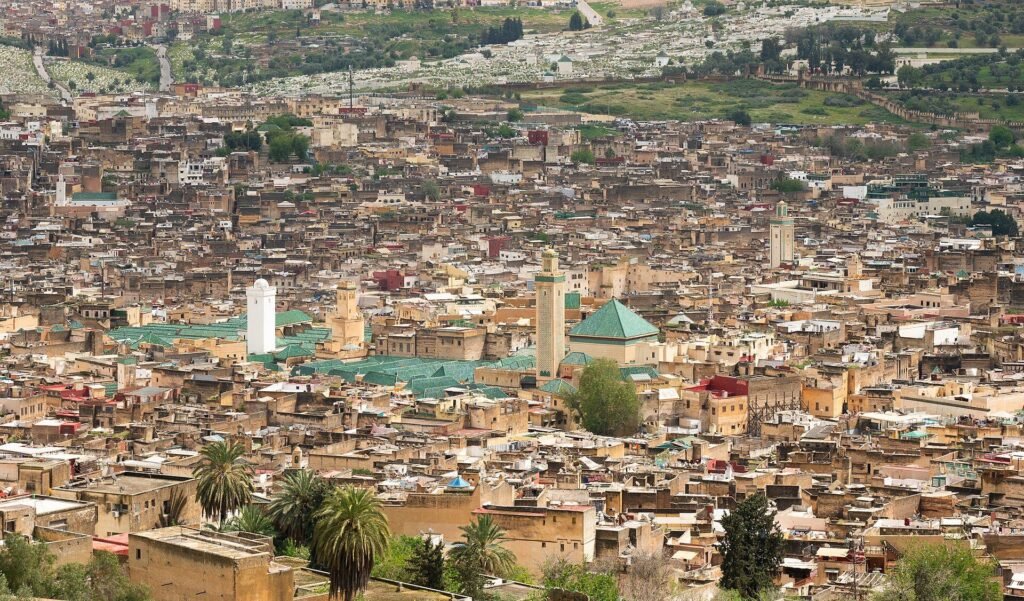
| Fes | A quieter medina; fewer places serving lunch | Streets and food stalls come alive | Eat lunch at your riad; hire a guide in the morning |
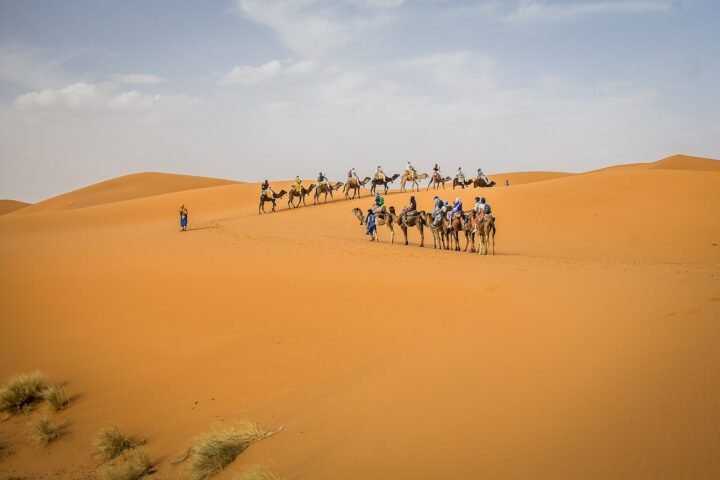
| Atlas and Sahara tours | Long drives; fewer roadside cafés open | Dinner at the camp or hotel as usual | Carry snacks and water; ask the tour what meals are included |
| Essaouira and the coast | Relaxed, with visitor-focused cafés in town | Quieter evenings than the big cities | A slow stop to rest between busier cities |
Rule of thumb: the more a place depends on visitors, the more stays open in the daytime. In small towns and on rural roads, assume nothing is open between breakfast and sunset unless you’ve checked.
Should you go during Ramadan?
- Go if you like slow mornings and late nights, want to see a side of Morocco most visitors miss, and are happy to plan meals around your riad. February and early March are also the cooler months for the desert and the cities; our winter shoulder-season guide covers Marrakech in winter.
- Think twice if your trip is short and full of long drives, you want bars and nightlife, or your dates fall right on Eid, when transport is under the most pressure.
- Either way, be patient. People who are fasting may be tired by the afternoon, and a little tolerance goes a long way.
Check entry rules for your passport on our visa map before you book.
The short version
Ramadan 2027 in Morocco is expected to run from about 8 February to 9 March, with Eid al-Fitr on about 10–11 March. You don’t have to fast, but eat and drink out of sight in the daytime, see sights in the morning, and be seated somewhere by sunset (about 18:12–18:35 in Marrakech). Expect the clocks to go back an hour, a special train timetable and fewer bars. Marrakech is the easiest base, and the evenings are the best part.
Want the next route in your inbox? Join the TravelSpatial newsletter for one mapped itinerary a week.
Sources
- UK Moonsighting Committee: Ramadan 1448 projection, checked November 2026
- Timeanddate: Morocco holidays 2027 (tentative Ramadan and Eid dates) and Marrakech sunrise and sunset
- UK Foreign Office: Morocco safety and security (Ramadan, alcohol, local customs), checked November 2026
- Morocco World News: Morocco returns to GMT and returns to GMT+1 (2026 clock change, office hours)
- Le Matin: ONCF Ramadan 2026 timetable and maroc.ma: ONCF Eid al-Fitr plan
- TelQuel: Casablanca bars closed for Ramadan (2015)
- ONCF (official timetables)
Photo credits
- Jemaa el-Fnaa at night – Maroco – Marrakesh by Andrzej Kosiński, CC BY-SA 3.0, via Wikimedia Commons
- Medina of Fes, Marocco by Petar Milošević, CC BY-SA 4.0, via Wikimedia Commons
The infographic is original to TravelSpatial. Photos are used under the licences linked above.

2 comments on “Visiting Morocco During Ramadan 2027: What Changes and Where”